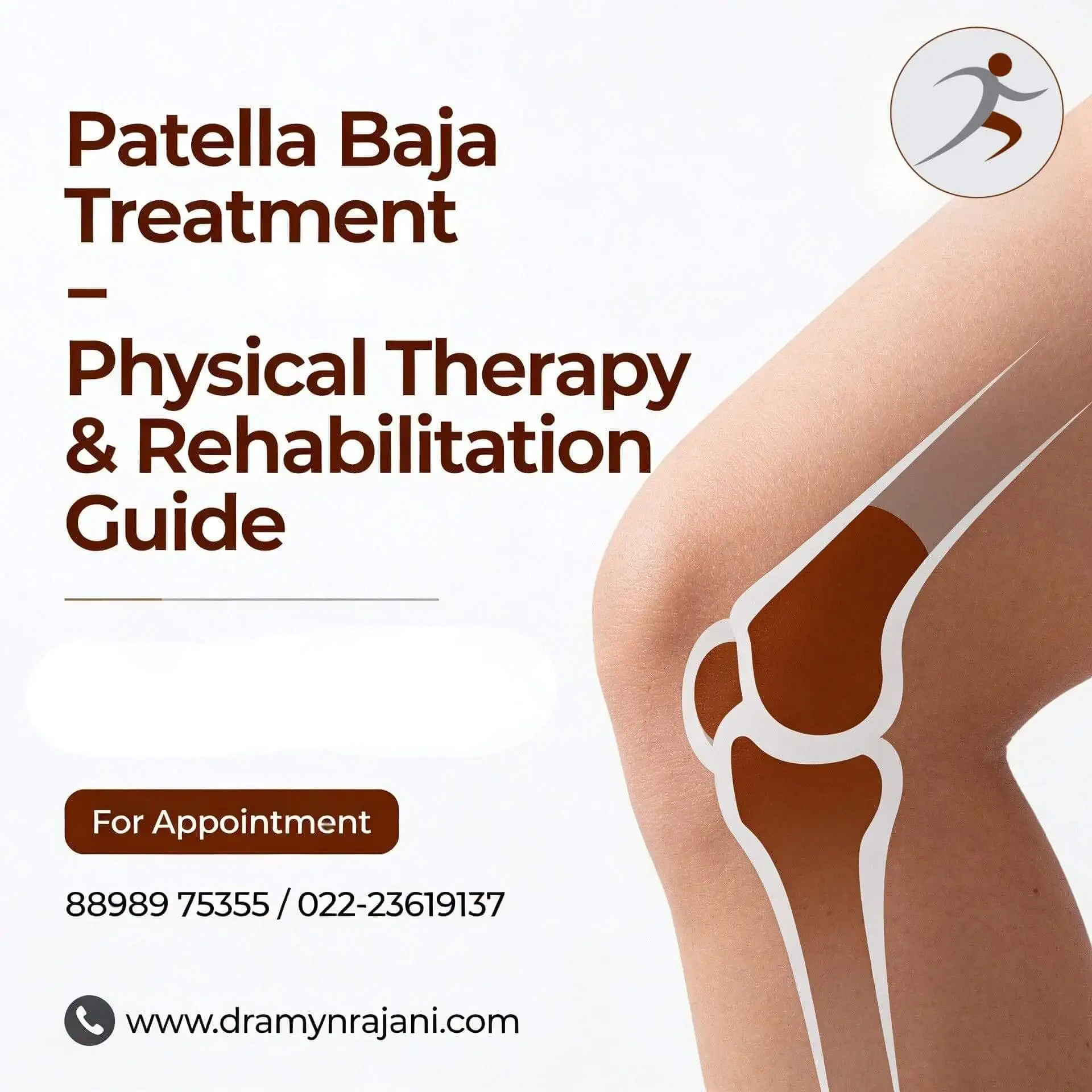
Patella baja is a condition where the kneecap (patella) sits lower than normal in relation to the thigh bone (femur). This altered position can restrict knee movement, cause stiffness and contribute to discomfort or pain during activities like bending, walking, or climbing stairs.
Many patients and clinicians ask a critical question: Can patella baja be treated with physical therapy alone? In this article, we explain the role of physiotherapy in managing patella baja, when therapy helps, when it doesn’t, what realistic goals you should expect, and when to seek surgical evaluation - including insights from Dr. Amyn Rajani, Mumbai’s leading consultant orthopaedic surgeon experienced in knee conditions.
(Note: This article is intended for general health education. Diagnosis and treatment of patella baja should always be made by a qualified orthopaedic surgeon or physiotherapist following clinical examination and appropriate imaging.)
What Is Patella Baja?
The kneecap normally glides smoothly along a groove in the femur (thigh bone) during knee bending and straightening. In patella baja, the patella lies lower than its typical anatomical position. This can occur due to:
- prolonged knee immobilization (e.g., in a cast or brace)
- scar tissue formation around the knee
- chronic inflammation
- previous surgery
- quadriceps muscle tightness
- shortened or fibrosed patellar tendon
When the kneecap is abnormally low, it may not track properly during motion, leading to compromised knee biomechanics, reduced range of motion and anterior knee discomfort.
Can Patella Baja Be Treated with Physical Therapy?
The short answer is: sometimes, but not always.
Physical therapy plays a valuable role in the management of functional limitations associated with patella baja, especially in cases where:
- there is stiffness after immobilization
- soft tissue tightness limits motion
- there is no significant structural shortening of the patellar tendon
- the condition is identified early
However, physical therapy cannot reliably reposition a chronically low-riding patella caused by structural shortening of the tendon or severe scar tissue formation. In such cases, surgical evaluation may be necessary.
Dr. Amyn Rajani, a leading orthopaedic surgeon in Mumbai with extensive experience in knee conditions, often emphasises that “the role of physical therapy is to maximise functional mobility, reduce stiffness, and strengthen the muscles around the knee - but it is not always curative for true structural abnormality.”
When Physical Therapy Helps in Patella Baja
Physical therapy is most effective for patients with:
- mild to moderate stiffness resulting from previous casting or bracing
- soft tissue tightness rather than true tendon shortening
- restricted range of motion due to pain and disuse
- early-stage changes without permanent structural alteration
In these scenarios, therapy can help improve:
- knee flexion (bending)
- muscle strength around the knee
- patellar mobility
- functional mobility and gait
Therapists focus on restoring motion, enhancing flexibility and strengthening key muscle groups to support the knee joint.
When Physical Therapy Alone Is Not Enough
Physical therapy has limitations. It is less effective when:
- the patellar tendon is structurally shortened
- a significant amount of scar tissue restricts motion
- the kneecap is permanently malpositioned
- symptoms do not improve despite an adequate trial of therapy
In such cases, an orthopaedic consultation with a clinician like Dr. Amyn Rajani is highly recommended. He assesses whether the condition might benefit from surgical options, such as patellar tendon lengthening, proximal realignment procedures, or soft tissue release, depending on the underlying cause and patient-specific factors.
Goals of Physical Therapy for Patella Baja
The purpose of physical therapy for patella baja includes:
- Increasing knee range of motion
Gentle mobilizations and stretching help improve flexion. - Reducing stiffness and pain
Techniques to decrease discomfort during motion. - Strengthening muscles around the knee
Particularly the quadriceps, hamstrings and hip stabilizers. - Improving patellar tracking
Manual therapy and movement training can enhance how the kneecap glides. - Promoting functional recovery
Gradual progression toward walking, stair climbing and daily activities.
The focus is on restoring as much function as possible within safe clinical limits, not on forcing unnatural motion.
Physical Therapy Techniques and Rehabilitation Approach
Physical therapy for patella baja typically involves a structured and progressive approach rather than a random exercise list. Common elements include:
Soft Tissue Mobilisation
Manual therapy is used to reduce tightness in:
- quadriceps muscle
- patellar tendon area
- surrounding soft tissues
Joint Mobilisation
Therapeutic techniques help improve knee flexion and extension by gently guiding joint movement where safe and appropriate.
Range of Motion Exercises
Active and passive motion exercises encourage controlled knee bending without causing harm.
Strengthening
Targeted strengthening improves muscular support for the kneecap and surrounding joints.
- quadriceps strengthening (emphasis on controlled quadriceps activation)
- hip muscle strengthening to improve knee alignment
- hamstring exercises for balanced knee mechanics
Functional Training
Rehabilitation includes:
- gait training
- balance exercises
- progression to more dynamic movements as tolerated
A qualified physiotherapist plans progression based on patient response and clinical assessment.
Typical Recovery Timeline with Physical Therapy
Recovery timelines vary greatly depending on:
- severity of stiffness
- initial range of motion
- degree of soft tissue tightness
- patient compliance
- presence of structural abnormalities
In general:
- Initial improvements in motion and comfort are often seen within 3–6 weeks of consistent therapy.
- More significant functional progress may take 8–12 weeks, particularly when muscle strengthening is a key component.
- Long-term improvements continue with ongoing rehabilitation and activity modification.
Dr. Amyn Rajani emphasises that “recovery is patient-specific - some regain functional mobility quickly, while others require ongoing rehab over months.”
Risks of Delayed or Incorrect Rehabilitation
Incorrect or overly aggressive rehabilitation can lead to:
- increased pain
- patellar irritation
- excessive swelling
- compensatory movement patterns
- further functional limitations
Unsupervised exercise programmes without clinical assessment often produce suboptimal results and, in some cases, delay proper diagnosis and treatment.
When Should You Consult an Orthopaedic Surgeon?
You should seek specialist evaluation when:
- pain and stiffness do not improve after a reasonable trial of therapy
- there is a history of knee surgery or trauma associated with the onset of patella baja
- functional limitations significantly impact daily activities
- imaging shows structural shortening of the patellar tendon
- there is persistent mechanical restriction despite rehabilitation efforts
An orthopaedic surgeon like Dr. Amyn Rajani can evaluate whether:
- conservative care should continue
- surgical intervention is appropriate
- combined therapy and surgical strategies are necessary
A clinical examination, diagnostic imaging and a rehabilitation history are essential for accurate decision-making.
FAQs
Can physical therapy fully treat patella baja?
Physical therapy can improve symptoms related to stiffness and muscle tightness in many cases, but it cannot always correct structural patellar positioning.
How long does patella baja physical therapy take?
Recovery timelines vary, but functional improvements often begin within 4–6 weeks, with continued progress over 2–3 months or longer.
Is surgery always needed for patella baja?
No. Surgery is considered when there is significant structural abnormality or if conservative therapy does not produce meaningful results.
Does patella baja cause knee pain?
Yes, patella baja can contribute to discomfort, stiffness and restricted range of motion, particularly during activities involving deep knee bending.
Conclusion
Physical therapy is a valuable and often effective component of patella baja treatment, especially when incorporated early and guided by experienced clinicians. It focuses on improving motion, strengthening muscles and promoting functional recovery. However, its effectiveness depends on the underlying cause and severity.
For personalised evaluation and treatment planning - whether conservative or surgical - consulting a knee specialist in Mumbai such as Dr. Amyn Rajani ensures that your care pathway is safe, evidence-based and aligned with your functional goals.
If you are experiencing persistent stiffness, restricted knee motion or discomfort suggestive of patella baja, a tailored assessment from an orthopaedic surgeon and physiotherapy team is highly recommended.