You have just been told you need surgery. Perhaps it's a knee replacement, a spinal fusion, a rotator cuff repair, or a hip resurfacing. The words are alarming and so is the weight of the decision you're now expected to make. Before you sign any consent form, there is one step every patient deserves to take: getting a second opinion from another qualified orthopaedic surgeon.
This is not about doubting your doctor. It is about understanding your own body well enough to say yes or no to an intervention that could change your life permanently. As a practicing orthopaedic surgeon in Mumbai with over two decades of clinical experience in joint replacement and sports medicine, I have seen both outcomes: patients who avoided unnecessary surgery with the right second opinion, and patients who delayed necessary surgery far too long because they were afraid to seek one. Both are preventable.
From Dr. Amyn Rajani's Practice
In my experience, patients who arrive with a clear second opinion tend to be better informed, more cooperative during recovery, and significantly more satisfied with their outcomes - regardless of whether they chose surgery or not.
What Is a Medical Second Opinion and Why Does It Matter?
A second opinion is a consultation with an independent medical specialist, one who has no prior knowledge of your case who reviews your diagnosis, imaging, test results, and treatment plan from scratch. The goal is not to contradict the first doctor, but to independently verify that the recommended treatment is the right one for your specific condition at this specific stage.
Orthopaedic surgery, particularly elective procedures, is an area where the threshold for intervention varies meaningfully between surgeons and hospitals. Research consistently shows that for conditions like osteoarthritis, degenerative disc disease, and shoulder impingement, a significant proportion of patients who are recommended surgery can often benefit equally or more from structured conservative management.
1 in 5
Patients receive a different or refined diagnosis after a second opinion (Mayo Clinic research)
88%
Second opinions result in confirmed or modified care plans rather than complete reversals
₹ 2–15L
Average cost of major orthopaedic surgery in India - making informed decisions financially critical
When Should You Seek a Second Opinion for Orthopaedic Surgery?
Not every orthopaedic recommendation requires a second opinion, a fracture that needs immediate fixation warrants urgent treatment. However, for any elective or semi-elective procedure, a second opinion is not only reasonable but often advisable. Here are situations where I specifically recommend seeking one:
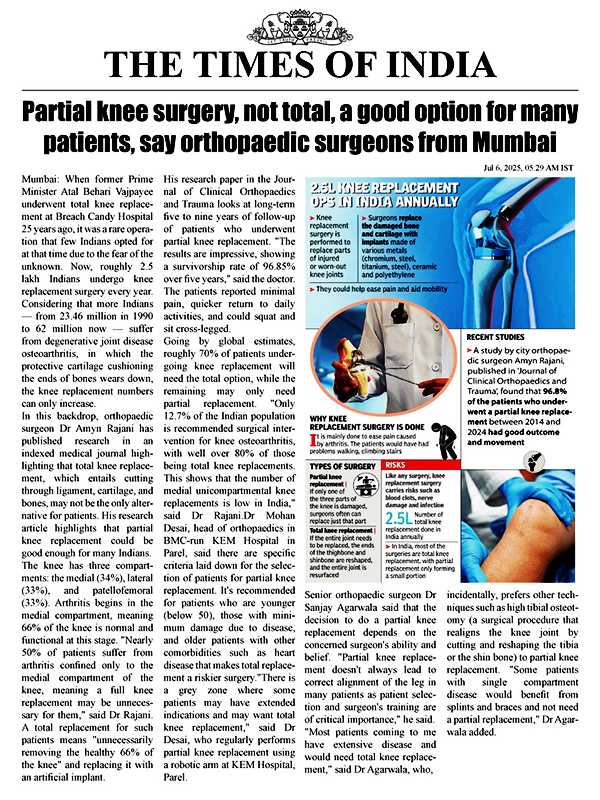
- Knee or hip replacement surgery: These are major, permanent procedures. If you have moderate-grade osteoarthritis and haven't exhausted physiotherapy, weight optimisation, injections, or bracing, a second opinion may open new avenues.
- Spinal surgery: Spine surgery carries significant risks. Indications for surgery versus conservative care vary widely between surgeons. A second look from a spine-trained specialist is strongly encouraged.
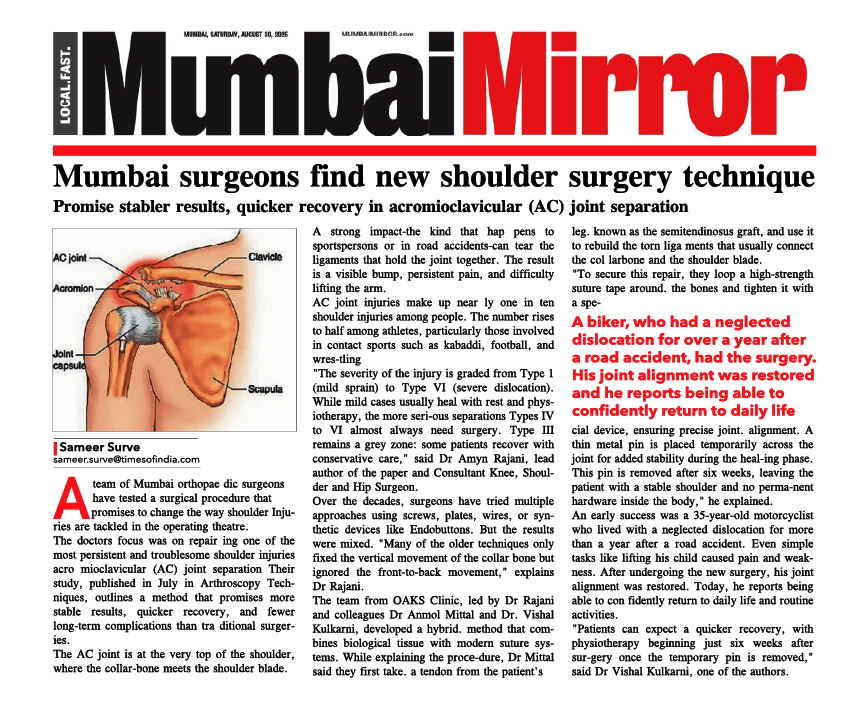
- Rotator cuff or shoulder repairs: Many partial tears heal without surgery. A second opinion helps determine whether your specific tear is truly surgical or manageable with rehabilitation.
- Ligament reconstructions (e.g., ACL): Especially for older or less active patients, conservative management may offer equivalent functional outcomes without surgical risk.
- When the diagnosis feels unclear: If your pain doesn't match imaging findings, or your surgeon couldn't explain clearly why surgery is the only option, seek another view.
- When you feel rushed or pressured: A reputable surgeon will always give you time to think. If you feel pushed toward quick consent, that itself is a reason to pause.
Important Note
In cases of acute trauma - fractures with displacement, ligament ruptures causing instability, or orthopaedic emergencies - do not delay treatment for the sake of a second opinion. In these situations, prompt care takes priority.
Common Myths About Getting a Second Opinion
Myth 1: "It will offend my surgeon."
A confident, experienced surgeon is never offended by a patient seeking a second opinion. In fact, most ethical surgeons actively encourage it for elective procedures. It reflects an informed patient and informed patients make better surgical candidates.
Myth 2: "It will delay surgery and worsen my condition."
For the vast majority of elective orthopaedic conditions, a one-to-two week delay for a second opinion carries no measurable clinical harm. Conditions like knee osteoarthritis or rotator cuff tears progress over months and years not days. The exception is acute trauma.
Myth 3: "Two opinions will contradict each other and confuse me."
When two opinions differ, that difference itself is clinically valuable. It tells you that the treatment decision is not black and white and that you may have options worth exploring further. A good second opinion includes a clear explanation of why the recommendation may differ and what evidence underlies it.
Myth 4: "My insurance doesn't cover it."
Several health insurance providers in India now recognise second opinion consultations as covered services under major surgical policies. Even if not covered, the cost of a specialist consultation is minimal compared to the cost - financial and physical of an unnecessary or premature surgery.
How to Prepare for an Orthopaedic Second Opinion Consultation
The quality of your second opinion depends heavily on the information you bring. Here is a practical checklist:
Documents to Bring to Your Second Opinion
✔ All imaging - MRI films, X-rays, CT scans (not just the written reports - bring the actual images/CDs)
✔ Your original surgeon's written notes and proposed surgical plan
✔ Blood reports, bone density scans (DEXA), and any nerve conduction studies
✔ A written summary of your symptoms - onset, severity, what makes it worse or better
✔ A list of all conservative treatments already tried (physiotherapy, injections, medications) and their outcomes
✔ Your complete medical history including co-morbidities (diabetes, hypertension, cardiac conditions)
✔ Your questions - write them down in advance so you don't forget them in the room
Questions to Ask the Second Opinion Surgeon
A consultation is a dialogue. Here are questions you should not leave the room without getting clear answers to:
- Do you agree with the diagnosis? Is there any alternative explanation for my symptoms?
- Is surgery the only appropriate treatment at this stage, or are there conservative options I haven't tried?
- What is the risk of delaying surgery by 3–6 months to explore non-surgical management?
- What are the risks specific to my case given my age, bone quality, and general health?
- What surgical technique would you use, and how does it differ from what was proposed before?
- What does recovery look like realistically - time off work, physiotherapy duration, expected outcome at 1 year?
- What is the implant or hardware you would use (for joint replacements), and what is its longevity data?
What Happens When Two Opinions Disagree?
This is more common than patients realise, and it is not cause for alarm. When two qualified orthopaedic surgeons recommend different courses of action, you have three sensible paths:
- Seek a third opinion from a senior specialist or a tertiary care academic centre - particularly for complex cases involving the spine, hip, or revision surgery.
- Ask each surgeon to explain the basis for their recommendation in simple terms. A surgeon who can explain clearly why they are recommending or not recommending surgery, citing your specific imaging and functional status, is giving you a more trustworthy clinical assessment.
- Consider choosing the more conservative path first if both options are medically sound. Surgery can often still be done later if conservative management fails; it cannot always be undone if it proves premature.
Seeking an Orthopaedic Second Opinion in Mumbai
Mumbai has a high concentration of tertiary hospitals, super-speciality clinics, and experienced orthopaedic surgeons making it one of the best cities in India to access a quality second opinion. When choosing a specialist, look for a surgeon who:
- Holds a recognised fellowship in the relevant sub-specialty (joint replacement, spine, sports medicine)
- Has experience not only in performing the procedure but also in managing patients non-operatively
- Takes time to review your full records before giving an assessment not just a 5-minute glance at one X-ray
- Is transparent about success rates, complication rates, and realistic outcomes
- Does not have a financial incentive to push you toward surgery
At my practice in Mumbai, second opinion consultations are offered as a dedicated appointment with time set aside specifically to review your prior imaging, understand your history, and give you a considered, unbiased assessment. You are never rushed, and you will always leave with a written summary of my findings.
Frequently Asked Questions
Should I get a second opinion before knee replacement surgery?
Yes. Knee replacement is a major, irreversible procedure. Getting a second opinion helps confirm the
diagnosis, the severity of degeneration, and whether non-surgical options have been fully exhausted. A
second orthopaedic opinion is medically recommended and widely practised globally.
Is it okay to ask for a second opinion from another orthopaedic surgeon?
Absolutely. Seeking a second opinion is a patient's right and a sign of an informed healthcare
consumer. Any reputable surgeon will encourage patients to feel fully confident before proceeding with
surgery.
How do I get a second opinion for orthopaedic surgery in Mumbai?
Bring your existing MRI/X-ray reports, blood work, and the original surgeon's notes to your second
opinion consultation. Dr. Amyn Rajani offers dedicated second opinion consultations at his clinics in
Breach Candy and Bandra, Mumbai. You can book online via dramynrajani.com or call the clinic directly.
Does getting a second opinion delay surgery?
In most elective orthopaedic conditions—including knee replacement, spine surgery, and rotator cuff
repairs—a delay of one to two weeks for a second opinion does not cause harm. Emergency trauma cases
are an exception where immediate action is needed.
Will my health insurance cover a second opinion consultation?
Several insurers in India now cover second opinion consultations as part of surgical benefits. Check
your policy documents or speak with your insurer. Even where not covered, a specialist consultation fee
is a small cost relative to the financial and health implications of any major surgical procedure.
A Note from Dr. Amyn Rajani
Over my career, I have had patients come to me as a second opinion — and I have actively referred patients to seek second opinions from peers I trust. This is how good medicine works. Surgeons are specialists in surgery; but our job is first to know when surgery is truly necessary, and when it is not. An honest second opinion is one of the most powerful tools available to any patient navigating a difficult orthopaedic diagnosis
If you have been told you need orthopaedic surgery anywhere in India, and you are in Mumbai or able to travel, I invite you to come in for a dedicated consultation. You will leave with a thorough review of your case, a clear explanation of your options, and — most importantly — the confidence to make the decision that is right for you.
Medical Disclaimer: In cases of acute trauma - fractures with displacement, ligament ruptures causing instability, or orthopaedic emergencies - do not delay treatment for the sake of a second opinion. In these situations, prompt care takes priority.