
Best Orthopaedic
Surgeon in Breach Candy
Hospital, Mumbai –
Dr. Amyn Rajani

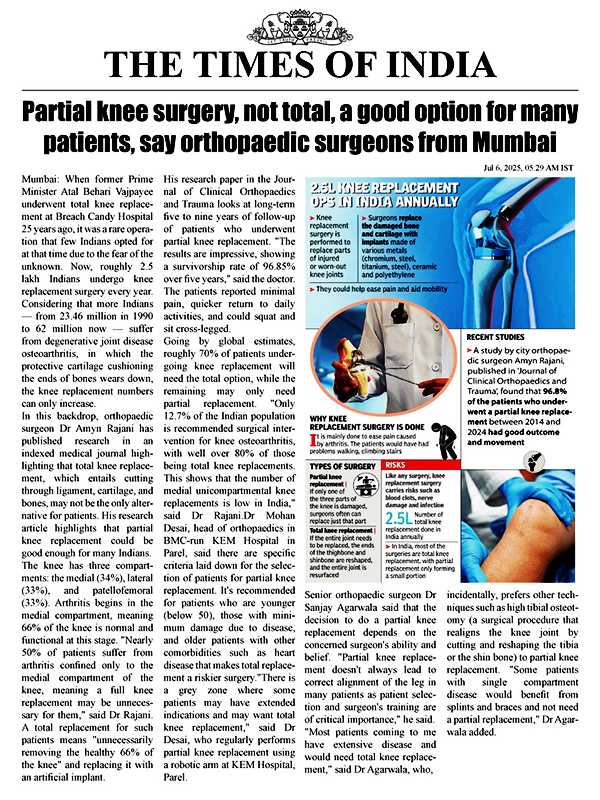
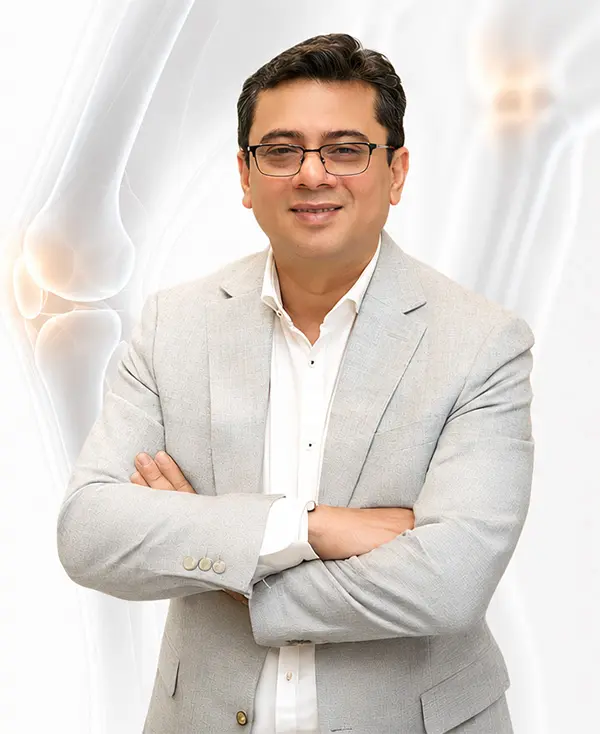
Dr. Amyn Rajani is a Mumbai-based orthopaedic surgeon and joint replacement specialist practicing at Breach Candy Hospital.

With over 20 years of experience and a Gold Medal in Orthopaedics from the University of Mumbai, he specializes in robotic knee and hip replacement, shoulder surgery, arthroscopy, and sports injury treatment.

Patients across South Mumbai consult him for personalized, evidence-based orthopaedic care and advanced surgical solutions.

Dr. Amyn Rajani

Finding the Right
Orthopaedic Surgeon in
Breach Candy Hospital,
Mumbai

Joint pain, ligament injuries, and arthritis can quietly take over daily life climbing stairs becomes a chore, a morning walk feels impossible, and even simple movements start to hurt. When this happens, the surgeon you choose matters as much as the treatment itself. Orthopaedic care, especially when surgery is involved, depends heavily on the experience, judgment, and surgical precision of the specialist treating you.

For patients searching for the best orthopaedic doctor in Breach Candy Hospital, Dr. Amyn Rajani is a name that comes up often and for good reason. With more than two decades of clinical experience, specialized training in robotic joint replacement, and a patient-first approach to care, he has built a reputation as a trusted orthopaedic surgeon in Breach Candy Hospital Mumbai for knee, hip, and shoulder conditions.

This page is designed to help you understand his background, the conditions he treats, and what to expect if you're considering a consultation — whether for early-stage joint pain or a more advanced procedure like robotic knee replacement.

Dr. Amyn Rajani

Who is Dr. Amyn Rajani?

Dr. Amyn Rajani is the Chief Surgeon and Director of OAKS Clinic, and practices at several of Mumbai's leading hospitals, including Breach Candy Hospital, P. D. Hinduja Hospital (Khar), and Saifee Hospital. He holds an M.S. in Orthopaedics (Gold Medallist) from the University of Mumbai and trained at two of the city's most respected public teaching hospitals Sion Hospital and KEM Hospital institutions known for their high surgical volumes and rigorous clinical training.

His professional development hasn't stopped at India's borders. Dr. Rajani has pursued advanced fellowship and observership training in the UK, Canada, Germany, Australia, and Singapore, allowing him to bring internationally benchmarked surgical techniques into his Mumbai practice. He has also been recognized in the India Book of Records for performing a notable bilateral partial knee replacement procedure.

Dr. Amyn Rajani

Dr. Amyn Rajani

Areas of Clinical Focus

    • Robotic Total & Partial Knee Replacement
    • Total Hip Replacement
    • Total & Reverse Shoulder Replacement
    • Knee, Shoulder & Hip Arthroscopy
    • ACL Reconstruction
    • Rotator Cuff Repair
    • Sports Injury Treatment
    • Revision (redo) Joint Replacement Surgery
Dr. Amyn Rajani

Why Patients Choose Dr. Amyn Rajani

  • 20+ years of focused orthopaedic practice, with deep experience in joint replacement and reconstructive surgery
  • Gold Medallist in Orthopaedics from the University of Mumbai
  • Internationally trained in robotic and minimally invasive surgical techniques
  • Multi-hospital affiliation, including Breach Candy Hospital, giving patients flexibility in choosing a familiar, trusted facility
  • Individualized treatment planning rather than a one-size-fits-all surgical approach
  • Structured rehabilitation guidance to support long-term recovery, not just the operation itself
Note: Outcomes in orthopaedic surgery depend on individual diagnosis, bone health, age, and overall medical condition. A personal consultation is necessary to determine the most appropriate treatment for your specific case.

Common Orthopaedic Conditions Treated

Orthopaedic problems rarely look the same in two patients. Below is an overview of the conditions
Dr. Rajani commonly evaluates and treats, along with how they typically present.

Knee Arthritis

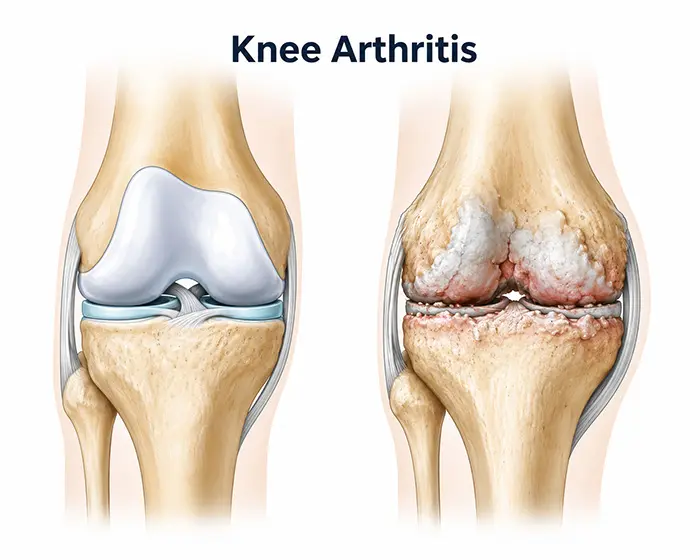
Knee arthritis develops when the cartilage cushioning the knee joint wears down over time, leading to bone-on-bone friction. Patients usually notice stiffness in the morning, swelling after activity, and a grinding or catching sensation while walking or climbing stairs.

Diagnosis is usually confirmed through a clinical exam combined with X-rays, and sometimes an MRI if soft tissue involvement is suspected. Treatment can range from physiotherapy and weight management in early stages to partial or total knee replacement in advanced cases.

Knee Arthritis

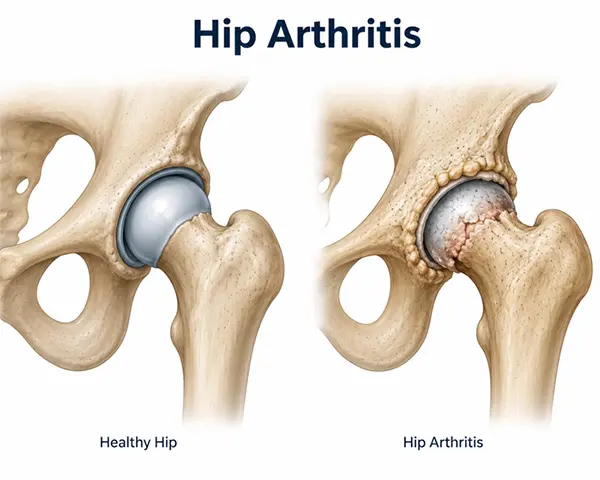
Hip Arthritis

Hip Arthritis

Hip arthritis often presents as groin pain that radiates to the thigh or knee, along with reduced range of motion and a noticeable limp during longer walks. It tends to be more disabling than people expect, because the hip is involved in nearly every lower-body movement.

Early management includes activity modification and anti-inflammatory care; persistent, severe cases are typically evaluated for total hip replacement.

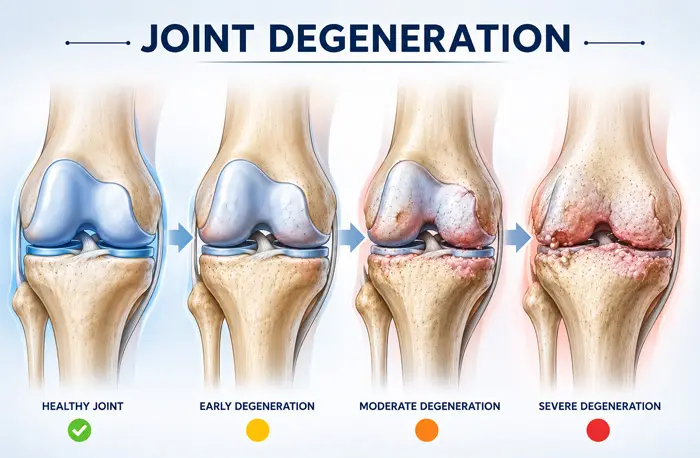
Joint Degeneration

General wear-and-tear of joints whether from age, repetitive strain, or prior injury can affect knees, hips, and shoulders alike. Symptoms include chronic ache, reduced flexibility, and discomfort that worsens with weather changes or prolonged activity. A staged treatment approach, starting conservatively and escalating only if needed, is standard practice.

Joint Degeneration

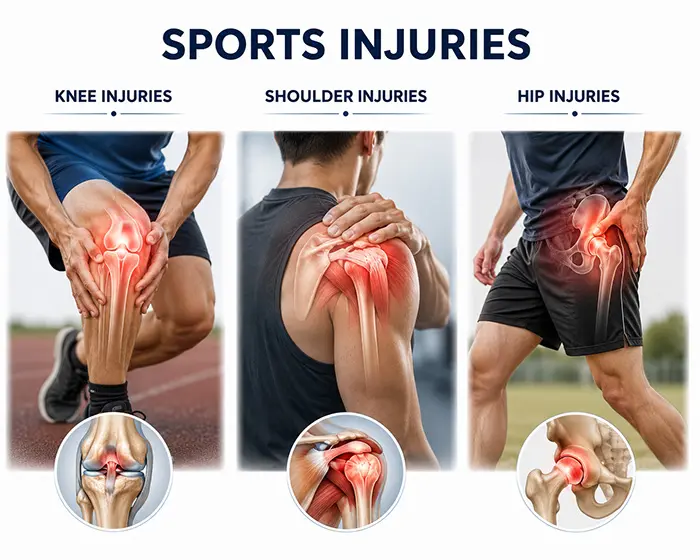
Sports Injuries Knee Shoulder Hip Injuries

Sports Injuries

Sports injuries commonly include ligament tears, meniscus damage, and tendon strains. These often present with sudden pain, swelling, and joint instability following a specific incident, a twist, fall, or impact. Arthroscopic evaluation is frequently used both to diagnose and treat these injuries in a single, minimally invasive procedure.

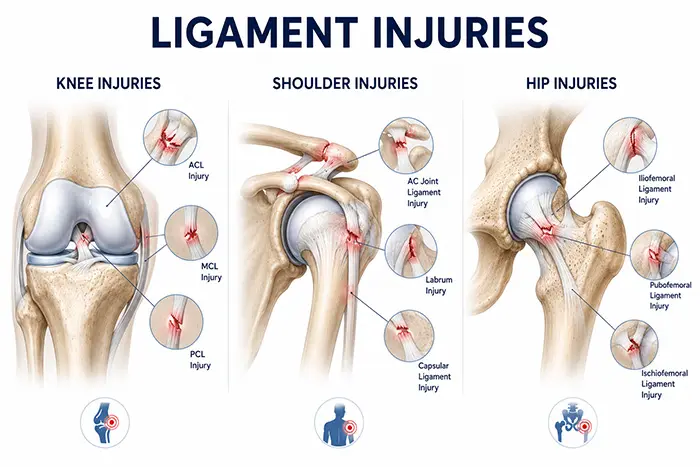
Ligament Injuries (Including ACL Tears)

An ACL (anterior cruciate ligament) tear is one of the more common sports-related knee injuries, especially in athletes who play football, basketball, or pivot-heavy sports. Patients often report a "pop" sensation at the time of injury, followed by swelling and a feeling that the knee is "giving way." ACL reconstruction is generally recommended for active individuals who want to return to sport or physically demanding work.

Ligament Injuries - Knee, Shoulder & Hip Injuries

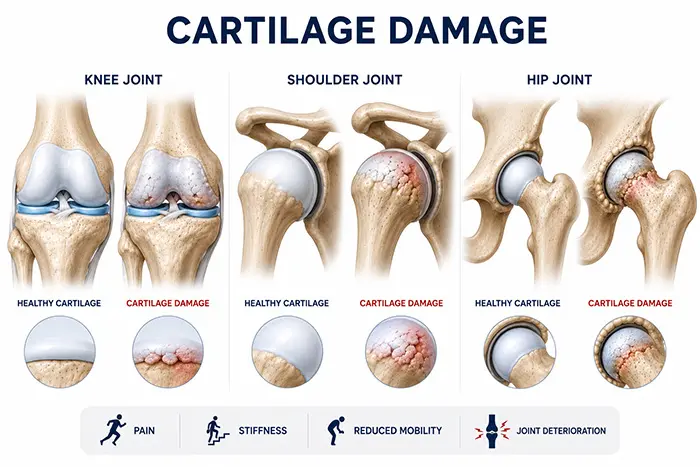
Cartilage Damage - Knee, Shoulder, Hip Damage

Cartilage Damage

Cartilage injuries can occur from trauma or gradual degeneration and often cause clicking, locking, or catching sensations in the joint. Depending on severity, treatment options range from physiotherapy to arthroscopic cartilage repair procedures.

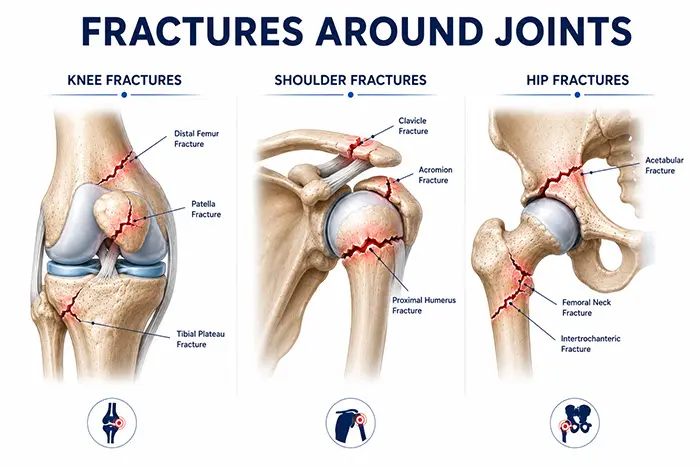
Fractures

Fractures around joints particularly in the hip, shoulder, or knee region require careful assessment, since improper healing can affect long-term joint function. Treatment depends on fracture pattern, age, and bone quality, and may involve fixation, casting, or in some cases joint replacement if the fracture is severe.

Fractures around joints - Knee, Shoulder, Hip Fractures

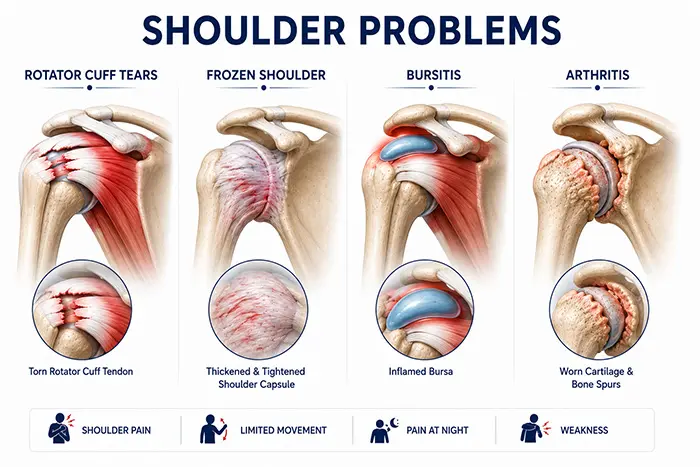
Shoulder Problems - rotator cuff tears, frozen shoulder, bursitis, arthritis

Shoulder Problems

Shoulder pain can stem from rotator cuff tears, frozen shoulder, instability, or arthritis. Common symptoms include difficulty lifting the arm overhead, night pain, and weakness during everyday tasks like reaching or lifting. Treatment ranges from physiotherapy and injections to arthroscopic repair or, in advanced arthritis, shoulder replacement.

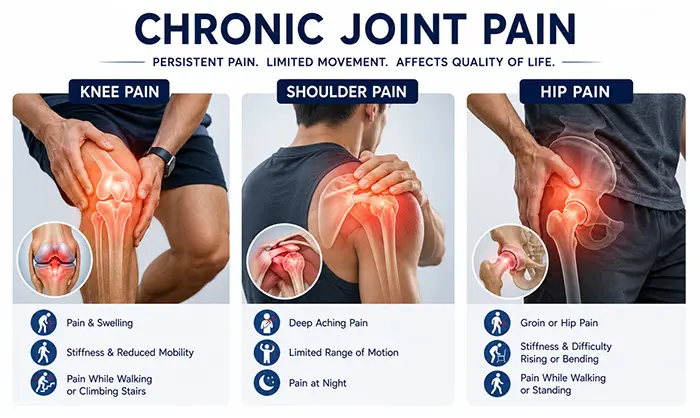
Chronic Joint Pain

When joint pain persists for months despite rest and basic care, it usually signals an underlying structural issue that needs proper diagnostic evaluation rather than continued self-management.

Chronic Joint Pain - knee, shoulder, hip pain


Joint Replacement Specialist in Breach Candy Hospital, Mumbai

For patients with advanced arthritis or joint damage that no longer responds to conservative treatment, joint replacement surgery is often the most effective long-term solution. Dr. Rajani's practice at Breach Candy Hospital includes a full spectrum of joint replacement procedures.

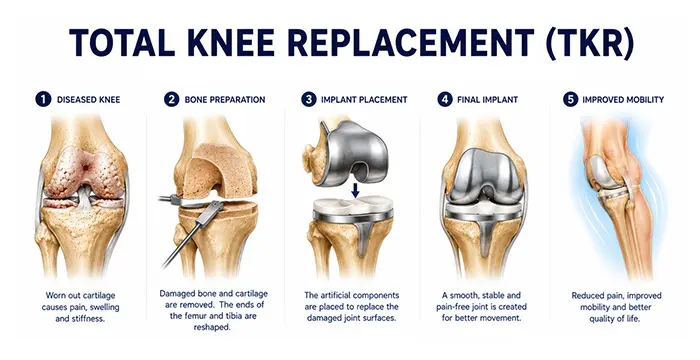
Total Knee Replacement (TKR)

In a total knee replacement, the damaged cartilage and bone surfaces of the knee are resurfaced with an artificial implant. This is typically considered when arthritis has progressed to the point where pain significantly limits walking, sleeping, or daily function, and non-surgical treatments no longer provide relief.

Total Knee Replacement (TKR)

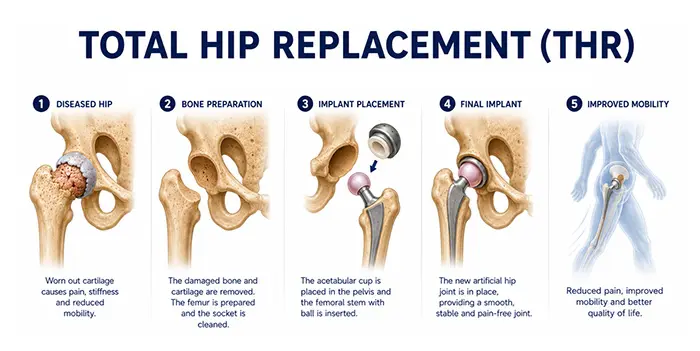
Total Hip Replacement (THR)

Total Hip Replacement (THR)

Total hip replacement involves replacing the damaged hip joint with an artificial implant designed to restore smooth, pain-free movement. It is generally recommended for patients with advanced hip arthritis, avascular necrosis, or certain hip fractures where the joint cannot be adequately repaired.

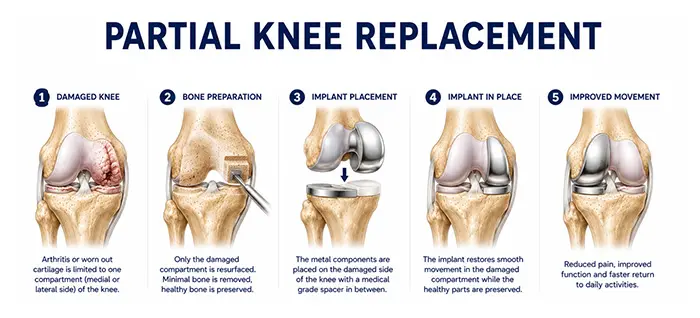
Partial Knee Replacement

When arthritis is limited to only one compartment of the knee rather than the entire joint, a partial (unicompartmental) knee replacement may be appropriate. This approach preserves more of the patient's natural knee structure and, in suitable candidates, can offer a comparatively quicker recovery than total knee replacement.

Partial Knee Replacement

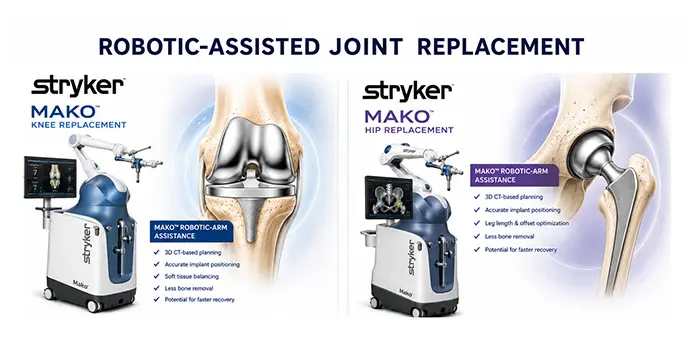
Robotic Assisted Joint Replacement

Robotic-Assisted Joint Replacement

Robotic-assisted systems allow for highly precise bone resurfacing and implant alignment based on each patient's unique anatomy. The technology assists the surgeon in planning and executing the procedure with greater accuracy, which can contribute to better implant positioning. The surgeon, not the robot, performs and controls the surgery at every step.

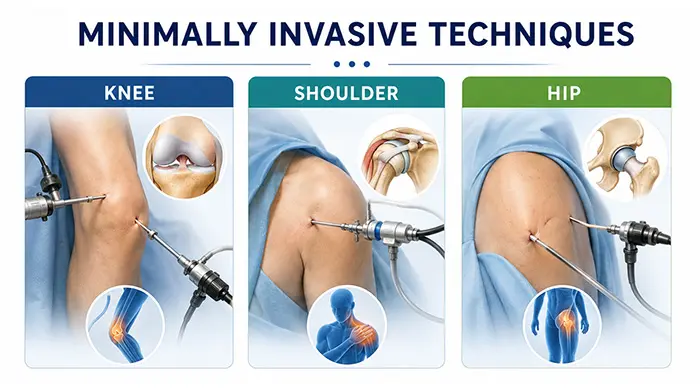
Minimally Invasive Techniques

Where clinically appropriate, minimally invasive approaches use smaller incisions and tissue-sparing techniques, which may help reduce post-operative discomfort and support a smoother early recovery though suitability depends on the individual patient's anatomy and condition.

Minimally Invasive Techniques - knee, shoulder, hip

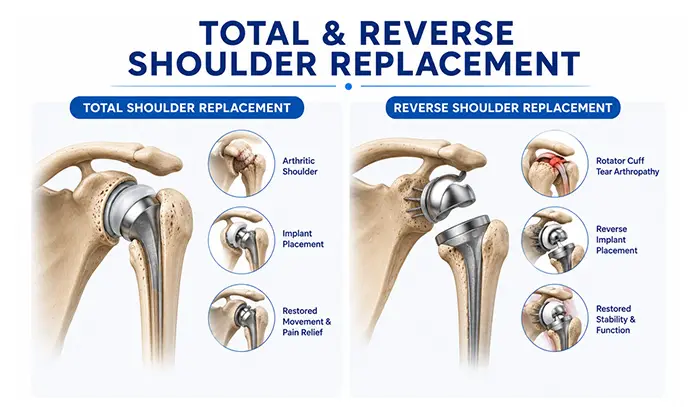
Total & Reverse Shoulder Replacement

Total & Reverse Shoulder Replacement

Shoulder replacement involves resurfacing or replacing the damaged ball-and-socket joint with an artificial implant. A total shoulder replacement is generally suited to patients with advanced shoulder arthritis whose rotator cuff tendons are still intact, since the procedure relies on those tendons for normal joint mechanics.

A reverse shoulder replacement changes the geometry of the joint; the ball and socket positions are reversed to allow the shoulder's larger deltoid muscle to compensate for the affected area. This option is typically considered for patients with a combination of advanced arthritis and significant rotator cuff damage, or for certain complex fracture patterns, where a conventional total shoulder replacement would not function well.

Both procedures aim to relieve pain and restore functional shoulder movement, with the choice between them guided by the condition of the rotator cuff and the specific pattern of joint damage seen on imaging.

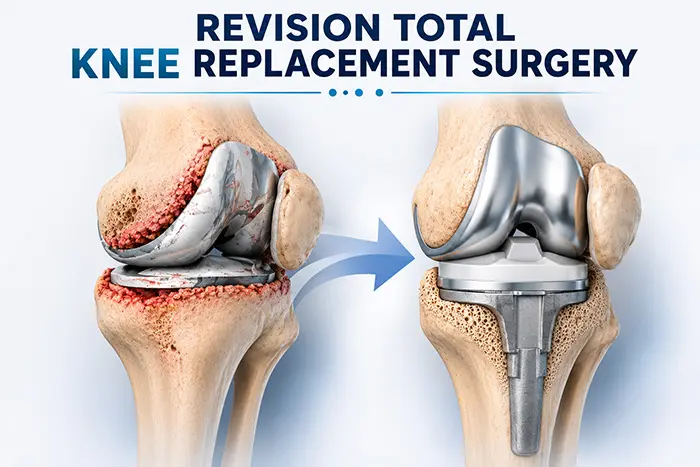
Revision Joint Replacement Surgery

Revision joint surgery is performed when a previous joint replacement has worn out, loosened, or developed complications over time. These are technically more complex procedures that require specialized experience in managing altered anatomy and existing implant hardware.

Revision Total Knee Replacement Surgery

Procedure
Best Suited For
Typical Hospital Stay
Key Consideration
Total Knee Replacement
Advanced, whole-joint knee arthritis
Varies by patient
Resurfaces entire knee joint
Partial Knee Replacement
Arthritis limited to one knee compartment
Often shorter than TKR
Preserves more natural knee structure
Total Hip Replacement
Advanced hip arthritis, certain fractures
Varies by patient
Restores hip joint movement
Total Shoulder Replacement
Shoulder arthritis with intact rotator cuff
Varies by patient
Resurfaces ball-and-socket joint
Reverse Shoulder Replacement
Arthritis with rotator cuff damage, complex fractures
Varies by patient
Uses deltoid muscle to power movement
Robotic-Assisted Replacement
Patients seeking high precision alignment
Similar to conventional surgery
Surgeon-controlled, robot-assisted planning
Revision Replacement
Failed or worn previous implants
Generally longer
Technically complex, individualized approach
Note: Hospital stay duration and recovery timelines vary by patient and are determined after individual clinical evaluation.

needs joint replacement

Who Needs Joint Replacement?

Joint replacement is generally considered for patients who experience persistent pain, stiffness, or loss of function that interferes with daily activities, sleep, or mobility and who have not found lasting relief through physiotherapy, medication, or lifestyle changes. The decision is never based on age or X-ray findings alone; it depends on how significantly the joint is affecting quality of life.

should surgery considered

When Should Surgery Be Considered?

Surgery is typically discussed when conservative treatments rest, physiotherapy, weight management, and medication no longer control symptoms, and when imaging confirms significant joint damage. This is a decision made jointly between patient and surgeon after a thorough evaluation, not a default first step.

Recovery Process Like

What is the Recovery Process Like?

Recovery after joint replacement generally involves an initial hospital stay, followed by a structured physiotherapy program to rebuild strength and range of motion. Most patients progress from assisted walking to independent mobility over the following weeks, with continued improvement over several months. Exact recovery timelines vary based on the procedure performed, the patient's overall health, and adherence to the rehabilitation plan.

Advanced Orthopaedic Treatments Offered

Not every orthopaedic problem requires surgery. Dr. Rajani's approach typically starts
with the least invasive effective option and escalates only when necessary.

Non surgical treatments

Non-surgical treatments :
physiotherapy, activity modification, bracing, and medication for early-stage joint conditions
Arthroscopy iconArthroscopy:
minimally invasive, camera-guided surgery used to diagnose and treat joint problems through small incisions

Sports injury managementSports injury management:
evaluation and treatment of ligament, tendon, and cartilage injuries in athletes and active individuals

Fracture careFracture care:
assessment and treatment of fractures involving major joints
Rehabilitation guidanceRehabilitation guidance:
structured post-treatment physiotherapy planning to support functional recovery

Personalized treatment planningPersonalized treatment planning:
diagnosis and treatment decisions based on each patient's anatomy, activity level, and health status

Why Choose an Orthopaedic Specialist in Breach Candy Hospital, Mumbai?

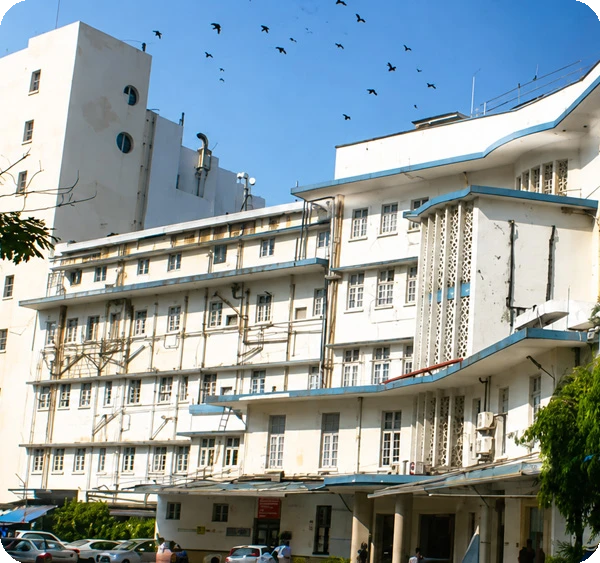
Breach Candy Hospital is one of South Mumbai's well-established healthcare institutions, known for its diagnostic infrastructure and surgical facilities. Choosing an orthopaedic specialist in Breach Candy Hospital Mumbai offers several practical advantages:

Experienced specialists
Experienced specialists who can accurately distinguish between conditions with overlapping symptoms

Established medical
Established medical infrastructure, including imaging and post-operative care facilities

Personalized care
Personalized care, with treatment plans built around the individual rather than standardized protocols

Accurate diagnosis
Accurate diagnosis, which is the foundation of effective orthopaedic treatment

Modern surgical techniques
Modern surgical techniques, including robotic-assisted and minimally invasive options where appropriate

Every patient's anatomy, bone density, and lifestyle needs are different. The right treatment plan is one built specifically around your evaluation, not a generic recommendation.

The Patient Journey: What to Expect

Consultation DiagnosisConsultation and Diagnosis:
A detailed discussion of your symptoms, medical history, and a physical examination to understand the nature of your condition.

Imaging EvaluationImaging and Evaluation:
X-rays, MRI, or other diagnostic tests as needed to assess the extent of joint damage or injury.

Personalized TreatmentPersonalized Treatment Planning:
A treatment recommendation based on your specific diagnosis, age, activity level, and overall health ranging from conservative management to surgical intervention.

SurgeryifSurgery (If Required):
If surgery is the appropriate course of action, the procedure is planned and explained in detail, including expected outcomes and risks.

Recovery RehabilitationRecovery and Rehabilitation:
A structured physiotherapy and rehabilitation program designed to support strength, mobility, and a safe return to daily activities.

Long Term Follow UpLong-Term Follow-Up Care:
Ongoing monitoring to track healing progress and address any concerns as you return to normal function.

key takeway img

Key Takeaways

  • Dr. Amyn Rajani is an orthopaedic surgeon and joint replacement specialist practicing at Breach Candy Hospital, Mumbai, with over 20 years of experience.
  • He holds an M.S. in Orthopaedics (Gold Medallist) from the University of Mumbai and trained at Sion and KEM Hospitals.
  • His areas of expertise include robotic knee and hip replacement, shoulder replacement, arthroscopy, ACL reconstruction, and sports injury treatment.
  • Treatment recommendations - surgical or non-surgical are based on individual evaluation, not a standard protocol.
  • Patients can consult him at Breach Candy Hospital, P. D. Hinduja Hospital (Khar), Saifee Hospital, or at OAKS Clinic in Gamdevi, South Mumbai.

Ready to Take the Next Step?

If joint pain, stiffness, or a sports injury is affecting your daily life, the first step is an accurate diagnosis. Schedule a consultation with Dr. Amyn Rajani to understand your treatment options and receive personalized orthopaedic care suited to your condition and lifestyle.

FAQs

Dr. Amyn Rajani is a widely consulted orthopaedic surgeon at Breach Candy Hospital, with over 20 years of experience in joint replacement, arthroscopy, and sports injury treatment. He holds an M.S. in Orthopaedics (Gold Medallist) from the University of Mumbai.

Dr. Amyn Rajani specializes in robotic total and partial knee replacement, total hip replacement, and revision joint replacement surgery, and practices at Breach Candy Hospital among other Mumbai institutions.

Knee replacement is typically considered when arthritis pain significantly limits daily activities and does not improve with physiotherapy, medication, or lifestyle changes. A clinical evaluation and imaging are needed to confirm suitability.

Recovery varies by patient, but generally involves an initial hospital stay followed by weeks of structured physiotherapy to rebuild strength and mobility, with continued improvement over several months.

Robotic-assisted knee replacement allows for precise, patient-specific implant planning and alignment, with the surgeon controlling the procedure throughout. This precision may contribute to better implant positioning, though outcomes depend on individual factors.

Look for a surgeon's qualifications, years of focused experience, hospital affiliations, and area of specialization relevant to your condition. A consultation to discuss your specific diagnosis is the best way to evaluate fit.

Arthritis treatment ranges from physiotherapy, weight management, and medication in early stages to partial or total joint replacement surgery in advanced cases, depending on severity and impact on daily life.

Total knee replacement resurfaces the entire knee joint, while partial knee replacement treats only the damaged compartment, preserving more natural knee structure in suitable candidates.

Robotic-assisted surgery offers enhanced precision in implant planning and positioning, but it is performed and controlled by the surgeon. Safety and outcomes depend on the individual patient's condition and overall health.

Orthopaedic surgeons treat conditions affecting bones, joints, ligaments, and tendons, including arthritis, fractures, ligament tears, cartilage damage, and sports injuries.

ACL injuries are evaluated through clinical examination and MRI. Treatment may involve physiotherapy for partial tears or ACL reconstruction surgery for complete tears, particularly in active individuals.

Arthroscopy is a minimally invasive procedure using a small camera to diagnose and treat joint problems such as ligament tears, cartilage damage, and certain shoulder conditions through small incisions.

Shoulder replacement is generally considered for advanced shoulder arthritis or severe joint damage when pain and limited movement persist despite conservative treatment.

Total shoulder replacement is typically used when the rotator cuff is intact, while reverse shoulder replacement changes the joint's mechanics to rely on the deltoid muscle, making it suitable for patients with significant rotator cuff damage alongside arthritis.

Revision surgery replaces a previous joint implant that has worn out, loosened, or developed complications. It is a more complex procedure requiring specialized surgical experience.

Dr. Amyn Rajani practices at Breach Candy Hospital, P. D. Hinduja Hospital (Khar), and Saifee Hospital, in addition to his private practice, OAKS Clinic, in Gamdevi, South Mumbai.

You can schedule a consultation through OAKS Clinic or by contacting Dr. Rajani's team directly via the appointment booking page on this website.