

Clinical Areas of Focus
-
- Knee, shoulder and hip replacement surgery, including robotic-assisted techniques
-
- Total and reverse shoulder replacement
-
- Arthritis management - both surgical and non-surgical
-
- Sports injury treatment, including ligament and cartilage injuries
-
- Fracture management around major joints
- Fracture management around major joints
-
- Arthroscopic surgery for knee and shoulder conditions
- Arthroscopic surgery for knee and shoulder conditions
-
- Personalized, evidence-based treatment planning

Why Choose Dr. Amyn Rajani?
-
- Extensive orthopaedic experience spanning more than two decades of clinical practice
-
- Expertise in joint replacement procedures, including knee, hip, and shoulder replacement
-
- Comprehensive diagnosis and treatment planning based on individual clinical findings
-
- Individualized care for every patient, rather than standardized treatment protocols
-
- Advanced surgical and non-surgical treatment options, informed by international training
-
- Focus on mobility, pain relief, and improved quality of life as the measure of successful treatment
Knee Conditions
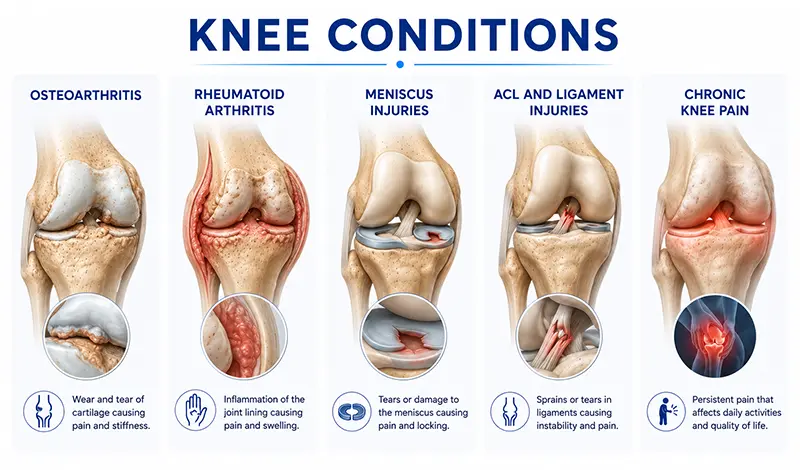 Osteoarthritis develops as knee cartilage wears down over time, causing stiffness, swelling, and a grinding sensation during movement. Diagnosis relies on clinical examination and X-rays, with treatment typically beginning conservatively - physiotherapy, weight management, and medication and progressing to surgical options only if symptoms remain disabling.
Rheumatoid arthritis is an autoimmune condition causing joint inflammation, often in both knees simultaneously, with prolonged morning stiffness as a hallmark symptom. Orthopaedic care for rheumatoid arthritis typically works alongside rheumatology management to address joint-specific damage.
Meniscus injuries commonly result from a twisting movement and cause pain along the joint line, swelling, and a catching or locking sensation. MRI confirms the diagnosis, and treatment ranges from physiotherapy to arthroscopic repair depending on the tear's location and pattern.
ACL and ligament injuries often occur during sports activity, marked by a sudden "pop," swelling, and a feeling of knee instability. Depending on the severity and the patient's activity level, treatment can range from structured rehabilitation to ACL reconstruction surgery.
Chronic knee pain without a clear injury history often indicates gradual degenerative change and is worth evaluating before it limits daily function further.
Shoulder Conditions
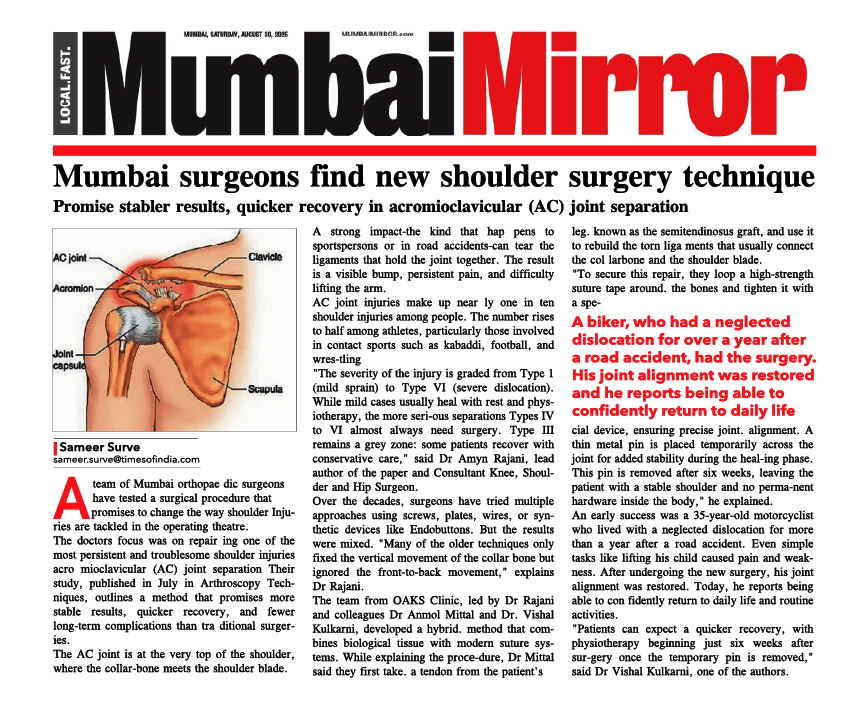
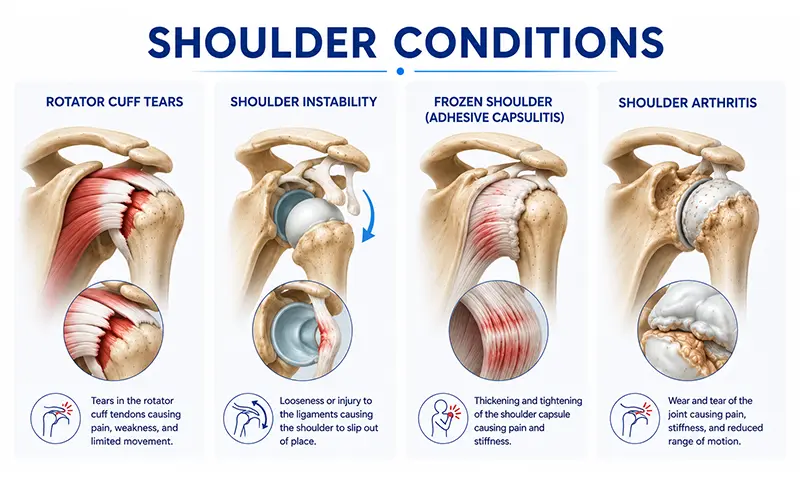 Rotator cuff tears cause pain during overhead movement, night pain that disrupts sleep, and weakness when lifting or reaching. Smaller, partial tears may respond to physiotherapy, while larger or full-thickness tears are often treated with arthroscopic repair.
Shoulder instability, where the joint repeatedly slips or dislocates, is common in younger, active patients following an initial dislocation injury. Diagnosis is confirmed with MRI, and treatment ranges from physiotherapy and activity modification to arthroscopic stabilization surgery for recurrent cases.
Frozen shoulder (adhesive capsulitis) causes progressive stiffness and pain that gradually restricts shoulder movement, often without a clear preceding injury. Most cases improve with physiotherapy, anti-inflammatory treatment, and time, though severe or persistent cases may need further intervention.
Shoulder arthritis causes deep, aching joint pain and progressive stiffness, particularly with overhead activity. Early-stage arthritis is managed conservatively, while advanced cases with significant pain and functional limitation may be evaluated for shoulder replacement.
Hip Conditions
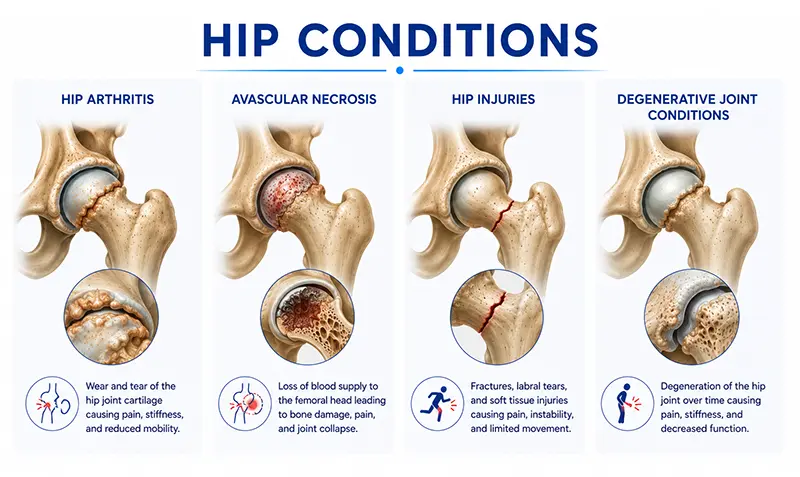
Hip arthritis typically presents as groin pain radiating to the thigh or knee, along with stiffness and a noticeable limp during longer walks. Management depends on severity, ranging from activity modification to total hip replacement in advanced cases.
Avascular necrosis occurs when the blood supply to the hip bone is disrupted, gradually weakening the bone and, if untreated, leading to joint collapse. Early diagnosis through MRI is important, since symptoms can initially be mild and intermittent.
Hip injuries, including fractures, require prompt assessment particularly in older adults, where hip fractures can significantly impact long-term mobility if not treated appropriately and promptly.
Degenerative joint conditions of the hip develop gradually and are typically managed with a staged approach, starting with conservative care before considering surgical intervention.
Sports & Orthopaedic Injuries
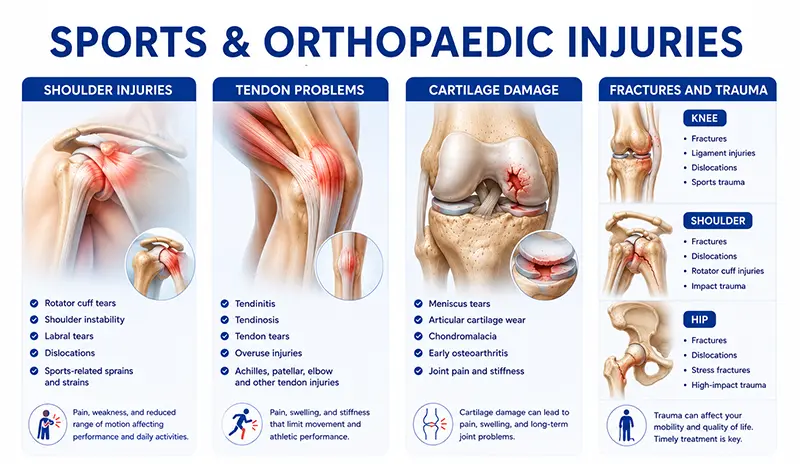 Shoulder injuries, including rotator cuff tears and instability, often cause pain during overhead activity, night discomfort, and weakness while lifting. Diagnosis combines physical examination with MRI, and treatment ranges from physiotherapy to arthroscopic repair.
Tendon problems, such as tendinitis, usually develop from repetitive strain or overuse and are generally managed with activity modification, physiotherapy, and targeted treatment.
Cartilage damage can cause clicking, locking, or catching sensations within a joint and is evaluated through MRI, with treatment depending on the extent and location of the damage.
Fractures and trauma involving joints require careful evaluation, since improper healing can affect long-term function. Treatment depends on the fracture pattern, the patient's bone quality, and age, ranging from fixation to joint replacement in severe cases.
Joint Replacement Surgery
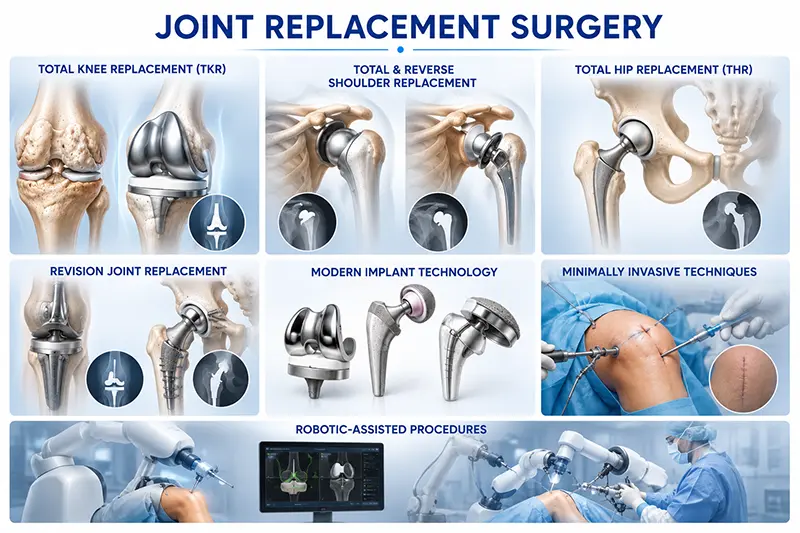
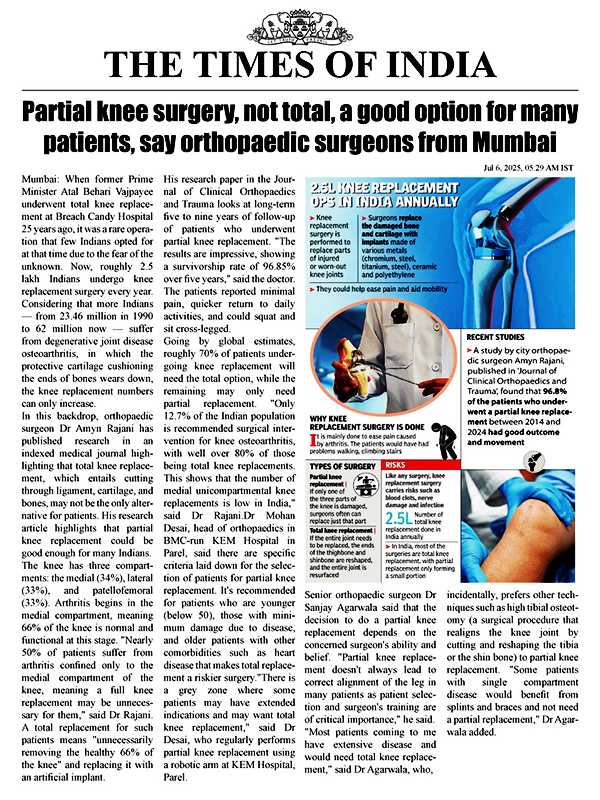
Total Knee Replacement (TKR) resurfaces the damaged cartilage and bone of the knee joint with an artificial implant and is generally considered when arthritis significantly limits daily activity despite conservative treatment.
Total & Reverse Shoulder Replacement addresses advanced shoulder arthritis or significant joint damage that no longer responds to conservative treatment. A total shoulder replacement resurfaces the joint in its normal anatomy and is generally suited to patients with an intact rotator cuff. A reverse shoulder replacement repositions the ball-and-socket mechanics so the deltoid muscle compensates for the joint, making it appropriate for patients with arthritis combined with significant rotator cuff damage, or for certain complex shoulder fractures.
Total Hip Replacement (THR) replaces the damaged hip joint with an artificial implant and is typically recommended for advanced hip arthritis, avascular necrosis, or certain hip fractures.
Revision joint replacement is performed when a previous implant has worn out, loosened, or developed complications, requiring specialized surgical experience due to altered anatomy and existing hardware.
Modern implant technology focuses on durability and a closer match to natural joint movement, with implant selection based on individual patient factors.
Minimally invasive techniques, where clinically appropriate, use smaller incisions and tissue-sparing approaches that may support a more comfortable early recovery.
Robotic-assisted procedures, used where appropriate, allow for precise, patient-specific surgical planning and implant alignment, with the surgeon directing the procedure at every step.
Arthroscopy & Sports Injury Care
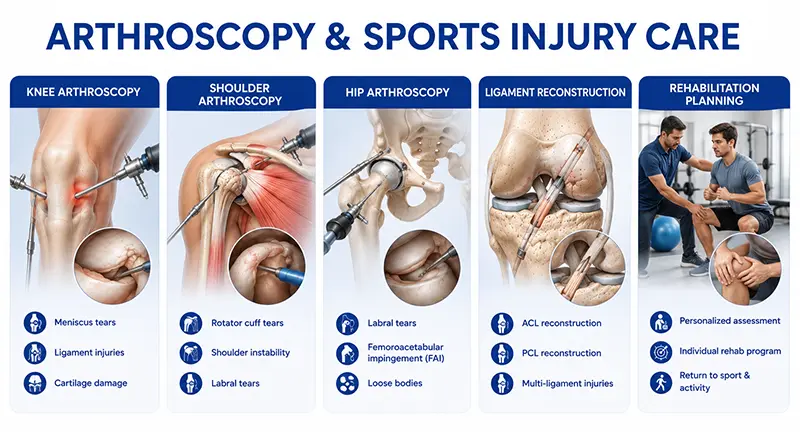
- Knee arthroscopy: a minimally invasive, camera-guided procedure used to diagnose and treat meniscus tears, ligament injuries, and cartilage damage
- Shoulder arthroscopy: used to evaluate and repair rotator cuff tears, labral injuries, and shoulder instability through small incisions
- Hip arthroscopy: a minimally invasive surgical procedure where a surgeon inserts a small, camera-equipped instrument (arthroscope) through tiny incisions to diagnose and treat joint problems inside the hip. It is primarily used to repair labral tears and treat conditions like femoroacetabular impingement (FAI).
- Ligament reconstruction: surgical reconstruction of torn ligaments, such as the ACL, particularly for patients aiming to return to sport or physically demanding activity
- Rehabilitation planning: structured, condition-specific physiotherapy programs designed to support a safe return to function after arthroscopic procedures
Non-Surgical Orthopaedic Care
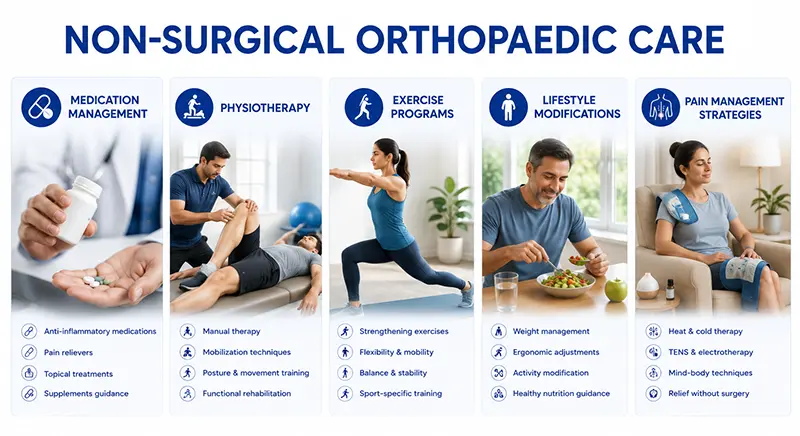
Many orthopaedic conditions, especially in earlier stages, are managed effectively without surgery:
- Medication management: anti-inflammatory and pain-relief medication to control symptoms during treatment
- Physiotherapy: targeted exercises to strengthen muscles supporting the affected joint
- Exercise programs: structured routines designed to maintain mobility without overloading the joint
- Lifestyle modifications: weight management and activity adjustments to reduce joint stress
- Pain management strategies: a tailored combination of approaches based on the specific condition and severity
Surgery is recommended only after a proper medical assessment confirms that conservative treatment is unlikely to provide adequate relief, or that structural joint damage requires surgical correction.

Importance of choosing an experienced orthopaedic doctor:
accurate diagnosis depends heavily on clinical experience, particularly for conditions with overlapping symptoms
 Detailed clinical evaluation:
a thorough history and physical examination form the foundation of any sound treatment plan
 Access to modern diagnostic facilities:
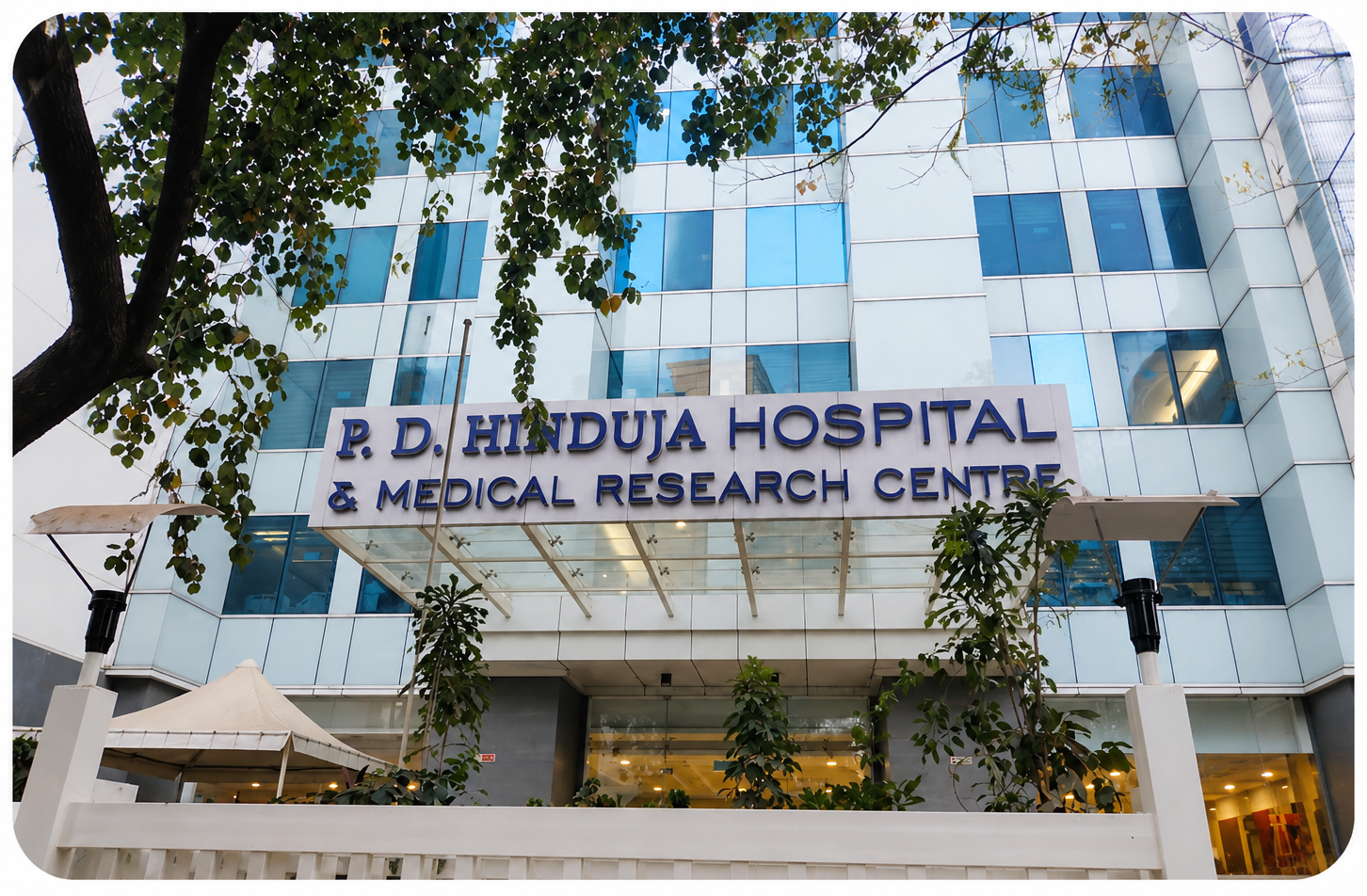
Hinduja Hospital, Khar provides the imaging and diagnostic infrastructure needed for comprehensive orthopaedic assessment
 Personalized treatment approach:
recommendations based on the individual patient rather than a generic protocol
 Long-term follow-up and rehabilitation:
orthopaedic care continues well beyond the initial procedure, with structured follow-up supporting lasting results

Initial Consultation:
Discussing your symptoms, medical history, and concerns in detail.

Physical Examination:
A hands-on assessment of joint movement, stability, and pain triggers.
Diagnostic Tests and Imaging:
X-rays, MRI, or other relevant tests to confirm the diagnosis.

Personalized Treatment Planning:
A clear discussion of suitable options, from conservative management to surgery, based on your findings.

Surgery (If Required):
If indicated, the procedure, expected recovery, and risks are explained in detail beforehand.
Post-Operative Rehabilitation:
A structured physiotherapy program to restore strength and mobility.
Follow-Up Care and Recovery:
Ongoing monitoring to track healing and address any concerns as they arise.