

Best Orthopaedic
Doctor in Saifee Hospital
Mumbai – Dr. Amyn Rajani

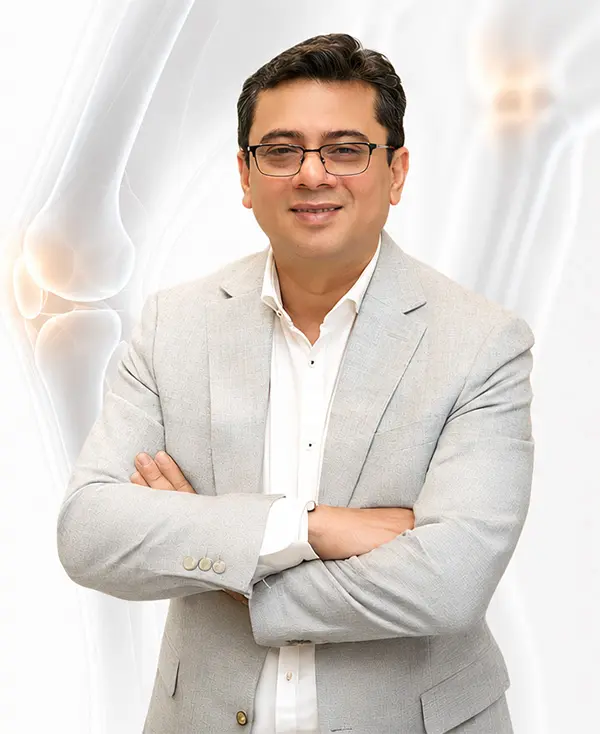
Dr. Amyn Rajani is an orthopaedic surgeon and joint replacement specialist practicing at Saifee Hospital, Mumbai. A Gold Medallist in Orthopaedics from the University of Mumbai with over 20 years of experience, he specializes in robotic knee and hip replacement, shoulder surgery, arthroscopy, and sports injury treatment. He trained at Sion and KEM Hospitals and received advanced surgical training in the UK, Canada, Germany, Australia, and Singapore. Patients seeking an experienced orthopedic doctor in Saifee Hospital consult him for personalized, evidence-based joint and orthopaedic care.

Dr. Amyn Rajani

Choosing an Orthopedic Doctor
in Saifee Hospital, Mumbai

Persistent knee pain, a stiff hip, or a sports injury that won't heal can change the rhythm of daily life. Stairs become harder, sleep gets disrupted, and activities you once enjoyed start to feel out of reach. When orthopaedic problems reach this point, the experience and judgment of the surgeon treating you plays a central role in the outcome.

Patients searching for a best orthopedic doctor in Saifee Hospital often look for a specialist who combines strong surgical credentials with a genuinely individualized approach to care. Dr. Amyn Rajani, an orthopaedic surgeon in Saifee Hospital Mumbai, brings over two decades of focused clinical experience in joint replacement, arthroscopy, and sports injury management to his practice.

This page walks through his background, the conditions he treats, his approach to joint replacement surgery, and what patients can expect from consultation through recovery.

Saifee-Hospital

About Dr. Amyn Rajani – Orthopaedic Surgeon in Saifee Hospital Mumbai

Dr. Amyn Rajani is the Chief Surgeon and Director of OAKS Clinic and practices across several of Mumbai's established hospitals, including Saifee Hospital, Breach Candy Hospital, and P. D. Hinduja Hospital, Khar. He completed his M.S. in Orthopaedics as a Gold Medallist from the University of Mumbai, with his foundational surgical training at Sion Hospital and KEM Hospital, two of Mumbai's busiest public teaching institutions, known for producing surgeons with broad hands-on experience.

Beyond his training in India, Dr. Rajani has pursued advanced orthopaedic training abroad, including in the UK, Canada, Germany, Australia, and Singapore, with a particular focus on robotic and minimally invasive joint replacement techniques. He has also been recognized in the India Book of Records for a notable bilateral partial knee replacement procedure.

Dr. Amyn Rajani

Dr. Amyn Rajani

His clinical focus spans:

    • Robotic Total & Partial Knee Replacement
    • Total Hip Replacement
    • Total & Reverse Shoulder Replacement
    • Knee, Shoulder & Hip Arthroscopy
    • ACL Reconstruction
    • Rotator Cuff Repair
    • Sports Injury Treatment
    • Revision Joint Replacement Surgery

What distinguishes his approach is not just surgical skill, but how treatment decisions are made each patient is assessed individually, with surgery considered only when it is the most appropriate option, not the default one.

Dr. Amyn Rajani

Why Choose Dr. Amyn Rajani?

    • Experienced orthopaedic and joint replacement specialist with over 20 years in practice
    • Advanced treatment approach, incorporating internationally trained surgical techniques
    • Comprehensive patient assessment before any treatment recommendation
    • Individualized surgical and non-surgical treatment plans tailored to each patient's condition and lifestyle
    • Focus on long-term mobility and quality of life, not just the immediate procedure
Note: Treatment outcomes depend on individual diagnosis, bone health, age, and overall medical condition. The information on this page is educational and does not replace a personal medical consultation.

Orthopaedic Conditions Treated

Knee Disorders

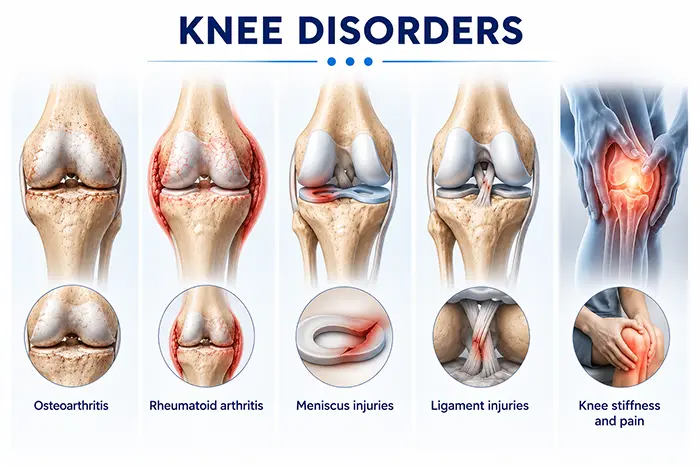
Knee DisorderOsteoarthritis is the gradual wearing down of knee cartilage, leading to stiffness, swelling, and a grinding sensation, especially after periods of activity or first thing in the morning. It's diagnosed through clinical examination and X-rays, and managed with a stepwise approach starting with physiotherapy and weight management, progressing to injections or surgery if needed.

Rheumatoid arthritis is an autoimmune condition that causes joint inflammation, often affecting both knees symmetrically, along with morning stiffness lasting beyond 30 minutes. It typically requires a combined approach involving rheumatology management alongside orthopaedic care for joint-specific symptoms.

Meniscus injuries usually result from a twisting motion and present as pain along the joint line, swelling, and a sensation of the knee "catching" or "locking." Diagnosis is confirmed with MRI, and treatment ranges from physiotherapy to arthroscopic repair depending on tear pattern and severity.

Ligament injuries, including ACL and MCL tears, often occur during sports and present with sudden pain, swelling, and a feeling of knee instability. Clinical testing combined with MRI helps determine whether the injury can be managed conservatively or requires reconstruction.

Knee stiffness and pain that persists without a specific injury often points to early degenerative changes and warrants evaluation before it progresses further.
Hip Arthritis

Shoulder Disorders

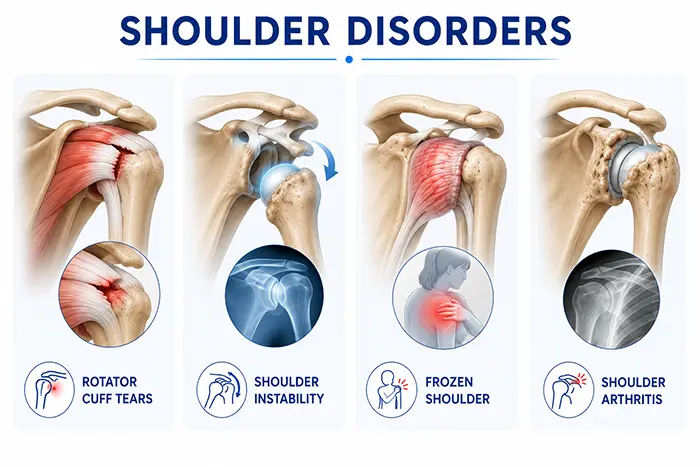
Rotator cuff tears cause pain during overhead movement, night pain that disrupts sleep, and weakness when lifting or reaching. Smaller, partial tears often respond to physiotherapy, while larger or full-thickness tears are typically treated with arthroscopic repair.
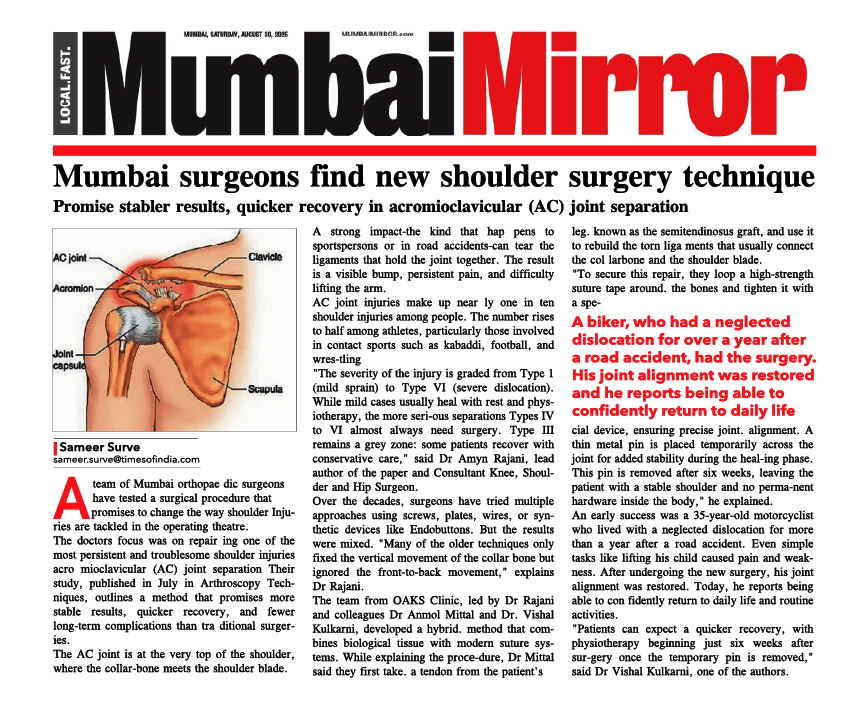
Shoulder instability, where the joint repeatedly slips or dislocates, is most common in younger, active patients following an initial dislocation. Diagnosis is confirmed with MRI, and treatment ranges from physiotherapy and activity modification to arthroscopic stabilization surgery for recurrent cases.
Frozen shoulder (adhesive capsulitis) causes progressive stiffness and pain that gradually limits shoulder movement, often without a clear preceding injury. Most cases improve with physiotherapy, anti-inflammatory treatment, and time.
Shoulder arthritis causes deep, aching joint pain and progressive stiffness, particularly with overhead activity. Early-stage arthritis is managed conservatively, while advanced cases with significant pain and functional limitation may be evaluated for shoulder replacement.

Hip Disorders

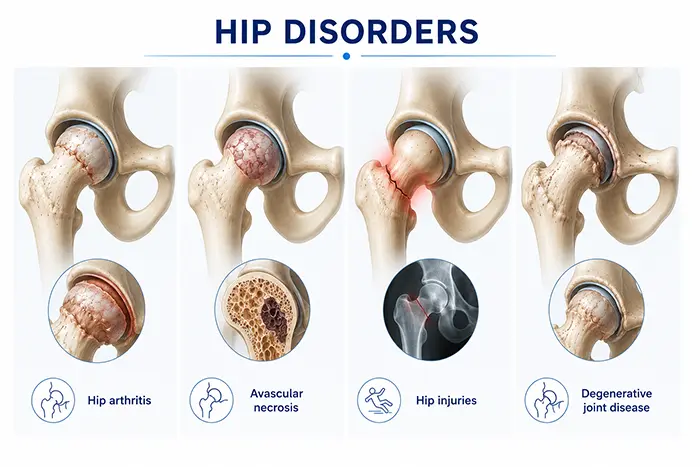
Hip arthritis typically causes groin pain that may radiate to the thigh or knee, along with a noticeable limp and reduced range of motion. It is diagnosed through clinical assessment and imaging, with treatment depending on severity.

Avascular necrosis occurs when blood supply to the hip bone is disrupted, causing bone tissue to weaken and, in some cases, collapse. Early symptoms can be subtle — intermittent groin or hip pain — making early diagnosis through MRI important before significant joint damage occurs.

Hip injuries, including fractures and labral tears, require prompt evaluation, particularly in older patients where hip fractures can significantly affect mobility and independence if not addressed appropriately.

Degenerative joint disease in the hip develops gradually and is managed with a combination of activity modification, physiotherapy, and, when needed, surgical intervention.

Joint Degeneration

Sports-and-Joint-Injuries

Sports and Joint Injuries

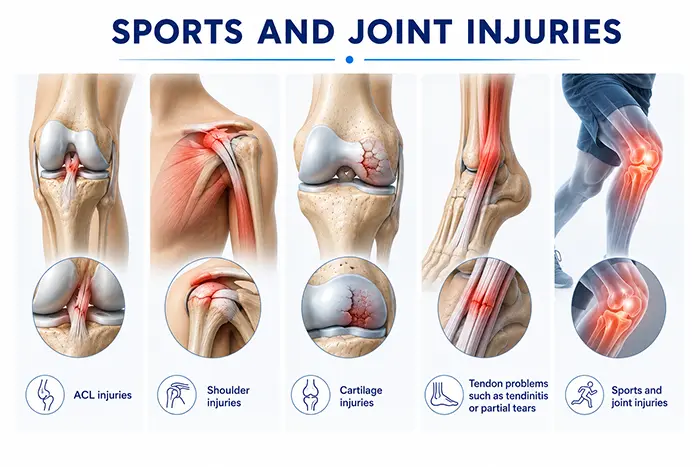
ACL injuries are common among athletes and active individuals, often presenting with a "pop" sensation at the time of injury followed by swelling and instability. Treatment depends on the patient's activity level and the severity of the tear ranging from physiotherapy-based rehabilitation to ACL reconstruction surgery.

Shoulder injuries, including rotator cuff tears and instability, often present as pain during overhead movement, night pain, and weakness when lifting. Diagnosis combines clinical testing with MRI, and treatment ranges from physiotherapy to arthroscopic repair.

Cartilage injuries can cause clicking, locking, or catching sensations within the joint and are evaluated through MRI, with treatment tailored to the size and location of the damage.

Tendon problems, such as tendinitis or partial tears, usually develop from overuse or repetitive strain and are typically managed with activity modification, physiotherapy, and targeted treatment before considering surgical options.


Joint Replacement Specialist in Saifee Hospital Mumbai

Knee Replacement Surgery

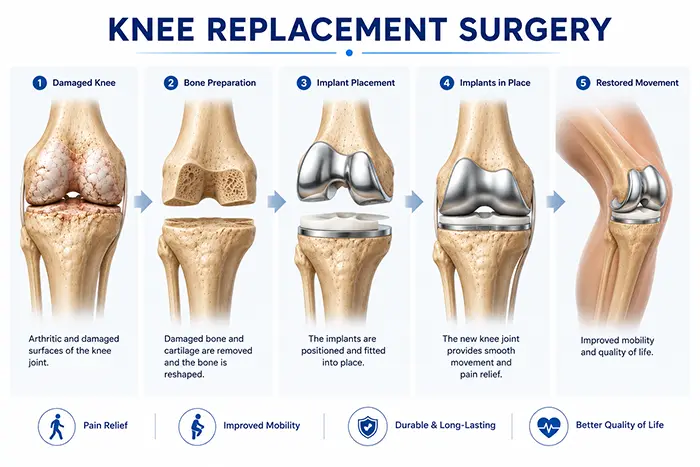
Knee replacement is generally considered when arthritis has progressed to the point where daily activities walking, climbing stairs, even sleeping are significantly affected, and conservative treatments no longer provide adequate relief.

Benefits patients commonly look for include pain relief and improved ability to perform daily activities, though individual results vary based on overall health and adherence to rehabilitation.

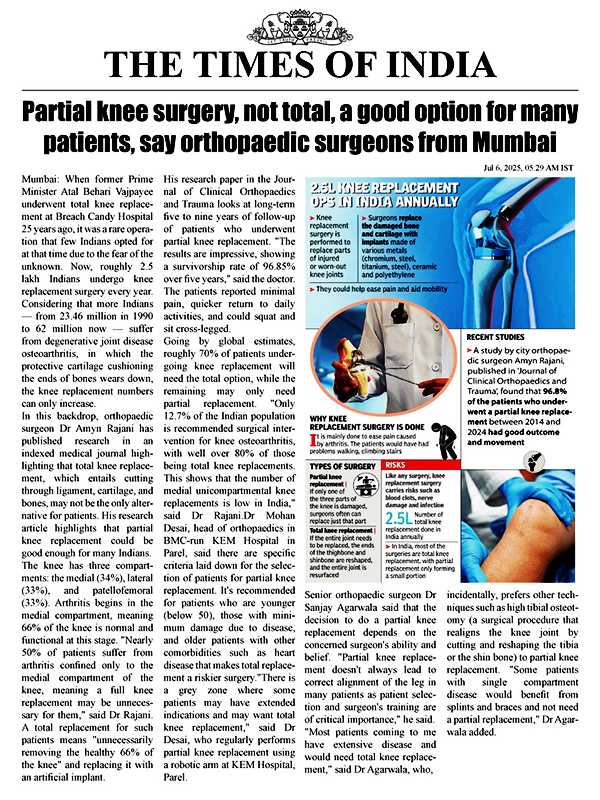
Procedure overview: The damaged cartilage and bone surfaces of the knee joint are resurfaced with an artificial implant designed to restore smoother movement. The specific surgical approach total, partial, or robotic-assisted depends on the extent and location of joint damage.

Recovery expectations: Recovery typically begins with hospital-based physiotherapy focused on regaining movement, followed by a structured rehabilitation program over the following weeks and months. Most patients see gradual, steady improvement in mobility, though full recovery timelines vary by individual.

Knee-Replacement-Surgery

Shoulder-Replacement-Surgery

Shoulder Replacement Surgery

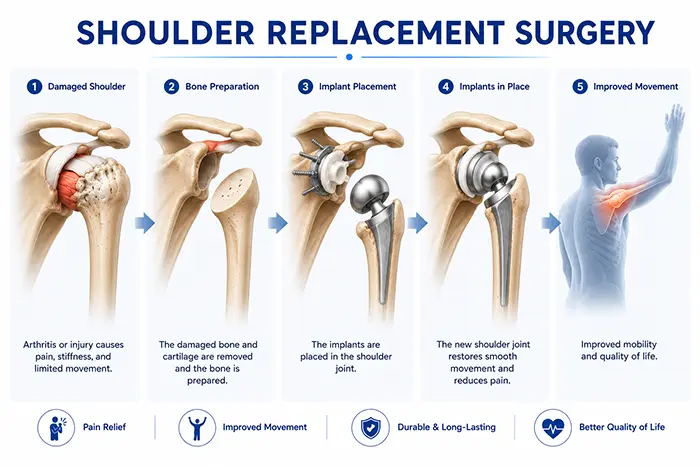
Who may benefit: Patients with advanced shoulder arthritis or significant joint damage that limits arm movement and causes persistent pain, especially when conservative treatment has not provided adequate relief.
Total vs. reverse shoulder replacement: A total shoulder replacement resurfaces the joint in its normal anatomical orientation and is generally suited to patients whose rotator cuff tendons are intact. A reverse shoulder replacement reverses the ball-and-socket positioning, allowing the deltoid muscle to take over much of the joint's function making it a better fit for patients with both arthritis and significant rotator cuff damage, or certain complex shoulder fractures.
Rehabilitation process: Recovery involves a structured physiotherapy program focused on gradually restoring shoulder strength and range of motion, with progress typically monitored over several months.

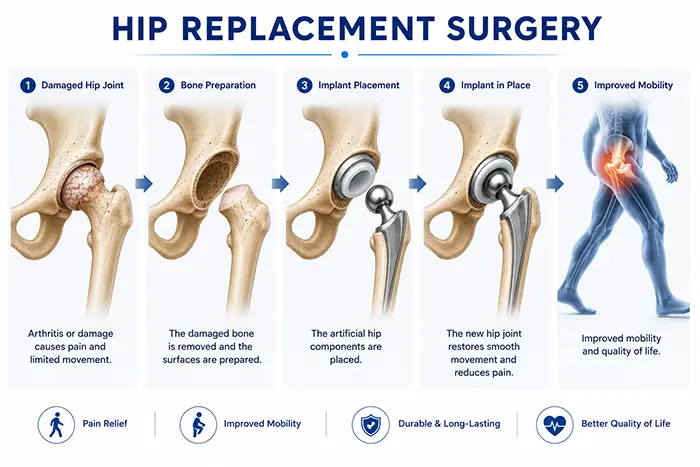
Hip Replacement Surgery

Who may benefit: Patients with advanced hip arthritis, avascular necrosis, or certain hip fractures where the joint cannot be adequately preserved are typically evaluated for hip replacement.

Surgical approach: The damaged hip joint is replaced with an artificial implant, with the specific surgical technique chosen based on the patient's anatomy and the surgeon's assessment.

Rehabilitation process: Post-surgical rehabilitation focuses on restoring walking ability and strength through a progressive physiotherapy program, with most patients transitioning from assisted to independent mobility over the following

Hip-Replacement-Surgery

Advanced-Joint-Replacement-Techniques

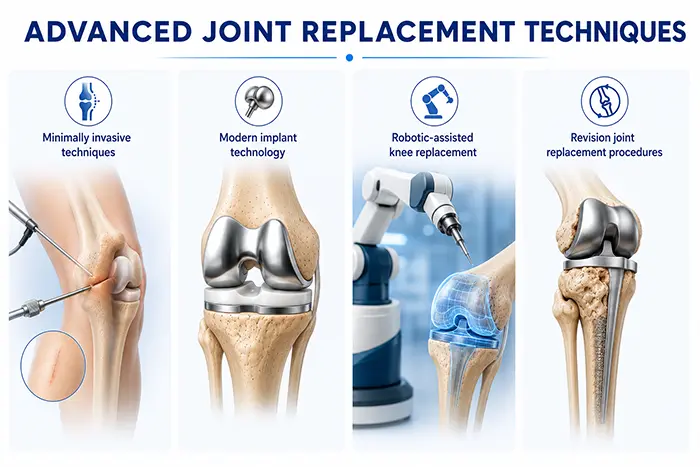
Advanced Joint Replacement Techniques

  • Minimally invasive techniques: smaller incisions and tissue-sparing approaches that, where clinically appropriate, may support a smoother early recovery
  • Modern implant technology: contemporary implant designs aimed at durability and natural joint movement
  • Robotic-assisted knee replacement: used where appropriate to support precise, patient-specific surgical planning and implant alignment, with the surgeon directing the procedure throughout
  • Revision joint replacement procedures: performed when a previous implant has worn out, loosened, or developed complications, requiring specialized experience in managing altered joint anatomy

Treatment Comparison Overview

Treatment Option
Typically Recommended For
Key Feature
Physiotherapy & Medication
Early-stage arthritis or mild joint pain
Non-surgical, first-line approach
Arthroscopy
Ligament, cartilage, or meniscus injuries (knee, hip, shoulder)
Minimally invasive diagnosis and repair
Partial Knee Replacement
Arthritis limited to one knee compartment
Preserves more natural knee structure
Total Knee Replacement
Advanced, whole-joint knee arthritis
Resurfaces the entire knee joint
Total Hip Replacement
Advanced hip arthritis or certain fractures
Restores hip joint movement
Total Shoulder Replacement
Shoulder arthritis with intact rotator cuff
Resurfaces ball-and-socket joint
Reverse Shoulder Replacement
Arthritis with rotator cuff damage, complex fractures
Uses deltoid muscle to power movement
Robotic-Assisted Replacement
Patients seeking precision-guided alignment
Surgeon-controlled, robot-assisted planning
Revision Replacement
Failed or worn previous implants
Technically complex, individualized approach
Note: This table is a general guide. The appropriate treatment for any individual depends on a complete clinical evaluation.

Non-Surgical Orthopaedic Treatments

Surgery is often not the first step in orthopaedic care. Many conditions, particularly in their early stages, respond well to conservative management:

Non surgical treatments

Medications:
anti-inflammatory and pain-relief medications to manage symptoms during active treatment phases
long term rehabilitationPhysiotherapy:
targeted exercises to strengthen supporting muscles and improve joint stability

Sports injury managementLifestyle modification:
weight management and activity adjustments to reduce joint load

Exercise programsExercise programs:
structured, condition-specific routines designed to maintain mobility without aggravating symptoms

Joint preservation treatmentsJoint preservation treatments:
approaches aimed at protecting joint function and potentially delaying the need for surgery

Pain management strategiesPain management strategies:
a combination of approaches tailored to the patient's specific condition and pain levels

When is surgery necessary?

Surgery is generally considered only after conservative treatments have been adequately tried and have failed to provide sufficient relief, or when imaging confirms structural damage severe enough that non-surgical options are unlikely to help. This decision is made collaboratively between patient and surgeon, based on individual evaluation.


Why Choose an Orthopaedic Specialist in Saifee Hospital Mumbai?

Experienced specialists
Experience and expertise:
a surgeon's depth of experience directly affects diagnostic accuracy and surgical outcomes

Established medical
Accurate diagnosis:
many orthopaedic conditions present with overlapping symptoms, making precise diagnosis essential before treatment begins

Personalized care
Personalized treatment plans:
care built around the individual patient rather than a standardized protocol

Accurate diagnosis
Access to advanced facilities:
Saifee Hospital provides the diagnostic and surgical infrastructure needed for comprehensive orthopaedic care

Modern surgical techniques
Continuity of care and follow-up:
recovery doesn't end at discharge; ongoing follow-up is essential to long-term joint health

Patient Treatment Journey

Initial ConsultationInitial Consultation:
A discussion of your symptoms, medical history, and concerns.
clinicalClinical Examination:
A physical assessment of joint movement, stability, and pain patterns.
Diagnostic Tests and ImagingDiagnostic Tests and Imaging:
X-rays, MRI, or other tests as needed to confirm the diagnosis.
Personalized Treatment DiscussionPersonalized Treatment Discussion:
A clear explanation of treatment options, ranging from conservative care to surgery, based on your specific findings.
Surgery If IndicatedSurgery (If Indicated):
If surgery is the appropriate path, the procedure, expected outcomes, and risks are discussed in detail beforehand.

Rehabilitation and RecoveryRehabilitation and Recovery:
A structured physiotherapy program to support healing and restore function.

Long Term Follow Up CareLong-Term Follow-Up Care:
Continued monitoring to ensure lasting joint health and address any concerns as they arise.

key takeway img

Key Takeaways

    • Dr. Amyn Rajani is an orthopaedic surgeon and joint replacement specialist practicing at Saifee Hospital, Mumbai, with over 20 years of clinical experience.
    • He is a Gold Medallist in Orthopaedics from the University of Mumbai and trained at Sion and KEM Hospitals, with additional international training in robotic and minimally invasive techniques.
    • His expertise spans knee and hip replacement, shoulder replacement, arthroscopy, ACL reconstruction, and sports injury management.
    • Treatment is approached in stages starting with conservative options and progressing to surgery only when clinically appropriate.
    • Joint replacement options include total, partial, robotic-assisted, and revision procedures, each suited to different clinical situations.

Take the Next Step Toward Pain-Free Movement

If joint pain or a sports injury is limiting your daily life, an accurate diagnosis is the right place to start. Book a consultation with Dr. Amyn Rajani to receive a detailed evaluation and discuss the most suitable orthopaedic treatment options for your condition.

FAQs

Dr. Amyn Rajani is a widely consulted orthopaedic surgeon practicing at Saifee Hospital, with over 20 years of experience in joint replacement, arthroscopy, and sports injury treatment, and a Gold Medal in Orthopaedics from the University of Mumbai.

Dr. Amyn Rajani specializes in robotic total and partial knee replacement, total hip replacement, shoulder replacement, and revision joint replacement surgery at Saifee Hospital and other affiliated Mumbai hospitals.

Knee replacement is generally considered when arthritis pain significantly limits daily activities and does not respond to physiotherapy, medication, or lifestyle changes, following a confirmed diagnosis through clinical evaluation and imaging.

Recovery varies by patient and procedure, typically involving an initial hospital stay followed by weeks of structured physiotherapy, with continued improvement over the following months.

Robotic-assisted knee replacement offers enhanced precision in implant planning and alignment, with the surgeon controlling the procedure throughout. Whether it's the right choice depends on the individual patient's anatomy and condition.

Knee replacement is a well-established orthopaedic procedure with generally favorable outcomes for appropriately selected patients, though individual results depend on factors like age, bone health, and adherence to rehabilitation. No outcome can be guaranteed.

Arthritis treatment ranges from physiotherapy, weight management, and medication in early stages to partial or total joint replacement surgery for advanced, severe cases.

Consider the surgeon's qualifications, years of focused experience, hospital affiliations, and specific expertise relevant to your condition, and schedule a consultation to discuss your diagnosis directly.

Both involve structured physiotherapy, but recovery details - including weight-bearing progression and mobility milestones - differ based on the joint involved and the surgical approach used.

Orthopaedic surgeons treat conditions affecting bones, joints, ligaments, and tendons, including arthritis, fractures, ligament tears, cartilage injuries, and sports-related injuries.

ACL injuries are diagnosed through clinical examination and MRI. Treatment ranges from physiotherapy-based rehabilitation for partial tears to ACL reconstruction surgery for complete tears, particularly in active individuals.

Arthroscopy is a minimally invasive, camera-guided procedure used to diagnose and treat joint conditions such as ligament tears, cartilage damage, and certain shoulder injuries through small incisions.

Shoulder replacement is typically considered for advanced shoulder arthritis or significant joint damage when pain and limited movement persist despite conservative treatment.

Total shoulder replacement is generally used when the rotator cuff is intact, while reverse shoulder replacement repositions the joint to rely on the deltoid muscle, making it suitable for patients with rotator cuff damage alongside arthritis or certain complex fractures.

Frozen shoulder causes progressive stiffness and pain that limits shoulder movement, often developing gradually without a clear injury. Treatment typically starts with physiotherapy and anti-inflammatory care, with most cases improving over time.

Avascular necrosis occurs when blood supply to the hip bone is disrupted, weakening the bone tissue over time. Early diagnosis through MRI is important to prevent further joint damage

Revision surgery replaces a previous joint implant that has worn out, loosened, or developed complications, and requires specialized surgical experience due to altered joint anatomy.

Yes, early and moderate knee arthritis is often managed with physiotherapy, weight management, activity modification, and medication before surgery is considered necessary.

Minimally invasive techniques use smaller incisions and tissue-sparing approaches, which may support a smoother early recovery in appropriately selected patients.

A hip replacement may be appropriate if you have persistent groin or hip pain, reduced mobility, and imaging-confirmed joint damage that hasn't improved with conservative treatment. This is determined through clinical evaluation.

Dr. Amyn Rajani practices at Saifee Hospital, Breach Candy Hospital, and P. D. Hinduja Hospital (Khar), in addition to his private practice, OAKS Clinic, in Gamdevi, South Mumbai.

Dr. Amyn Rajani practices at Saifee Hospital, Breach Candy Hospital, and P. D. Hinduja Hospital (Khar), in addition to his private practice, OAKS Clinic, in Gamdevi, South Mumbai.