
Robotic Total Knee Replacement in Mumbai

Precision-Planned Knee Replacement for Advanced Arthritis

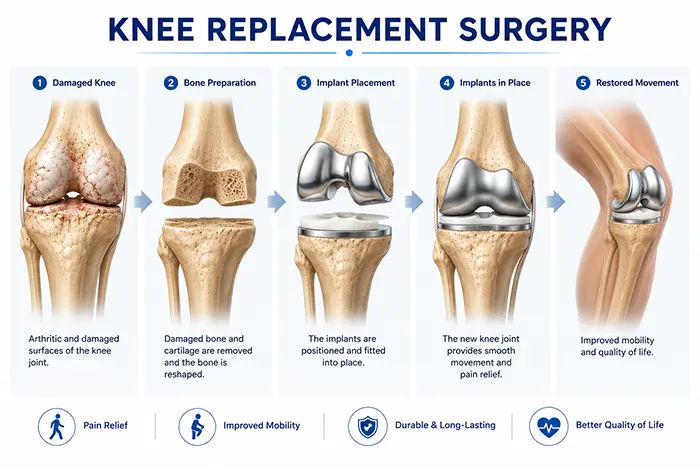
Robotic total knee replacement combines a personalised digital plan with robotic-arm guidance to help position your new knee accurately. Dr. Amyn Rajani performs robotic-assisted total knee arthroplasty in Mumbai for patients with advanced knee arthritis, using the technology to support precise bone cuts, alignment and ligament balance.

  • 20+ Years of Clinical Experience
  • MAKO, CORI and ROSA Robotic Surgery Certified
  • M.S. Orth (Gold Medallist)

Call +91 22 2369 6161

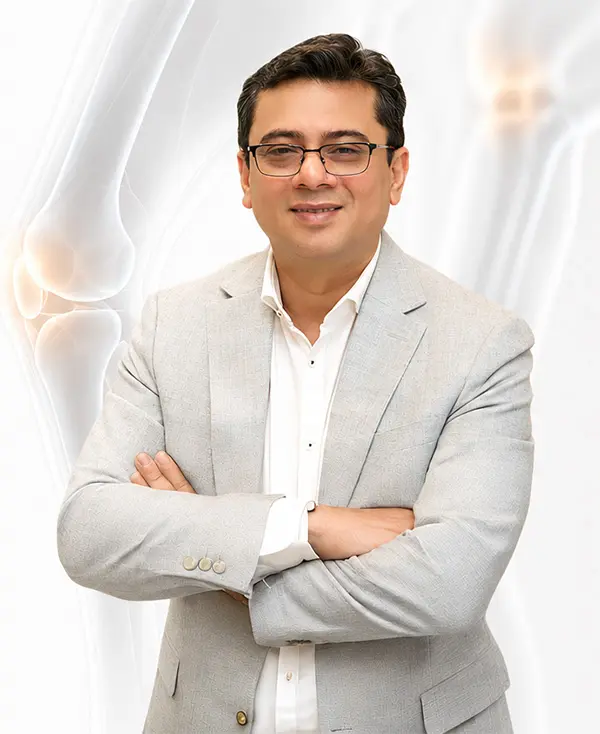
Dr. Amyn Rajani

Is Robotic Total Knee Replacement Right for You?

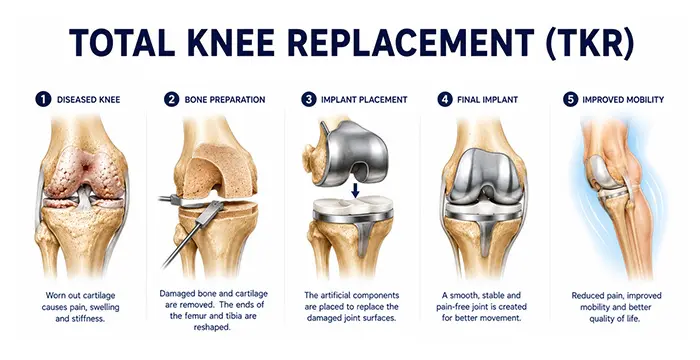
Robotic total knee replacement suits the same patients who need a conventional total knee replacement: those with advanced arthritis affecting more than one part of the knee. The difference lies in how the operation is planned and performed, with robotic assistance helping the surgeon match the implant to your individual anatomy.

It may be considered when:

  • Arthritis affects more than one compartment of the knee, confirmed on X-ray.
  • Knee pain limits walking, stairs or sleep despite non-surgical treatment.
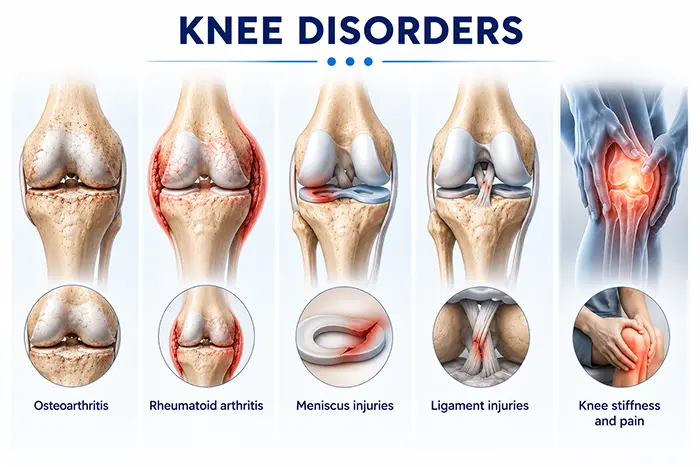
  • The knee has a bow-leg, knock-knee or flexion deformity that needs correction.
  • Your knee anatomy calls for careful, individualised implant planning.
  • You are medically fit for surgery and rehabilitation.

Dr. Amyn Rajani

How Does Dr. Rajani Assess Your Knee?

Robotic assistance is a surgical tool, not a reason for surgery. Dr. Rajani first confirms that a total knee replacement is needed, then explains whether a robotic-assisted or conventional approach suits your knee best.

Imaging Review:Imaging Review:
Standing X-rays and alignment views to assess arthritis and deformity and, where the robotic system requires it, a CT scan for planning.
Clinical Examination:Clinical Examination:
Range of motion, alignment, ligament stability, muscle strength, swelling and gait during an in-person consultation.
Ligament Balance:Ligament Balance:
Ligament tension and stability are assessed, as well-balanced soft tissues are essential for a stable, comfortable knee.

Overall Health:Overall Health:
Age, body weight, bone quality, diabetes, heart health and vitamin D3 levels, which influence anaesthesia, recovery and implant longevity.


Your Robotic Total Knee Replacement Journey

A structured five-step pathway takes you from your first consultation and digital planning through surgery to a confident return to everyday activities.

01. Consultation and Imaging01. Consultation and Imaging
Dr. Rajani reviews your symptoms and X-rays, examines your knee and confirms whether robotic total knee replacement is suitable.

02. 3D Surgical Planning02. 3D Surgical Planning
Depending on the robotic system, a CT scan or intra-operative mapping creates a 3D model of your knee to plan implant size, position and alignment.

03. Robotic-Assisted Surgery03. Robotic-Assisted Surgery
Under spinal or general anaesthesia, the robotic arm helps Dr. Rajani make bone cuts within the planned boundaries and balance the ligaments. Surgery typically takes 1.5 to 2 hours.

04. Early Mobilisation04. Early Mobilisation
Most patients stand and walk with a walker within 24 hours of surgery, with a hospital stay of around 3 to 5 days.

05. Rehabilitation and Follow-Up05. Rehabilitation and Follow-Up
Structured physiotherapy and regular reviews help most patients walk independently within 4 to 6 weeks and return to most daily activities by around 3 months.


Robotic Total Knee Replacement: What You Should Know

Understanding how robotic assistance works, who benefits, what recovery involves and where its limits lie helps you make a confident, informed decision.

Who Is a Good Candidate?

Robotic Total Knee Replacement Candidate

  • Advanced Arthritis – Damage affecting more than one compartment of the knee.
  • Persistent Knee Pain – Not relieved by physiotherapy, medication or injections.
  • Knee Deformity – Bow-leg, knock-knee or a knee that will not straighten fully.
  • Complex Anatomy – Such as deformity after a previous fracture, where detailed 3D planning may help.
  • Fit for Surgery – Overall health that allows safe anaesthesia and rehabilitation.
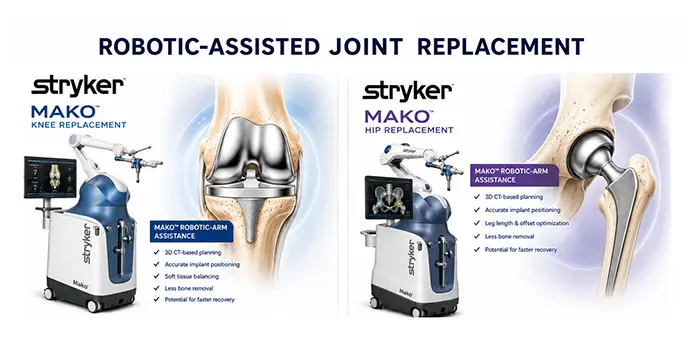
Robotic Total Knee Replacement in Mumbai

How Robotic Assistance Helps

  • Personalised 3D Plan – Implant size and position are planned around your anatomy.
  • Precise Bone Cuts – The robotic arm helps keep bone preparation within planned boundaries.
  • Soft-Tissue Protection – Defined cutting boundaries help protect the surrounding ligaments.
  • Ligament Balancing – Real-time data helps the surgeon achieve a stable, well-balanced knee.

Who May Not Be Suitable?

  • Active Infection – Infection must be treated before any joint replacement.
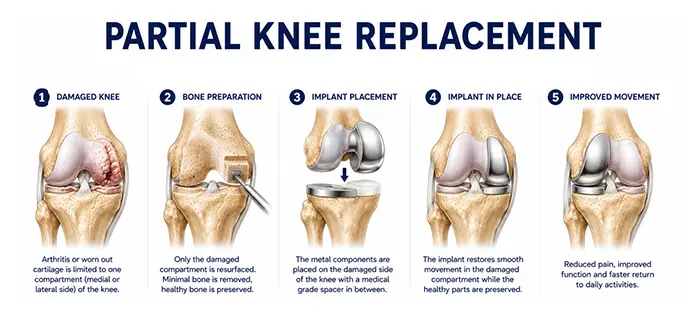
  • Single-Compartment Arthritis – A robotic partial knee replacement may be more appropriate.
  • Early or Mild Arthritis – Symptoms may still respond to non-surgical treatment.
  • Uncontrolled Medical Conditions – Such as heart disease or diabetes that raise surgical risk.
  • Metal Implants Near the Knee – These may affect CT-based planning; another system or a conventional technique may be used.

Recovery Timeline

  • Day 1 to 2 – Standing and walking with a walker under physiotherapy supervision.
  • Week 2 to 6 – Moving from a walker to a stick, with steadily improving knee bend.
  • Week 6 to 12 – Walking independently and returning to most daily activities, including driving when advised.
  • 3 to 12 Months – Continued gains in strength and stamina; low-impact activities such as walking, cycling and swimming.

Recovery After Robotic Total Knee Replacement

Alternatives to Robotic Total Knee Replacement

Alternatives to Consider

  • Conventional Total Knee Replacement – A well-established total knee replacement with excellent long-term results.
  • Robotic Partial Knee Replacement – When arthritis is limited to one compartment.
  • High Tibial Osteotomy – Realignment surgery for selected younger, active patients.
  • Physiotherapy and Injections – For milder symptoms or patients not yet ready for surgery.
  • Weight Management – Reduces the load on the knee and can ease symptoms.

Risks and Limitations

  • Possible Risks – Infection, blood clots, stiffness and, rarely, nerve or blood vessel injury.
  • Not a Guarantee – Robotics improves precision, but results also depend on rehabilitation and individual factors.
  • Additional CT Scan – Some robotic systems need a pre-operative CT scan, which involves a small radiation dose.
  • Implant Survival – Most modern knee implants function well for 15 to 20 years or more.

Robotic Knee Replacement Surgery in Mumbai

Robotic vs Conventional Total Knee Replacement

Both approaches replace the same worn surfaces with similar implants. The difference lies in how the operation is planned and how precisely bone cuts and alignment are carried out. Read more about robotic knee replacement in Mumbai.

Factor Robotic Total Knee Replacement Conventional Total Knee Replacement
Planning Personalised 3D plan based on CT or intra-operative mapping. Based on X-rays and standard instruments.
Bone cuts Guided by the robotic arm within planned boundaries. Made with manual cutting guides.
Alignment Measured and adjusted in real time during surgery. Assessed with mechanical guides and surgeon judgement.
Ligament balance Supported by real-time data on knee stability. Assessed by the surgeon during surgery.
Early recovery Some studies report less early pain and quicker early recovery. Well-established rehabilitation pathway.
Long-term results Long-term data are still emerging. Decades of proven long-term results.

Travelling to Mumbai for Robotic Knee Surgery?

Patients from other cities and countries can begin with an online consultation by sharing their knee X-rays and reports in advance. Dr. Rajani can assess whether robotic total knee replacement may be suitable and help you plan your visit to Mumbai.


About Dr. Amyn Rajani

Dr. Rajani is a Mumbai-based knee, shoulder and hip surgeon with certification on three robotic surgery platforms and extensive experience in robotic-assisted joint replacement, including robotic total hip replacement.

International Course FacultyInternational Course Faculty
Holds 5 international faculty appointments.

Knee Arthroplasty ResearchKnee Arthroplasty Research
His peer-reviewed publications include knee arthroplasty research on the mucoid ACL and vitamin D3 correction.

3,000+ Procedures3,000+ Procedures, including knee reconstruction, joint replacement, and arthroscopy.

Google Scholar ProfileGoogle Scholar Profile
His publications and citations are listed on his Google Scholar profile.

Robotic Surgery CertifiedRobotic Surgery Certified
He is certified on the MAKO, CORI and ROSA robotic surgery systems.

100+ Research Citations100+ Research Citations
Dr. Rajani's published research in peer-reviewed orthopaedic journals has been cited more than 100 times.

Record RecognitionRecord Recognition
He has been recognised in the India Book of Records for a bilateral partial knee replacement performed on the heaviest patient.

Considering Robotic Knee Replacement From Outside Mumbai?

If travelling to Mumbai for an initial assessment is difficult, you can start with an online consultation with Dr. Amyn Rajani. Share your knee X-rays and reports in advance for a review of whether robotic total knee replacement is suitable for you. If surgery is recommended, your visit to Mumbai can be planned around it.

Frequently Asked Questions

It is a total knee replacement in which a robotic system helps the surgeon plan the operation around your anatomy and carry out bone cuts and implant positioning according to that plan. The implant itself is similar to that used in conventional surgery.

No. Dr. Rajani plans and performs the operation. The robotic arm provides guidance and real-time feedback so that bone preparation stays within the planned boundaries.

Robotic assistance gives more consistent implant positioning and alignment, and some studies report less early pain and quicker early recovery. Long-term benefits over a well-performed conventional knee replacement are still being studied, so the choice is made individually.

Dr. Rajani is certified on the MAKO, CORI and ROSA robotic surgery systems. The system used depends on the hospital, the implant and your knee, and is confirmed during surgical planning.

It depends on the system. MAKO uses a pre-operative CT scan to build a 3D model of your knee, while CORI and ROSA can map the knee during surgery without a CT scan.

Most patients stand and walk with a walker within 24 hours of surgery, progress to a stick over the next few weeks and walk independently by around 4 to 6 weeks.

Most patients stay for around 3 to 5 days, until they can walk safely, manage stairs and control pain with oral medication.

Yes, in selected medically fit patients. Both knees can be replaced in one sitting or in two stages, depending on your overall health and the severity of arthritis.

Dr. Rajani operates at leading Mumbai hospitals, including Breach Candy Hospital, P. D. Hinduja Hospital (Khar) and Saifee Hospital. The hospital and robotic platform are confirmed during surgical planning.

The cost depends on the hospital, room category, implant, robotic system, whether one or both knees are treated and your insurance cover. An individual estimate is provided after consultation.