Rotator Cuff Tear Surgeon in Mumbai

Expert Care for Shoulder Pain and Weakness

A rotator cuff tear can make everyday tasks such as combing your hair, getting dressed or reaching overhead painful and difficult. Dr. Amyn Rajani diagnoses and treats rotator cuff tears in Mumbai, from physiotherapy-led care to minimally invasive arthroscopic rotator cuff repair, helping you regain a strong, pain-free shoulder.

  • 20+ Years of Clinical Experience
  • 3,000+ Procedures, Including Arthroscopy
  • M.S. Orth (Gold Medallist)

Call +91 22 2369 6161

Dr. Amyn Rajani

Signs You May Have a Rotator Cuff Tear

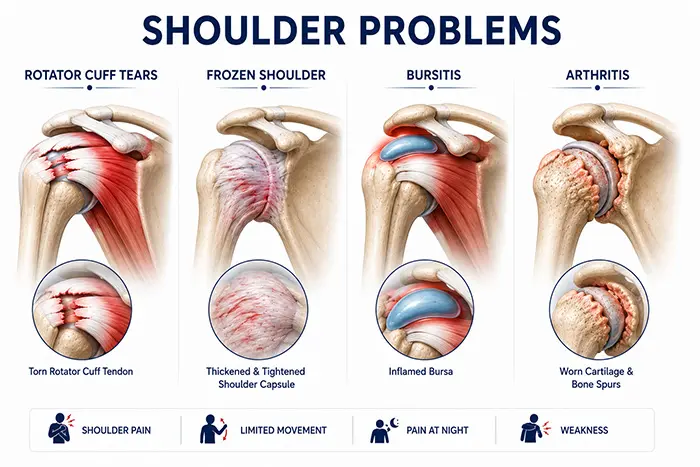
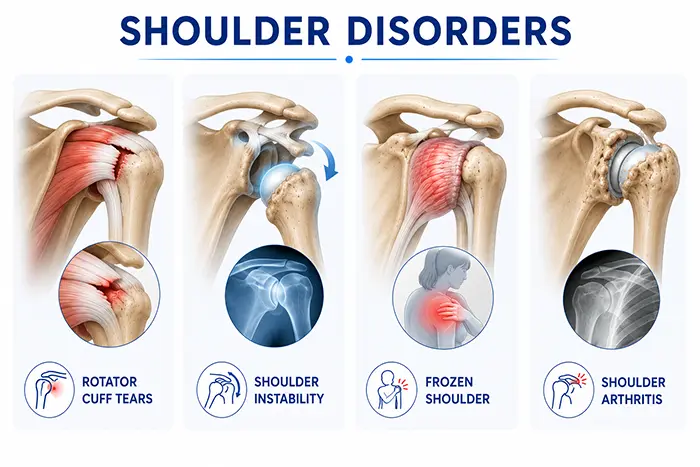
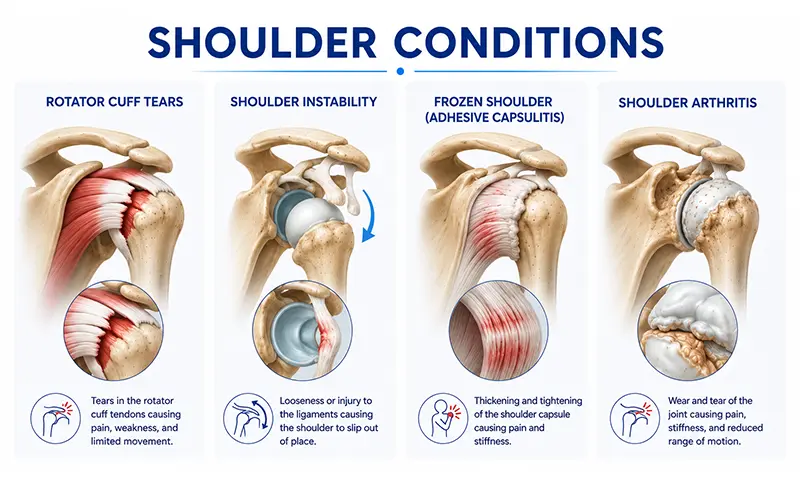
The rotator cuff is a group of four muscles and their tendons that hold the head of the upper arm bone in the shoulder socket and help you lift and rotate your arm. When one or more of these tendons tears, the shoulder becomes painful and weak.

Common symptoms include:

  • Pain at rest and at night, especially when lying on the affected shoulder.
  • Pain when lifting and lowering your arm or with specific movements.
  • Weakness when lifting or rotating your arm.
  • Difficulty with overhead activities, dressing or combing your hair.
  • Shoulder pain that has not improved with rest, medication or physiotherapy.

Dr. Amyn Rajani

How Does Dr. Rajani Diagnose a Rotator Cuff Tear?

An accurate diagnosis guides the right treatment. Dr. Rajani combines a detailed clinical examination with imaging to understand the size, type and cause of your tear.

MRI AssessmentMRI Assessment:
MRI is the gold standard for confirming a rotator cuff tear, its size and the quality of the tendon and muscle.
Clinical ExaminationClinical Examination:
Active and passive shoulder movement, strength testing and specific clinical tests such as the drop arm test.
Type of TearType of Tear:
Whether the tear is partial or full-thickness, and whether it is an acute injury or a degenerative tear from gradual wear.

Associated ProblemsAssociated Problems:
Shoulder impingement, bone spurs, biceps involvement or arthritis that may influence the treatment plan.

Your Rotator Cuff Treatment Journey

A structured five-step pathway takes you from diagnosis to a stronger, more comfortable shoulder.

01. Consultation and Diagnosis01. Consultation and Diagnosis
Dr. Rajani reviews your symptoms and MRI, and examines your shoulder to confirm the type and size of the tear.

02. Non-Surgical Treatment02. Non-Surgical Treatment
Rest, activity modification, anti-inflammatory medication and targeted physiotherapy. About half of patients improve without surgery.

03. Arthroscopic Repair03. Arthroscopic Repair
If surgery is needed, the torn tendon is reattached to the bone through small incisions using a camera and miniature instruments.
04. Protected Healing04. Protected Healing
A sling protects the repair in the early weeks while the tendon heals back to the bone.

05. Rehabilitation and Follow-Up05. Rehabilitation and Follow-Up
A phased physiotherapy programme restores movement and then strength, with regular reviews to manage stiffness and track progress.


Rotator Cuff Tears: What You Should Know

Understanding the type of tear, its cause and the available treatments helps you make a confident, informed decision about your shoulder.

Types of Rotator Cuff Tears

Rotator Cuff Tear

  • Partial Tear – Damages the tendon but does not completely sever it.
  • Full-Thickness Tear – Splits the tendon into two pieces; it may retract over time, making repair more difficult.
  • Acute Tear – Caused by a fall on an outstretched arm or lifting something heavy with a jerk.
  • Degenerative Tear – Caused by gradual wear of the tendon with age; more common in the dominant arm.
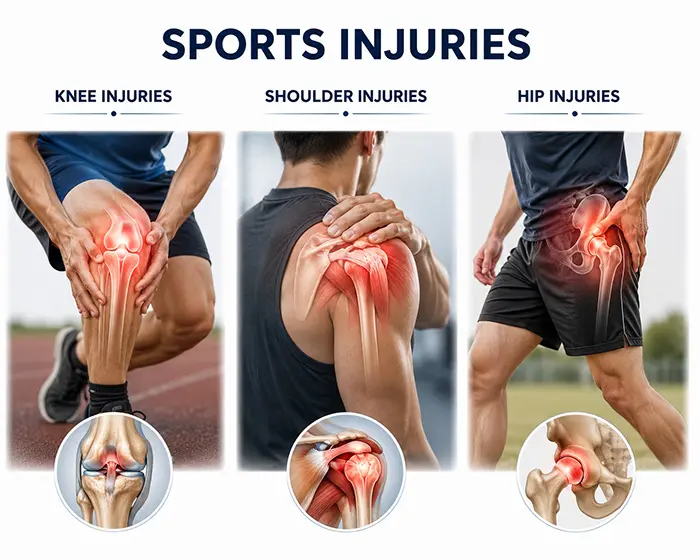
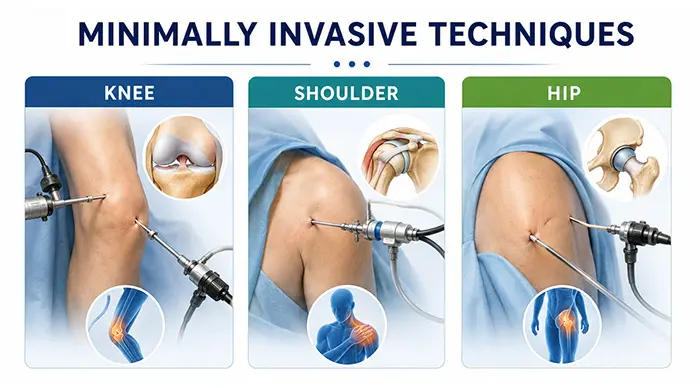
Rotator Cuff Injuries

Common Causes

  • Repetitive Stress – Overhead sports such as tennis, rowing and weightlifting, and repetitive work.
  • Reduced Blood Supply – With age, the tendon's natural ability to heal decreases.
  • Bone Spurs – Spurs under the acromion can rub on the tendon (impingement).
  • Injury – Falls or sudden heavy lifting.

Non-Surgical Treatment

  • Rest and Sling – Limiting overhead activities to protect the shoulder.
  • Activity Modification – Avoiding movements that cause pain.
  • Anti-Inflammatory Medication – To reduce pain and swelling.
  • Physiotherapy – Stretching and strengthening exercises to restore movement.
  • Injections – May be considered for pain relief in selected cases.

When Is Surgery Recommended?

  • Persistent Pain – Symptoms that do not improve with physiotherapy.
  • Significant Weakness – Shoulder strength does not usually improve without repair.
  • Acute Injury – Tears caused by a fall or injury, especially in active patients.
  • Full-Thickness Tears – Where the tendon may retract if left untreated.
  • High Demands – Patients who need a strong shoulder for work or sport.

Arthroscopic Rotator Cuff Repair

Massive Rotator Cuff Tears

Massive and Irreparable Tears

  • Bio-Inductive Patch – An implant that may support tendon healing in selected tears.
  • Cuff Tear Arthropathy – Arthritis that can develop after a long-standing tear.
  • Reverse Shoulder Replacement – May restore function when the rotator cuff cannot be repaired.

Recovery After Rotator Cuff Repair

  • Sling – Protects the repair during the first few weeks.
  • Early Physiotherapy – Gentle, guided movement to prevent stiffness.
  • Strengthening – Introduced once the tendon has healed sufficiently.
  • Managing Stiffness – Dr. Rajani's research has studied treatment of stiffness after arthroscopic repair.
  • Return to Activities – Gradual, depending on tear size and progress with rehabilitation.

Rotator Cuff Treatment in Mumbai

Non-Surgical Treatment vs Arthroscopic Repair

Not every rotator cuff tear needs surgery. Dr. Rajani recommends treatment based on the type and size of the tear, your symptoms and your activity goals.

Factor Non-Surgical Treatment Arthroscopic Repair
Approach Rest, medication, activity modification and physiotherapy. The torn tendon is reattached to the bone through small incisions.
Pain relief Relieves pain and improves function in about 50% of patients. Aims to relieve pain by repairing the torn tendon.
Shoulder strength Strength usually does not improve without surgery. Aims to restore strength by repairing the tendon.
Typically suited for Partial or degenerative tears and lower-demand shoulders. Persistent symptoms, significant weakness, acute or full-thickness tears.
Recovery Gradual improvement with physiotherapy. Sling protection followed by phased rehabilitation over several months.

Travelling to Mumbai for Treatment?

Patients from other cities and countries can begin with an online consultation by sharing their shoulder MRI and reports in advance. Dr. Rajani can review your tear and advise on treatment options before you plan a visit to Mumbai.


About Dr. Amyn Rajani

Dr. Rajani is a Mumbai-based knee, shoulder and hip surgeon with expertise in arthroscopy and published research on recovery after rotator cuff repair.

International Course FacultyInternational Course Faculty
Holds 5 international faculty appointments.

Rotator Cuff ResearchRotator Cuff Research
He co-authored a study in Clinics in Shoulder and Elbow on treating stiffness after arthroscopic rotator cuff repair.
3,000+ Procedures3,000+ Procedures, including knee reconstruction, joint replacement, and arthroscopy.

Google Scholar ProfileGoogle Scholar Profile
His publications and citations are listed on his Google Scholar profile.
Robotic Surgery CertifiedRobotic Surgery Certified
He is certified on the MAKO, CORI and ROSA robotic surgery systems.

100+ Research Citations100+ Research Citations
Dr. Rajani's published research in peer-reviewed orthopaedic journals has been cited more than 100 times.
Record RecognitionRecord Recognition
His work has been recognised in the Limca Book of Records for performing the highest number of knee arthroscopy surgeries in a single day.

Have a Rotator Cuff Tear and Live Outside Mumbai?

If travelling to Mumbai for an initial assessment is difficult, you can start with an online consultation with Dr. Amyn Rajani. Share your MRI and reports in advance for a review of your tear and treatment options. If surgery is recommended, your visit to Mumbai can be planned around it.

Frequently Asked Questions

The rotator cuff is a group of four muscles and tendons that hold the upper arm bone in the shoulder socket and help lift and rotate the arm. A tear occurs when one or more of these tendons is damaged or detached from the bone, most commonly the supraspinatus tendon.

Common symptoms include pain at rest and at night, especially when lying on the affected shoulder, pain when lifting or lowering the arm, and weakness when lifting or rotating the arm.

Diagnosis is based on a clinical examination of shoulder movement and strength, along with imaging. MRI of the shoulder is the gold standard for confirming a rotator cuff tear and assessing its size.

In about 50% of patients, non-surgical treatment such as rest, activity modification, medication and physiotherapy relieves pain and improves function. However, shoulder strength does not usually improve without surgery.

Surgery may be recommended when pain and weakness persist despite non-surgical treatment, after an acute injury, for full-thickness tears, or for patients who need a strong shoulder for work or sport.

It is a minimally invasive procedure in which a small camera (arthroscope) and miniature instruments are inserted through small incisions to reattach the torn tendon to the bone. It is the least invasive way to repair a torn rotator cuff.

Some patients develop stiffness in the weeks after surgery. Dr. Rajani co-authored a study showing that a single corticosteroid injection at six weeks after arthroscopic repair was safe and effective for treating this stiffness in the short term.

For massive or irreparable tears, options may include patch augmentation or, where arthritis has developed, a reverse shoulder replacement, which uses the deltoid muscle to move the arm.