
Total Knee Replacement Surgeon in Mumbai
Lasting Relief From Advanced Knee Arthritis
When arthritis has worn down the whole knee and everyday walking becomes painful, a total knee replacement can relieve pain and restore movement. Dr. Amyn Rajani performs total knee replacement, also called total knee arthroplasty (TKA), in Mumbai, resurfacing the damaged joint with a carefully aligned implant using conventional or robotic-assisted techniques.
- 20+ Years of Clinical Experience
- Conventional and Robotic Knee Replacement
- M.S. Orth (Gold Medallist)
Call +91 22 2369 6161

Is Total Knee Replacement Right for You?
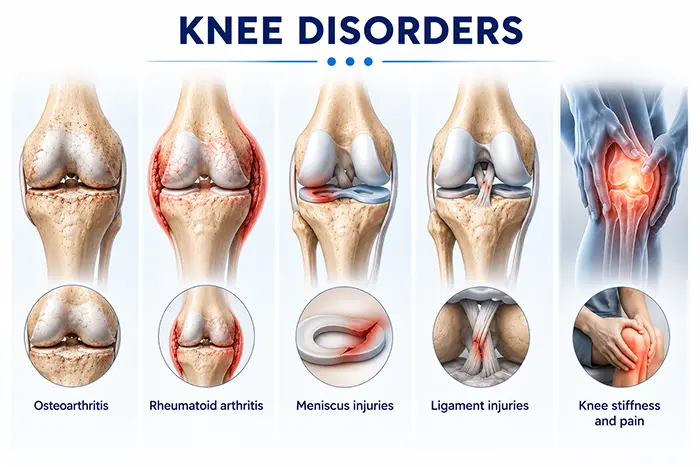
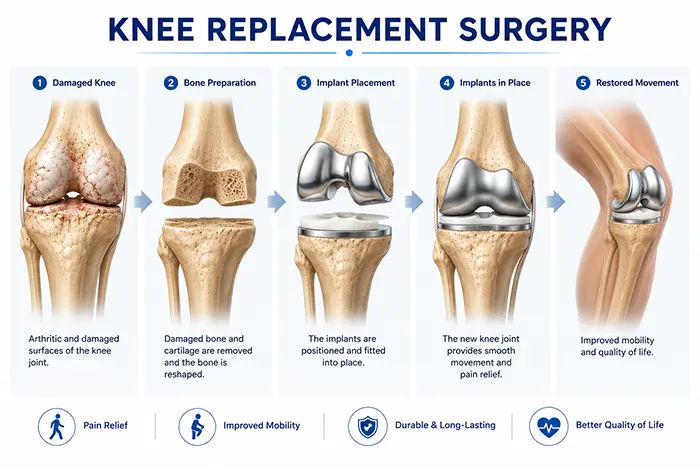
Total knee replacement is usually recommended when arthritis affects more than one part of the knee and pain, stiffness or deformity continue to limit daily life despite non-surgical treatment. The worn surfaces of the thigh bone, shin bone and, where needed, the kneecap are replaced with metal and medical-grade plastic components.
It may be considered when:
- Knee pain limits walking, climbing stairs or getting up from a chair.
- X-rays show advanced arthritis affecting more than one compartment of the knee.
- Pain continues despite physiotherapy, medication, injections or weight management.
- The knee has become stiff, swollen or increasingly bow-legged or knock-kneed.
- Knee pain regularly disturbs your sleep or rest.

How Does Dr. Rajani Assess Your Knee?
Knee replacement is a decision based on how much arthritis affects your life, not on X-rays alone. Dr. Rajani considers your symptoms, examination findings and imaging together before recommending a total knee replacement, a partial knee replacement or continued non-surgical care.
Imaging Review:
Standing X-rays of both knees and, where needed, long-leg alignment views or MRI to assess the extent of arthritis and deformity.
Clinical Examination:
Range of motion, alignment, ligament stability, muscle strength, swelling and gait during an in-person consultation.
Deformity and Alignment:
Bow-leg, knock-knee and fixed flexion deformities are assessed carefully, as correcting them is a key goal of knee replacement.

Overall Health:
Age, body weight, bone quality, diabetes, heart health and vitamin D3 levels, which can influence anaesthesia, recovery and implant longevity.

Your Total Knee Replacement Journey
A structured five-step pathway takes you from your first consultation through surgery and rehabilitation to a confident return to everyday activities.
01. Consultation and Imaging
Dr. Rajani reviews your symptoms, X-rays and previous treatment, examines your knee and explains whether total knee replacement is the right option.
02. Pre-Operative Planning
Medical fitness tests are arranged and implant size and alignment are planned. For robotic-assisted surgery, a personalised 3D plan of your knee is created.
03. Surgery
Under spinal or general anaesthesia, the damaged joint surfaces are replaced and the ligaments balanced. Surgery typically takes 1 to 2 hours.

04. Early Mobilisation
Most patients stand and walk with a walker within 24 hours of surgery, with a hospital stay of around 3 to 5 days.

05. Rehabilitation and Follow-Up
Structured physiotherapy and regular reviews help most patients walk independently within 4 to 6 weeks and return to most daily activities by around 3 months.
Total Knee Replacement: What You Should Know
Understanding who benefits, how the surgery is performed, what recovery involves and what the alternatives are helps you make a confident, informed decision.
Who Is a Good Candidate?

- Advanced Arthritis – Osteoarthritis or rheumatoid arthritis affecting more than one compartment.
- Persistent Knee Pain – Pain not relieved by physiotherapy, medication or injections.
- Limited Daily Function – Difficulty walking, using stairs or getting up from a chair.
- Knee Deformity – Progressive bow-leg, knock-knee or a knee that will not straighten fully.
- Fit for Surgery – Overall health that allows safe anaesthesia and rehabilitation.
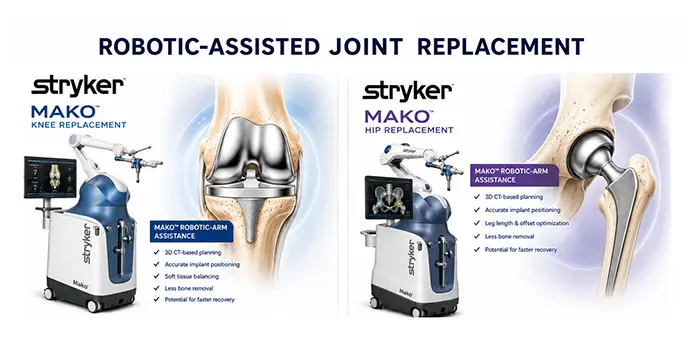
Robotic-Assisted Total Knee Replacement
- Personalised 3D Plan – Implant size and position are planned around your knee anatomy.
- Precise Bone Cuts – The robotic arm helps keep bone preparation within planned boundaries.
- Ligament Balancing – Real-time data helps the surgeon achieve a stable, well-balanced knee.
- Surgeon-Controlled – Dr. Rajani plans and performs the operation; the robot assists.
Who May Not Be Suitable?
- Active Infection – Infection in the knee or elsewhere in the body must be treated first.
- Early or Mild Arthritis – Symptoms may still respond to non-surgical treatment.
- Single-Compartment Arthritis – A robotic partial knee replacement may be the better option.
- Uncontrolled Medical Conditions – Such as heart disease or diabetes that raise surgical risk.
- Poor Circulation or Skin Problems – These can affect wound healing around the knee.
Recovery Timeline
- Day 1 to 2 – Standing and walking with a walker under physiotherapy supervision.
- Week 2 to 6 – Moving from a walker to a stick, with steadily improving knee bend.
- Week 6 to 12 – Walking independently and returning to most daily activities, including driving when advised.
- 3 to 12 Months – Continued gains in strength and stamina; low-impact activities such as walking, cycling and swimming.


Alternatives to Consider
- Physiotherapy – Strengthening exercises to support the knee and improve movement.
- Weight Management – Reduces the load on the knee joint.
- Injections – Corticosteroid or hyaluronic acid injections for temporary relief.
- High Tibial Osteotomy – Realignment surgery that may suit younger, active patients.
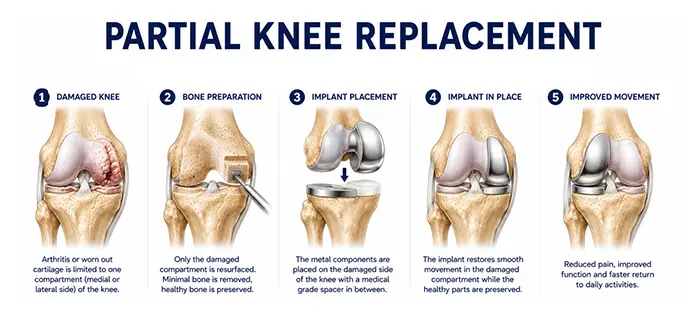
- Partial Knee Replacement – When arthritis is confined to one compartment of the knee.
Risks and Implant Longevity
- Possible Risks – Infection, blood clots, stiffness and, rarely, nerve or blood vessel injury.
- Persistent Symptoms – A small proportion of patients have some ongoing pain or stiffness.
- Implant Survival – Most modern knee implants function well for 15 to 20 years or more.
- Revision Surgery – If an implant wears or loosens, it can be replaced in a revision operation.

Total vs Partial Knee Replacement
Patients often ask whether they need a total or partial knee replacement. The answer depends on how much of the knee is affected by arthritis, the condition of the ligaments and the alignment of the leg. Read more about partial knee replacement in Mumbai.
| Factor | Total Knee Replacement | Partial Knee Replacement |
|---|---|---|
| Bone resurfaced | All three compartments of the knee are resurfaced. | Only the damaged compartment is resurfaced. |
| Suitable for | Advanced arthritis affecting multiple compartments, with or without deformity. | Arthritis confined to one compartment with an intact ACL. |
| Deformity correction | Can correct significant bow-leg, knock-knee and flexion deformity. | Suitable only for mild, correctable deformity. |
| Incision | Larger incision. | Smaller incision. |
| Recovery | Longer rehabilitation period. | Generally faster. |
| Long-term results | Well established, with a low long-term revision rate. | Arthritis may progress in other compartments over time. |
Travelling to Mumbai for Knee Replacement?
Patients from other cities and countries can begin with an online consultation by sharing their knee X-rays and reports in advance. Dr. Rajani can assess whether a total knee replacement may be suitable and help you plan your surgery and stay in Mumbai.
About Dr. Amyn Rajani
Dr. Rajani is a Mumbai-based knee, shoulder and hip surgeon with robotic surgery certification and extensive experience in conventional and robotic total knee replacement.
International Course Faculty
Holds 5 international faculty appointments.

Knee Arthroplasty Research
His peer-reviewed publications include knee arthroplasty research on the mucoid ACL and vitamin D3 correction.

3,000+ Procedures, including knee reconstruction, joint replacement, and arthroscopy.
Google Scholar Profile
His publications and citations are listed on his Google Scholar profile.

Robotic Surgery Certified
He is certified on the MAKO, CORI and ROSA robotic surgery systems.
100+ Research Citations
Dr. Rajani's published research in peer-reviewed orthopaedic journals has been cited more than 100 times.

Record Recognition
He has been recognised in the India Book of Records for a bilateral partial knee replacement performed on the heaviest patient.
Considering Total Knee Replacement From Outside Mumbai?
If travelling to Mumbai for an initial assessment is difficult, you can start with an online consultation with Dr. Amyn Rajani. Share your knee X-rays and reports in advance for a review of whether total knee replacement is suitable for you. If surgery is recommended, your visit to Mumbai can be planned around it.
Frequently Asked Questions
Q1. What is total knee replacement?
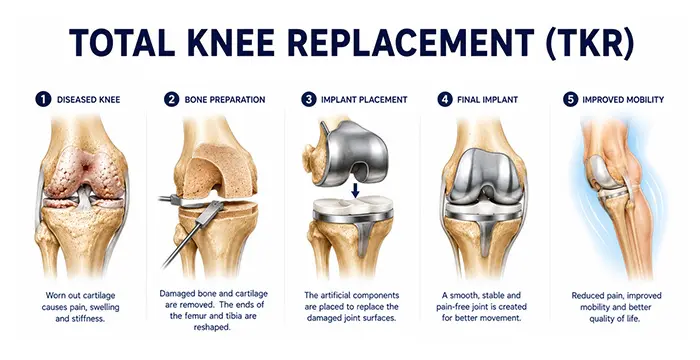
Total knee replacement, also called total knee arthroplasty (TKA), replaces the worn surfaces of the thigh bone, shin bone and, where needed, the kneecap with metal and medical-grade plastic components. It relieves arthritis pain, corrects deformity and helps restore movement.
Q2. When should I consider total knee replacement?
It is worth considering when knee pain and stiffness limit walking, stairs or sleep, and have not improved with physiotherapy, medication, injections or weight management. X-rays usually show advanced arthritis. Dr. Rajani confirms whether surgery is needed after examining your knee and reviewing your imaging.
Q3. Is there a right age for knee replacement?
There is no fixed age. Most patients are between 55 and 80, but the decision depends on symptoms, the severity of arthritis and overall health rather than age alone. Younger, active patients may first be assessed for options such as osteotomy or partial knee replacement.
Q4. How long does total knee replacement surgery take?
The operation usually takes 1 to 2 hours and is performed under spinal or general anaesthesia. Preparation and recovery-room time add to the overall time spent in theatre.
Q5. How soon can I walk after total knee replacement?
Most patients stand and walk with a walker within 24 hours of surgery. Many progress to a stick within 2 to 4 weeks and walk independently by around 4 to 6 weeks, depending on individual progress.
Q6. How long will I stay in hospital?
Most patients stay in hospital for around 3 to 5 days. The aim is safe walking, managing stairs and good pain control with oral medication before going home.
Q7. Can both knees be replaced at the same time?
Yes. In medically fit patients, both knees can be replaced in one sitting (bilateral total knee replacement) or in two stages a few weeks apart. Dr. Rajani advises on the safer option after assessing your overall health.
Q8. Is robotic total knee replacement available in Mumbai?
Yes. Dr. Rajani is certified on the MAKO, CORI and ROSA robotic systems and performs robotic total knee replacement in Mumbai. Whether robotic or conventional surgery suits you is discussed during planning.
Q9. How long does a total knee replacement last?
Most modern total knee implants continue to function well 15 to 20 years or more after surgery. Implant life depends on activity level, body weight, bone quality and how well the implant is aligned and balanced.
Q10. What is the cost of total knee replacement in Mumbai?
The cost depends on the hospital, room category, implant, whether one or both knees are treated, whether robotic assistance is used and your insurance cover. An individual estimate is provided after consultation.