is a common procedure for advanced knee arthritis for patients suffering from severe arthritis or knee joint damage. With advancements in medical technology, robotic-assisted knee replacement has emerged as a highly precise alternative to traditional manual knee replacement.
But how does the accuracy of robotic TKA compare to manual TKA? Which method offers better outcomes for patients? In this article, we explore the differences between these two surgical approaches, their benefits, and why Dr. Amyn Rajani, an orthopaedic surgeon in Mumbai, recommends robotic-assisted techniques for improved precision and faster recovery.
Understanding Robotic vs. Manual TKA
-
What is Manual TKA?
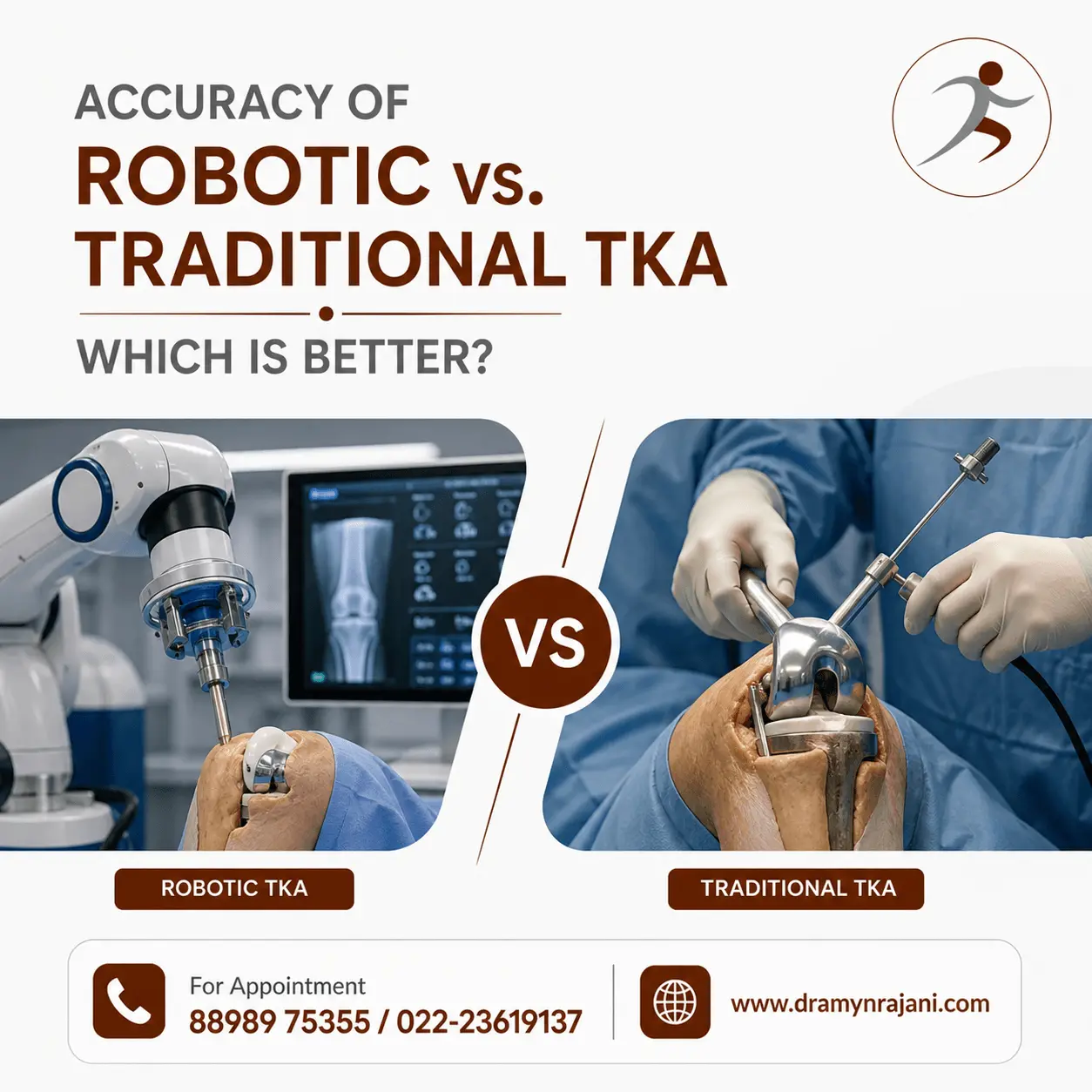
Manual TKA is the traditional approach where the surgeon relies on their skill, experience, and mechanical instruments to remove damaged bone and cartilage before implanting the prosthetic knee.
Key Features of Manual TKA:
- Surgeon-dependent accuracy
- Use of jigs and cutting guides
- Longer recovery time in some cases
- Risk of human error in alignment
-
What is Robotic TKA?
Robotic TKA uses advanced computer-assisted technology to enhance surgical precision. The surgeon controls a robotic arm that assists in bone preparation and implant positioning based on a 3D pre-operative plan.
Key Features of Robotic TKA:
- High precision with real-time adjustments
- Personalized 3D surgical planning
- Minimally invasive approach
- Reduced risk of human error
- Studies report more consistent implant alignment; long-term benefit is still being studied
Accuracy Comparison: Robotic vs. Manual TKA
-
Precision in Bone Cuts and Implant Positioning
- Robotic TKA: Uses 3D imaging to create a patient-specific surgical plan, ensuring exact bone cuts and optimal implant alignment.
- Manual TKA: Relies on the surgeon’s judgment, which can sometimes lead to minor misalignments.
Studies show that robotic-assisted knee replacement reduces alignment errors by up to 90% compared to manual techniques.
-
Soft Tissue Balancing
- Robotic TKA: Sensors provide real-time feedback on ligament tension, allowing for perfect balance.
- Manual TKA: Surgeon assesses soft tissue balance manually, which may lead to over- or under-correction.
-
Consistency in Results
- Robotic TKA: Delivers consistent outcomes with minimal variability between surgeries.
- Manual TKA: Outcomes may vary based on the surgeon’s experience.
-
Recovery and Longevity
- Robotic TKA: Some studies report less early pain; evidence on long-term implant survival is still developing.
- Manual TKA: Recovery may take longer if alignment is not optimal.
Why Choose Robotic Knee Replacement in Mumbai?
Robotic knee replacement is available at several Mumbai hospitals, including Dr. Amyn Rajani, an orthopaedic surgeon in Mumbai who performs robotic-assisted joint replacement.
Benefits of Robotic Knee Replacement in Mumbai:
✔ Higher accuracy with 3D planning
✔ Minimal tissue damage due to precision cuts
✔ Possible shorter recovery in some patients (individual results vary)
✔ Customized implants for better fit and function
✔ Reduced risk of complications
Who is a Candidate for Robotic TKA?
Robotic knee replacement is ideal for:
- Patients with severe osteoarthritis
- Those who have failed conservative treatments
- Individuals seeking faster recovery and long-term joint stability
About Dr. Amyn Rajani, Robotic Knee Replacement Surgeon in Mumbai
Dr. Amyn Rajani , with extensive experience in robotic-assisted knee surgery. His expertise ensures:
- Personalized treatment plans
- Minimally invasive techniques
- Comprehensive post-operative care
Robotic vs. Manual TKA: Which is Right for You?
Both methods are effective. Robotic TKA can improve alignment consistency; whether this gives better long-term results is still being studied.
- Severity of knee damage
- Surgeon’s expertise
- Patient’s overall health
For those considering total knee replacement in Mumbai, your surgeon can advise which approach suits you.
Conclusion
Studies show robotic TKA gives more consistent component positioning than manual TKA; long-term outcome data is still emerging.robotic-assisted knee surgery in Mumbai, patients can now benefit from minimally invasive techniques, quicker recovery, and improved mobility.
If you’re looking for robotic knee replacement surgery in Mumbai, consult Dr. Amyn Rajani, orthopaedic surgeon in Mumbai, to discuss treatment options for knee arthritis.
FAQs
- Is robotic knee replacement better than manual surgery?
Robotic TKA offers more consistent alignment; recovery and implant longevity vary by patient. - How long does recovery take after robotic knee replacement?
Most patients recover within 4-6 weeks, compared to 8-12 weeks with manual TKA. - Who is the best robotic knee replacement surgeon in Mumbai?
Dr. Amyn Rajani performs robotic knee replacement in Mumbai. - Does insurance cover robotic knee replacement?
Many insurance providers cover robotic TKA; check with your provider for details. - Can robotic surgery be used for total shoulder replacement?
Yes, Dr. Amyn Rajani also specializes in total shoulder replacement surgery in Mumbai using advanced robotic techniques.
By choosing robotic knee replacement in Mumbai, patients can achieve optimal results with minimal downtime. Consultations with Dr. Amyn Rajani are by appointment.