Best Frozen Shoulder Exercises for Pain Relief & Mobility
Frozen shoulder has a way of turning small movements into daily negotiations. Reaching for a mug on a high shelf can hurt. Getting an arm into a sleeve may take planning. Sleep can become awkward because every position seems to pull on the shoulder. It is understandable, then, that people search for 5 frozen shoulder exercises for quick relief or ask how to cure frozen shoulder quickly.
The difficult part is that adhesive capsulitis rarely responds to force. It usually improves over time, and the useful work is often quieter: keeping the shoulder moving within a sensible range, settling pain enough to stay active and adjusting exercises as stiffness changes. Home remedies for frozen shoulder can help with comfort, but they should support, not replace, a proper diagnosis.
What Frozen Shoulder Actually Feels Like
Frozen shoulder, also called adhesive capsulitis, affects the capsule around the shoulder joint. The capsule becomes inflamed and then tightens, which is why the shoulder can feel both painful and mechanically restricted.
One clue is that movement is limited in two ways. You struggle to move the arm yourself, and someone examining the shoulder also finds it difficult to move the joint passively. External rotation, such as turning the forearm away from the body, is often particularly restricted.
The condition is commonly described in freezing, frozen and thawing phases. Real life is not always that tidy. Pain and stiffness can overlap, and progress may come in fits and starts. That is one reason a list of 5 frozen shoulder exercises for quick relief should never be treated as a rigid programme.
5 Frozen Shoulder Exercises for Quick Relief
The word “quick” needs context. These movements may make the shoulder feel looser or more comfortable after a session, but they do not make the underlying condition vanish overnight. Use the 5 frozen shoulder exercises for quick relief as gentle mobility work, not as a challenge to see how far you can push.
1. Pendulum
Lean forwards slightly and support yourself with the unaffected arm on a table or sturdy chair. Let the sore arm hang. Now use a small movement of your body to let the arm swing forwards and backwards. Try side-to-side movement and small circles too.
The important word here is “let”. The arm should feel heavy and relaxed rather than actively driven around. That relaxed quality is what makes 5 frozen shoulder exercises for quick relief useful on a sore day. If the circle keeps getting bigger because you are trying to stretch harder, make it smaller again.
Pendulums are often included in 5 frozen shoulder exercises for quick relief because they allow movement without demanding much muscle effort from an irritable shoulder.
2. Supported table stretch
Place both hands on a table or kitchen counter. Keep them supported while you slowly step backwards and hinge forwards at the hips. You should feel the arms move forwards relative to the body.
Stop when you reach a comfortable stretch. You do not need to chase the deepest possible position. Cambridge University Hospitals includes a comparable forward stretch in its patient programme for frozen shoulder.
This is where the question of how to cure frozen shoulder quickly can become unhelpful. A harder stretch is not automatically a better stretch, especially when the shoulder is in a painful phase.
3. Assisted forward elevation
Lie on your back, or sit somewhere that gives you good support. Use the unaffected hand to help guide the affected arm upwards. Move slowly and stop before the shoulder starts fighting the movement.
Lying down can make this easier because you are not asking the painful shoulder to lift the full weight of the arm against gravity. It also makes it easier to notice whether you are arching your back to gain a few artificial centimetres.
Among home remedies for frozen shoulder, assisted movement is useful because it gives you a way to practise range without turning every repetition into a strength exercise.
4. Gentle external rotation with a stick
Keep both elbows bent and close to your sides. Hold a light stick, umbrella or similar object in both hands. Use the unaffected arm to gently guide the sore forearm outwards while the affected elbow stays near the body.
External rotation is often one of the movements frozen shoulder takes away early. You may notice the restriction when putting on a coat, fastening clothing or reaching for a seat belt.
For that reason, this movement earns its place among 5 frozen shoulder exercises for quick relief. Move until you feel a tolerable stretch, not a sharp jab.
5. Wall walk
Stand facing a wall. Place the fingertips of the affected arm on it and slowly walk them upwards. Stop at the height you can reach without forcing the shoulder, then come back down with control.
Mayo Clinic also describes finger-walking on a wall as a mobility exercise. One practical advantage is that it gives you a rough visual marker of movement. Just do not turn that marker into a daily competition. Shoulders have better and worse days.
If you are using home remedies for frozen shoulder alongside this exercise, comfort measures may make movement easier, but the aim remains steady mobility rather than instant range.
How Much Discomfort Is Acceptable?
A stretch can feel tight. It may even be mildly uncomfortable. Sharp pain is different.
This distinction matters because “push through it” is poor advice for a highly irritable frozen shoulder. A 2024 systematic review found that joint mobilisation and muscle-energy techniques may improve pain, movement and function, but the certainty of evidence was low to very low. Another 2024 meta-analysis reported possible short- and medium-term benefits from end-range mobilisation, again with very low-certainty evidence.
So there is no research-backed reason to turn 5 frozen shoulder exercises for quick relief into an endurance test. If an exercise causes a marked flare that hangs around, reduce the range, repetitions or intensity. New weakness, persistent numbness or neurological symptoms deserve medical assessment rather than more stretching.
How Often Should You Exercise?
There is no magic number of repetitions that suits every frozen shoulder. A shoulder that is painfully “freezing” may need a gentler approach than one that is mainly stiff. Short sessions can also be easier to tolerate than one long, determined stretching session.
With home remedies for frozen shoulder, regularity generally makes more sense than occasional over-effort. Your physiotherapist may change the frequency as symptoms change. They can also spot compensations that are easy to miss yourself, such as shrugging the shoulder, leaning sideways or arching the back.
If yesterday’s exercises left the shoulder significantly more painful today, that information matters. Rehabilitation should respond to what the shoulder is doing, not to a fixed target written on a sheet. That matters more than any promise about how to cure frozen shoulder quickly.
How to Cure Frozen Shoulder Quickly: A More Useful Question
There is no proven shortcut for how to cure frozen shoulder quickly. That can be frustrating when pain is interrupting sleep or work, but it is better to know this than to spend weeks forcing the joint because an online routine promised a rapid cure.
A more useful question is: what can make this stage easier while preserving movement?
Depending on symptoms, that may include education, activity modification, physiotherapy and appropriate pain relief. Corticosteroid injection is sometimes considered, particularly when pain is limiting rehabilitation. A randomised clinical trial comparing an exercise programme with oral corticosteroids reported improvement in both groups, which is another reminder that there is not one universal route through frozen shoulder.
For people searching how to cure frozen shoulder quickly, it is also worth knowing that procedures are not automatically the next step. When symptoms remain severe despite appropriate non-surgical care, selected patients may be offered options such as hydrodilatation, manipulation under anaesthesia or arthroscopic capsular release. The decision depends on the diagnosis, stage, severity and response to previous treatment.
Home Remedies for Frozen Shoulder That Are Reasonable
Home remedies for frozen shoulder do not need to be elaborate. Some people find comfortable warmth before mobility work makes the shoulder easier to move. Others prefer a wrapped cold pack after activity. Either is a comfort measure, not a cure, and the skin should be protected from extremes of temperature. Simple home remedies for frozen shoulder should feel supportive, not punishing.
Sleep deserves attention too. If lying on the painful side is miserable, supporting the affected arm on a pillow can reduce the feeling that the shoulder is hanging forwards. Experiment with support rather than repeatedly waking in the same painful position.
Keep using the arm for manageable daily activities. Complete avoidance can make life smaller very quickly. At the same time, there is little value in repeatedly provoking the worst movement just to “test” whether the shoulder has improved.
Be wary of home remedies for frozen shoulder that claim an oil, supplement, massage technique or aggressive stretch can break adhesions and restore normal movement in days. That is not how to cure frozen shoulder quickly, and it may distract from treatment that is actually appropriate for the stage you are in.
What Progress Can Look Like
Improvement is not always dramatic. You may first notice that getting dressed takes less thought, that you can reach a slightly higher shelf, or that turning in bed no longer wakes you every time. Pain may settle before full movement returns. This slower pattern is worth remembering when asking how to cure frozen shoulder quickly.
That is why repeating 5 frozen shoulder exercises for quick relief can be useful even when the change from one day to the next feels small. Look for trends over weeks rather than judging the shoulder after every session.
A simple note on sleep, pain and one or two meaningful activities can be more useful than obsessively measuring every degree of movement. If you can wash your hair more comfortably or reach a back pocket again, that is functional progress.
When It Might Not Be Frozen Shoulder
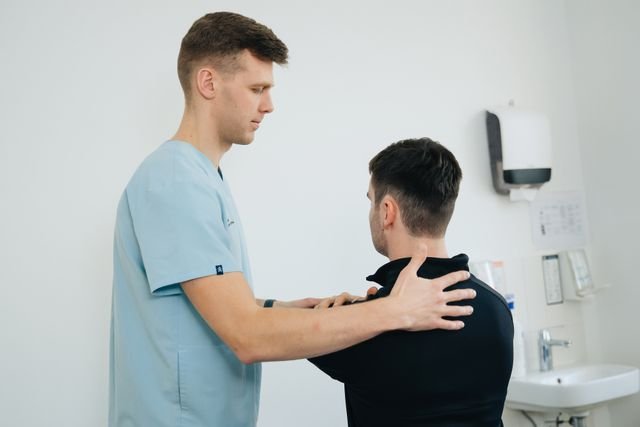
Not every painful, stiff shoulder is adhesive capsulitis. Rotator cuff tears, arthritis, calcific tendinopathy, neck-related pain and other shoulder problems can overlap with it. Frozen shoulder typically restricts both active and passive movement, but the diagnosis still belongs in clinical context.
Get assessed promptly if symptoms began after significant trauma, the shoulder looks deformed, you suddenly cannot lift the arm, or there is fever, marked redness, persistent numbness or significant new weakness.
Diabetes is also relevant. A BMJ Open systematic review found a higher risk of frozen shoulder among people with diabetes, although the authors noted limitations in the available studies. Diabetes does not make every stiff shoulder a frozen shoulder, and it does not change the need for a proper assessment.
If you have been trying home remedies for frozen shoulder for weeks without knowing what is actually causing the restriction, an examination is more useful than simply adding another exercise.
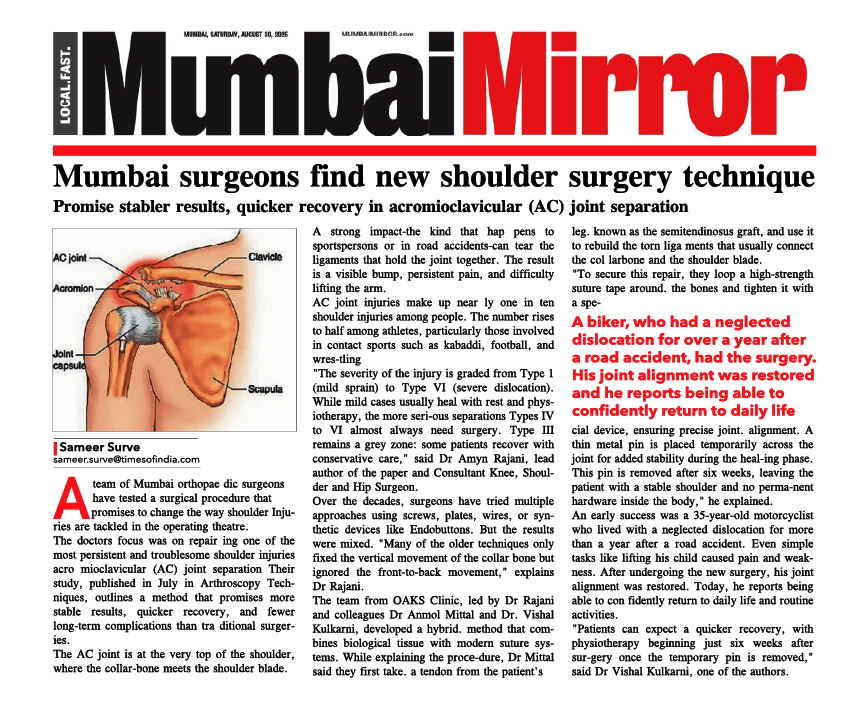
Dr Amyn Rajani‘s Research Insight: Stiffness Is Not One Diagnosis
Dr Amyn Rajani and colleagues published a prospective multicentre study in 2023 looking at stiffness after arthroscopic rotator cuff repair. Patients who developed postoperative stiffness at six weeks were studied after a glenohumeral corticosteroid injection, with pain, function and tendon healing followed over time.
There is an important distinction here. Postoperative stiffness after rotator cuff repair is not primary frozen shoulder. The study should not be used as proof that the same treatment is right for every person with adhesive capsulitis.
Its practical relevance is more modest and more useful: “stiff shoulder” describes a problem, not necessarily one diagnosis. Treatment has to account for why the shoulder is stiff, how irritable it is and whether tissue is healing after surgery. Dr Rajani’s frozen shoulder guidance similarly places movement and physiotherapy inside a broader treatment plan rather than presenting 5 frozen shoulder exercises for quick relief as a cure by themselves.
Frequently Asked Questions
Can 5 frozen shoulder exercises for quick relief cure frozen shoulder?
No. 5 frozen shoulder exercises for quick relief may make movement easier and help maintain mobility, but frozen shoulder usually changes over months. Exercises are part of management, not an overnight cure.
How to cure frozen shoulder quickly at home?
There is no proven method for how to cure frozen shoulder quickly at home. Gentle movement, sensible pain control and stage-appropriate rehabilitation are safer than repeatedly forcing a stiff joint.
What are the best home remedies for frozen shoulder?
Useful home remedies for frozen shoulder include comfortable heat or cold, pillow support for sleep and regular gentle mobility work. They should make day-to-day management easier, not promise to dissolve adhesions.
Should I stop if frozen shoulder exercises hurt?
Stop or reduce the movement if pain is sharp or a session causes a substantial, lasting flare. Mild stretching discomfort can occur, but exercise intensity should match how irritable the shoulder is.
Can I exercise during the painful stage?
Often, yes, but the range may need to be smaller and gentler. A physiotherapist can adapt 5 frozen shoulder exercises for quick relief so the routine suits the shoulder you have today, not an idealised timetable.
How long does frozen shoulder take to improve?
Recovery varies considerably and can be slow. That is another reason claims about how to cure frozen shoulder quickly should be treated cautiously. Your pattern of pain, stiffness, health and response to treatment all matter.
When should I see a shoulder specialist?
Seek assessment when stiffness is severe, worsening, follows an injury, causes notable weakness or is not improving. A clinician can confirm the diagnosis, review home remedies for frozen shoulder and discuss physiotherapy, injection or other options.