Hip Replacement Surgeon in Mumbai
Specialist Care for Hip Pain, Arthritis and Hip Joint Replacement
Persistent hip pain can make everyday activities such as walking, climbing stairs, sitting comfortably or getting out of a chair increasingly difficult. Whether your discomfort is caused by arthritis, avascular necrosis, an injury or another hip joint condition, an accurate diagnosis is important for choosing the right treatment.
Dr. Amyn Rajani, an experienced hip replacement surgeon in Mumbai, provides orthopaedic assessment and treatment for hip pain, joint degeneration, mobility problems and conditions that may require hip replacement surgery.
With over 20 years of orthopaedic experience, Dr. Rajani offers treatment options ranging from non-surgical management to total hip replacement, robotic-assisted hip replacement and selected hip arthroscopy procedures.
His approach focuses on understanding the patient's symptoms, evaluating joint damage and recommending treatment according to individual medical needs and functional goals.
- 20+ Years of Orthopaedic Experience
- M.S. Orthopaedics (Gold Medallist)
- Joint Replacement & Arthroscopy
- Robotic-Assisted Surgery
Call +91 88989 75355

When Should You Consult a Hip Specialist Doctor in Mumbai?
Hip discomfort may sometimes improve with rest and appropriate treatment. However, persistent pain, stiffness or difficulty moving the joint can indicate an underlying condition that needs medical attention.
Consulting a hip specialist doctor in Mumbai can help identify whether the pain is related to the hip joint, surrounding muscles, tendons, bones or another source.
You should consider seeing a hip pain doctor in Mumbai if you experience:
- Persistent pain in the hip, groin, buttock or upper thigh.
- Difficulty walking, climbing stairs or standing for long periods.
- Hip stiffness after sitting or resting.
- Pain that affects sleep or normal daily activities.
- Reduced movement while bending or rotating the hip.
- Limping or difficulty putting weight on one leg.
- Hip pain following an accident, fall or sports injury.
- Continued discomfort despite physiotherapy or medication.
- A previous diagnosis of hip arthritis or avascular necrosis.
- A recommendation for hip replacement surgery.
An experienced hip joint pain doctor evaluates the underlying cause before recommending treatment.
Important: Sudden severe hip pain after a fall, inability to bear weight, or hip pain accompanied by fever or a visibly abnormal joint requires urgent medical evaluation.
Hip Conditions Treated by Dr. Amyn Rajani
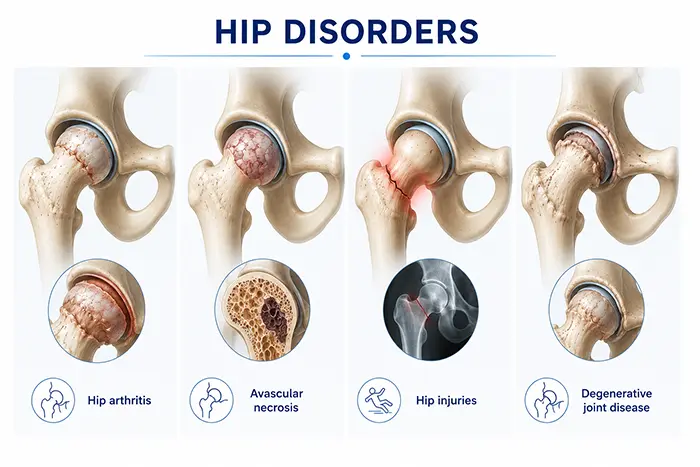
As an orthopedic hip specialist in Mumbai, Dr. Amyn Rajani evaluates conditions affecting hip joint movement, stability, cartilage and surrounding structures.
Hip Osteoarthritis
Osteoarthritis is a common cause of persistent hip pain, particularly in older adults. It occurs when the protective cartilage within the joint gradually deteriorates, leading to pain, stiffness and reduced mobility.
Symptoms may include:
- Groin or thigh pain while walking.
- Difficulty bending or rotating the hip.
- Stiffness after prolonged sitting.
- Reduced walking distance.
- Pain while putting on shoes or socks.
Treatment depends on the severity of arthritis and may include physiotherapy, activity modification, medication or hip replacement surgery in advanced cases.
Avascular Necrosis (AVN) of the Hip
Avascular necrosis, also called osteonecrosis, develops when blood supply to the femoral head is disrupted, potentially damaging the bone.
Patients may experience deep groin pain, stiffness, limping and difficulty bearing weight.
An experienced hip joint specialist in Mumbai can assess the stage of AVN through clinical examination and imaging.
Treatment options depend on whether the femoral head has retained its shape or developed significant structural damage. Advanced AVN with joint collapse may require total hip replacement.
Hip Fractures and Injury-Related Joint Damage
Hip fractures can occur after falls or accidents, particularly in older adults with weakened bones.
Some fractures and severe injuries may require surgical treatment, including hip replacement in selected cases.
Dr. Rajani evaluates hip injuries and joint damage to determine the appropriate management based on the type of injury, joint condition and patient's overall health.
Hip Labral Tears
The hip labrum is a ring of cartilage surrounding the socket of the hip joint. A labral tear can cause groin pain, clicking, catching sensations or discomfort during certain movements.
Depending on the symptoms and structural findings, treatment may involve physiotherapy, activity modification or arthroscopic surgery in selected patients.
Femoroacetabular Impingement (FAI)
Hip impingement occurs when abnormal contact between the femoral head and hip socket causes friction during movement.
This may lead to groin pain, stiffness and difficulty with activities involving repeated hip bending or rotation.
A specialist examination and appropriate imaging can help establish whether impingement is contributing to the symptoms.
Hip Bursitis and Tendon-Related Pain
Pain around the outer hip can arise from irritated tendons or structures surrounding the greater trochanter. Some patients experience discomfort while lying on the affected side, walking or climbing stairs.
A hip pain specialist in Mumbai can help distinguish these conditions from arthritis or other problems inside the hip joint.
Many cases can be managed without surgery through targeted rehabilitation, activity modification and appropriate pain management.
Hip Pain Treatment in Mumbai: Is Surgery Always Necessary?
Not everyone with hip pain requires an operation. A specialist consultation helps determine the cause, assess the severity and identify the most appropriate treatment options.
Patients looking for a hip pain doctor in Mumbai should consider a specialist who can explain non-surgical care alongside surgical options where needed.
Non-Surgical Hip Pain Treatment
Depending on the diagnosis, non-surgical treatment may include:
- Physiotherapy: Exercises to improve hip mobility, muscle strength and walking function.
- Pain management: Appropriate medications to help control discomfort and inflammation.
- Activity modification: Adjustments to activities that increase hip pain.
- Weight management: When appropriate, reducing excess weight may help decrease stress on the hip joint.
- Walking aids: A cane or other support may improve mobility and reduce joint loading.
- Selected injections: Certain injections may be considered for specific diagnoses, although they are not appropriate for every hip condition.
- Monitoring: Follow-up examination and imaging when necessary to assess disease progression.
Treatment is personalised according to the patient's symptoms, mobility, imaging findings and overall health.
When Surgical Treatment May Be Considered
Hip surgery may be discussed when:
- Hip pain remains severe despite appropriate treatment.
- Joint damage causes considerable stiffness and loss of movement.
- Walking and daily activities have become significantly restricted.
- Imaging confirms advanced arthritis or structural joint damage.
- A fracture or other serious hip condition requires surgical management.
The decision is based on clinical findings and individual circumstances rather than pain severity alone.
Hip Replacement Surgery Options in Mumbai
Dr. Amyn Rajani provides hip replacement assessment and surgical care for patients with advanced joint damage and related conditions.
As an orthopedic surgeon and hip specialist in Mumbai, he evaluates the extent of joint damage, bone quality, muscle function and the patient's overall health before discussing surgical options.
Total Hip Replacement Surgery
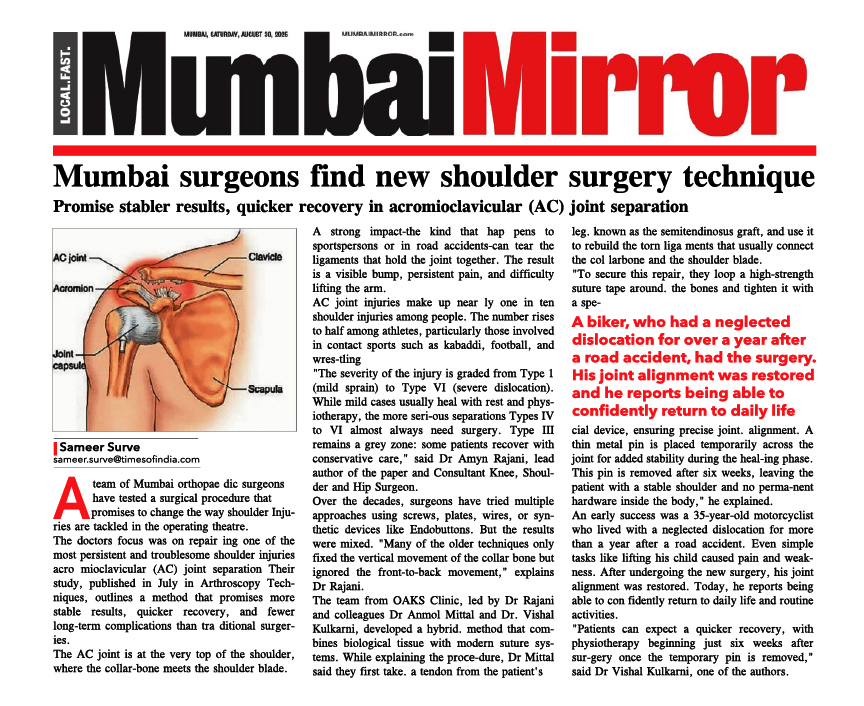
Total hip replacement, also called total hip arthroplasty, involves replacing the damaged joint surfaces with artificial components.
The procedure typically involves replacing the damaged femoral head with a prosthetic ball and preparing the hip socket to receive an artificial joint surface.
Total hip replacement may be considered for patients with:
- Advanced hip osteoarthritis.
- Severe rheumatoid or inflammatory joint damage.
- Avascular necrosis with femoral head collapse.
- Certain hip fractures.
- Persistent pain and restricted mobility despite suitable non-surgical care.
The goal of surgery is to reduce pain and improve hip function, although individual outcomes vary.
Robotic-Assisted Hip Replacement Surgery
Robotic-assisted hip replacement uses computer-assisted planning and specialised technology to support selected steps of the procedure.
Depending on the robotic system used, this technology may help the surgeon plan component positioning and execute the surgical plan with greater precision.
Robotic assistance does not perform the operation independently and does not guarantee better results for every patient.
As a hip replacement specialist in Mumbai, Dr. Rajani can assess whether robotic-assisted hip replacement is appropriate for the patient's anatomy, diagnosis and surgical requirements.
Hip Arthroscopy
Hip arthroscopy is a minimally invasive procedure that uses a small camera and instruments to examine and treat selected problems inside the hip joint.
It may be considered for certain labral tears, hip impingement, loose bodies and related conditions.
Patients looking for a hip arthroscopy surgeon in Mumbai should evaluate the surgeon's experience with their particular condition, the expected benefits of arthroscopy and whether their hip is suitable for a joint-preserving procedure.
Hip arthroscopy is not a substitute for replacement when a patient has advanced arthritis or severe joint deterioration.
Complex Hip Replacement and Revision Assessment
Some patients experience persistent pain, loosening, instability or other complications after a previous hip replacement.
These situations may require a detailed evaluation to determine the cause and whether further treatment or revision surgery is appropriate.
Dr. Rajani can review previous records, imaging and the patient's current symptoms to discuss the next steps, including referral or revision planning when clinically appropriate.
How Do You Know If You Need Hip Replacement Surgery?
Hip replacement is generally considered when joint damage causes substantial symptoms that are not adequately controlled with appropriate non-surgical treatment.
A hip replacement doctor in Mumbai assesses several factors before recommending an operation.
Signs That Hip Replacement May Be Worth Discussing
- Persistent hip pain during walking or routine activities.
- Significant pain while resting or sleeping.
- Difficulty getting up from a chair or entering a vehicle.
- Severe stiffness that restricts daily movement.
- A noticeable limp caused by hip pain.
- Advanced arthritis visible on X-rays.
- Femoral head collapse caused by avascular necrosis.
- Reduced independence because of hip joint problems.
- Limited improvement after a suitable period of conservative treatment.
Not all patients with these symptoms require hip replacement. A specialist assessment helps distinguish conditions that may respond to non-surgical management from those requiring operative treatment.

Can Hip Replacement Be Avoided?
In some patients, especially those with early or moderate joint disease, symptoms can be managed through rehabilitation, activity modification and other treatments.
However, advanced structural damage cannot always be reversed through non-surgical care.
An experienced hip replacement specialist can explain whether continued conservative management remains reasonable or whether surgery may provide a meaningful improvement in function and quality of life.
What Happens During a Hip Replacement Consultation?
A consultation with Dr. Amyn Rajani involves evaluating the patient's symptoms, joint movement and available medical investigations.
 1. Medical History and Symptom Review
The consultation begins with a discussion of the location of pain, its duration, previous injuries, medications, medical conditions and treatments already attempted.
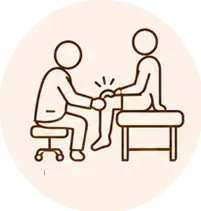 2. Physical Examination
The doctor assesses walking pattern, hip range of motion, tenderness, muscle strength and movements that reproduce symptoms.
 3. Imaging and Diagnostic Evaluation
X-rays are commonly used to assess arthritis, joint-space narrowing and bone changes. MRI, CT scans or additional investigations may be considered when clinically indicated.
 4. Treatment Options Discussion
Dr. Rajani reviews the diagnosis and explains suitable non-surgical or surgical options, including their potential benefits, limitations and risks.
 5. Personalised Treatment Planning
The recommended plan considers the patient's age, activity level, medical history, severity of joint damage and personal treatment goals.
Patients who are advised to undergo surgery can also discuss implant choices, preoperative preparation, hospital admission and rehabilitation requirements.
Why Consult Dr. Amyn Rajani for Hip Replacement in Mumbai?
Choosing a hip replacement surgeon in Mumbai is an important decision, particularly when considering a major joint replacement procedure.
Patients should consider a surgeon's qualifications, relevant clinical experience, approach to patient assessment, hospital affiliations and rehabilitation planning.
 Over 20 Years of Orthopaedic Experience
Dr. Amyn Rajani has more than two decades of clinical experience in orthopaedic surgery, joint replacement and arthroscopic procedures.
 M.S. Orthopaedics Gold Medallist
Dr. Rajani completed his M.S. in Orthopaedics as a Gold Medallist from the University of Mumbai, with training at major Mumbai medical institutions.
 International Faculty and Research
Dr. Rajani holds 5 international faculty appointments, and his published research in peer-reviewed orthopaedic journals has been cited more than 100 times.
 Hip and Joint Replacement Experience
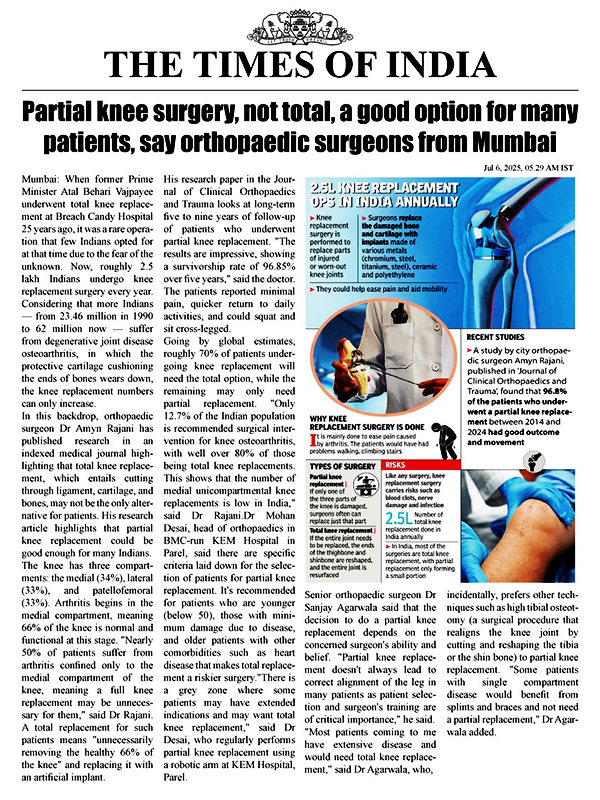
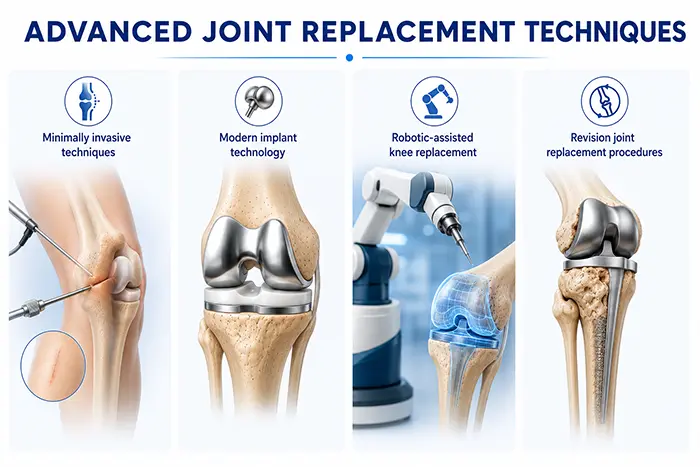
His clinical practice includes conventional and robotic-assisted hip replacement, alongside treatment of knee, shoulder and other major joint conditions.
 Established Mumbai Hospital Affiliations
Dr. Rajani is affiliated with Breach Candy Hospital, Mumbai; P. D. Hinduja Hospital, Khar; and Saifee Hospital, Mumbai.
Individualised Treatment Approach
The choice between non-surgical care, hip arthroscopy and joint replacement depends on the patient's clinical condition rather than a standard surgical recommendation for everyone.
 Recovery and Rehabilitation Planning
Rehabilitation is an important part of hip treatment. Patients receive guidance on postoperative mobility, physiotherapy, strengthening and returning to everyday activities according to their treatment plan.
For patients looking for a hip replacement doctor in Mumbai, these factors can help you make an informed choice.
Hip Replacement Recovery: What Can Patients Expect?
Recovery following hip replacement varies depending on the procedure, the patient's overall health and other medical factors.
Early Recovery After Surgery
Many patients begin standing and walking with assistance soon after surgery, according to the surgeon's instructions and their medical condition.
Pain management, safe movement and reducing the risk of postoperative complications are important during this stage.
Physiotherapy and Walking Rehabilitation
Rehabilitation usually focuses on:
- Gradually improving walking ability.
- Strengthening muscles around the hip.
- Restoring functional mobility.
- Improving balance and coordination.
- Learning safe movement techniques.
- Progressively returning to everyday tasks.
Returning to Daily Activities
The timing of returning to work, driving, exercise and other activities depends on the patient's recovery, occupation, surgery type and clinical progress.
Some activities may resume within weeks, while strength and functional recovery can continue for several months.
Long-Term Care After Hip Replacement
Patients may be advised to maintain a healthy weight, stay physically active within recommended limits and attend follow-up appointments.
Long-term outcomes also depend on implant characteristics, bone health, activity level and other individual factors.
Choosing the Right Hip Replacement Specialist in Mumbai
When choosing a hip surgeon in Mumbai, patients may consider the following when deciding where to seek treatment.
Before choosing a surgeon, it can help to consider the following questions.
Does the Surgeon Regularly Treat Your Hip Condition?
A doctor experienced in hip arthritis, avascular necrosis, arthroscopy or replacement surgery may be better positioned to discuss the options relevant to your diagnosis.
Are Both Surgical and Non-Surgical Options Explained?
A good consultation should help you understand whether conservative treatment remains appropriate and what might change if surgery becomes necessary.
Are the Benefits and Risks of Surgery Discussed?
Hip replacement may improve pain and function in suitable patients, but it also has potential complications, including infection, blood clots, dislocation, nerve injury and implant-related problems.
What Rehabilitation Will Be Required?
Understanding the recovery process and expected physiotherapy needs can help patients prepare for treatment.
Is a Second Opinion Available?
Patients who have already been advised hip replacement can seek an independent review of their diagnosis, imaging and proposed procedure.
Dr. Rajani offers orthopaedic second-opinion consultations for patients who want additional clarity before making a treatment decision.
Hip Replacement Consultation for Patients Across India
Patients looking for a hip replacement specialist in India may wish to consult an experienced surgeon before deciding on treatment, especially when they have been advised to undergo major joint replacement surgery.
Dr. Amyn Rajani practises in Mumbai and evaluates patients with hip arthritis, avascular necrosis, joint degeneration and other conditions that may require surgical treatment.
Patients travelling from other Indian cities can contact OAKS Clinic to discuss appointment arrangements and the medical records they should bring.
For individuals looking for a hip replacement surgeon in India, an informed decision should consider the surgeon's qualifications, experience with the specific diagnosis, hospital facilities, expected recovery and approach to follow-up care.
An in-person examination and appropriate imaging are usually important before finalising a surgical treatment plan.
Already Advised Hip Replacement? Get a Second Opinion
Being advised to undergo hip replacement can raise several questions. You may want to know whether surgery is necessary immediately, whether another treatment could help, or whether conventional or robotic-assisted replacement is suitable for your condition.
Dr. Amyn Rajani provides orthopaedic second opinions for patients seeking an additional assessment before proceeding with surgery. A second opinion may help you better understand:
- The cause and severity of your hip joint damage.
- Whether non-surgical treatment remains an option.
- The indications for hip replacement.
- Available surgical approaches.
- Expected benefits and possible complications.
- Rehabilitation and postoperative care requirements.
Consult a Hip Replacement Surgeon at OAKS Clinic, Mumbai
Patients experiencing persistent hip pain, difficulty walking, stiffness or symptoms of advanced hip arthritis can schedule an orthopaedic consultation with Dr. Amyn Rajani.
Patients can bring previous X-rays, MRI reports, prescriptions, surgical records and other relevant medical documents for review.
Consultation: By appointment only.
Clinic Address
OAKS Clinic
707, Panchsheel Plaza,
Next to Dharam Palace,
Hughes Road, Gamdevi,
Mumbai – 400007, Maharashtra, India.
Appointment Number: +91 88989 75355
Clinic Telephone: 022-23619137
Email: oaksclinic14@gmail.com
Frequently Asked Questions About Hip Replacement Surgeons in Mumbai
Q1. Who should I consult for persistent hip pain in Mumbai?
You can consult an orthopaedic doctor experienced in hip joint disorders. Dr. Amyn Rajani is a hip specialist in Mumbai who evaluates hip arthritis, avascular necrosis, hip injuries and conditions that may require hip replacement.
Q2. How do I choose a hip replacement surgeon in Mumbai?
Consider the surgeon's qualifications, experience in hip replacement, hospital affiliations, treatment approach and postoperative rehabilitation planning. A detailed consultation should help you understand your condition, available options and expected outcomes.
Q3. What is the difference between a hip pain specialist and a hip replacement surgeon?
A hip pain specialist evaluates and treats conditions causing pain in or around the hip. A hip replacement surgeon is an orthopaedic surgeon who also performs joint replacement procedures when substantial hip damage makes surgery appropriate. Many orthopaedic hip specialists provide both types of care.
Q4. At what stage is hip replacement surgery necessary?
Hip replacement may be considered when severe arthritis or other structural joint damage causes persistent pain and functional limitations despite appropriate conservative treatment. The decision depends on symptoms, examination findings and imaging.
Q5. Can hip arthritis be treated without surgery?
Yes. Some patients with early or moderate arthritis benefit from physiotherapy, activity modification, appropriate medication and other non-surgical measures. Advanced joint destruction may require surgical treatment when symptoms become difficult to manage.
Q6. Does Dr. Amyn Rajani perform robotic hip replacement surgery in Mumbai?
Dr. Amyn Rajani's practice includes robotic-assisted joint replacement, including hip replacement. The suitability of a particular robotic technique is discussed during consultation, as the approach depends on the patient's condition and surgical setting.
Q7. Is robotic hip replacement better than conventional hip replacement?
Robotic assistance may support surgical planning and component positioning in selected cases. However, it is not automatically superior for every patient and does not eliminate surgical risks. Both approaches can be appropriate depending on individual circumstances.
Q8. How long does it take to recover from hip replacement surgery?
Recovery varies. Many patients begin assisted walking early after surgery, while returning to daily activities and rebuilding strength may take weeks to months. The surgeon and rehabilitation team provide guidance based on individual progress.
Q9. Can avascular necrosis of the hip be treated without replacement?
Some early AVN cases may be managed with joint-preserving treatment, depending on the size and location of the affected area. Advanced AVN with femoral head collapse and significant arthritis may require hip replacement.
Q10. Is hip arthroscopy suitable for every patient with hip pain?
No. Hip arthroscopy is generally considered for selected structural problems, such as certain labral tears and hip impingement. It is often not appropriate for advanced hip arthritis, where other treatments may be more effective.
Q11. What are the potential complications of hip replacement surgery?
Potential complications include infection, blood clots, dislocation, nerve or blood vessel injury, implant loosening and differences in leg length. Your surgeon will discuss individual risks, preventive measures and expected benefits before surgery.
Q12. Can I get a second opinion before hip replacement surgery?
Yes. If you have been advised hip replacement surgery, you can seek another specialist's assessment of the diagnosis, imaging findings and proposed treatment. A second opinion can help clarify whether surgery is appropriate and what alternatives may exist.
Q13. What tests are required before hip replacement surgery?
Assessment usually includes clinical examination and X-rays. Additional imaging or laboratory investigations may be recommended depending on the condition and planned treatment. If surgery is scheduled, preoperative medical evaluation is also necessary.
Q14. Does hip replacement surgery have an age limit?
There is no single age threshold that determines whether hip replacement is suitable. The decision depends on the severity of joint damage, symptoms, functional limitations, bone health, medical conditions and expected benefits.
Q15. How do I book an appointment with Dr. Amyn Rajani in Mumbai?
You can contact OAKS Clinic at +91 88989 75355 or use the online contact page to request an appointment. The clinic is located at Hughes Road, Gamdevi, Mumbai.
Take the Next Step Towards Improved Hip Mobility
Hip pain, stiffness and limited mobility can affect independence, work, exercise and everyday life. Identifying the underlying cause is the first step towards choosing appropriate treatment.
Whether you are looking for a hip joint specialist in Mumbai, exploring treatment for hip arthritis or considering hip replacement surgery, Dr. Amyn Rajani provides orthopaedic evaluation and individualised treatment planning.