
Robotic Knee Replacement Surgery in Mumbai
Robotic-Assisted Total and Partial Knee Replacement
Severe knee pain, stiffness and difficulty walking can affect everyday activities, independence and quality of life. When arthritis or joint damage progresses and non-surgical treatments no longer provide adequate relief, knee replacement surgery may be considered.
Dr. Amyn Rajani, an experienced robotic knee replacement surgeon in Mumbai, provides specialist evaluation and surgical treatment for patients with advanced knee arthritis and other conditions requiring joint replacement.
With over 20 years of experience in orthopaedic surgery, Dr. Rajani performs robotic-assisted total and partial knee replacement procedures, using computer-assisted surgical planning to guide implant positioning and personalised treatment.
Whether you have been advised to undergo knee replacement or want to understand whether robotic technology is suitable for your condition, a specialist consultation can help you make an informed decision.
- 20+ Years of Orthopaedic Experience
- Total & Partial Knee Replacement
- M.S. Orthopaedics (Gold Medallist)
Call +91 88989 75355

What Is Robotic Knee Replacement Surgery?
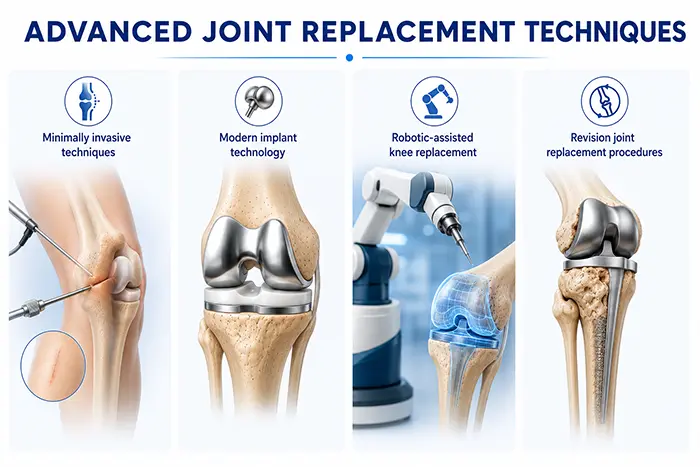
Robotic knee replacement surgery is an advanced joint replacement technique in which a surgeon uses robotic-assisted technology to plan and perform selected steps of knee replacement with a high level of precision.
Unlike traditional knee replacement, which primarily relies on conventional instruments and manual alignment techniques, robotic-assisted surgery uses computerised planning and real-time information to guide bone preparation and implant positioning.
Depending on the robotic platform, the system may create a three-dimensional model of the patient's knee anatomy using imaging and intraoperative measurements.
This information helps the surgeon plan the procedure around individual joint alignment, bone structure and soft-tissue balance.
The robot does not perform the surgery independently. The orthopaedic surgeon remains responsible for planning, controlling and carrying out the procedure.
Robotic technology is used to support surgical accuracy, but the overall success of knee replacement also depends on appropriate patient selection, the surgeon's experience, implant selection and rehabilitation.

Who May Need Robotic Knee Replacement Surgery in Mumbai?
Not every patient with knee pain requires joint replacement. Robotic knee replacement surgery in Mumbai may be considered for patients whose knee joint is significantly damaged and whose symptoms continue despite appropriate non-surgical treatment.
You may benefit from a specialist evaluation if you experience:
- Persistent knee pain while walking, standing or climbing stairs.
- Severe knee stiffness, particularly after resting.
- Difficulty bending or straightening the knee.
- Knee pain that disrupts sleep or daily activities.
- Bow-legged or knock-kneed alignment associated with arthritis.
- Reduced walking distance due to knee discomfort.
- Advanced osteoarthritis diagnosed through X-rays.
- Difficulty standing up from a chair or using stairs.
- Limited improvement after physiotherapy, medication or other treatments.
- A previous recommendation for total or partial knee replacement.
A robotic knee replacement surgeon in Mumbai can assess the severity and distribution of joint damage before recommending an appropriate surgical or non-surgical treatment plan.

Types of Robotic Knee Replacement Surgery
Robotic-assisted knee replacement is broadly divided into total and partial knee replacement procedures.
The choice depends on which parts of the knee are damaged, ligament function, knee alignment, bone quality and the patient's overall condition.
Robotic Total Knee Replacement Surgery
Robotic total knee replacement surgery involves replacing the damaged joint surfaces of the knee with artificial components while using robotic technology to assist surgical planning and implant placement.
The knee joint includes surfaces of the femur (thigh bone), tibia (shin bone) and patella (kneecap). In total knee replacement, the damaged joint surfaces are resurfaced or replaced as clinically appropriate.
Robotic assistance helps the surgeon evaluate joint alignment and plan the position of the components according to the patient's anatomy.
When Is Robotic Total Knee Replacement Considered?
It may be recommended for patients with:
- Advanced osteoarthritis affecting multiple knee compartments.
- Severe joint pain that limits everyday activities.
- Significant knee deformity associated with joint degeneration.
- Reduced knee movement and persistent stiffness.
- Certain forms of inflammatory arthritis.
- Extensive joint damage that is unsuitable for partial replacement.
The objective is to reduce arthritis-related pain and improve knee function. Individual results and recovery times vary.
Robotic Partial Knee Replacement Surgery
Robotic partial knee replacement surgery, also called robotic-assisted unicompartmental knee replacement, involves replacing only the damaged portion of the knee while preserving other healthy joint surfaces.
The knee has three main compartments:
- Medial compartment – the inner side of the knee.
- Lateral compartment – the outer side of the knee.
- Patellofemoral compartment – the area between the kneecap and thigh bone.
When arthritis is limited to one compartment and the remaining joint structures meet the necessary clinical criteria, partial replacement may be considered.
Robotic technology helps the surgeon plan the amount of bone preparation and positioning of the smaller replacement components.
Potential Advantages of Partial Knee Replacement
For appropriately selected patients, partial knee replacement may offer:
- Preservation of more healthy bone and joint structures.
- Smaller surgical exposure in some cases.
- Maintenance of more natural knee anatomy.
- Potentially quicker early functional recovery.
- Relief of pain associated with the damaged compartment.
However, partial knee replacement is not appropriate when arthritis is widespread or other essential joint structures are unsuitable.
Learn More About Robotic Partial Knee Replacement in Mumbai →
Robotic Total Knee Replacement vs Robotic Partial Knee Replacement
Understanding the difference between the two procedures can help patients discuss their treatment options with an orthopaedic specialist.
| Feature | Robotic Total Knee Replacement | Robotic Partial Knee Replacement |
|---|---|---|
| Joint area treated | Multiple damaged joint surfaces | Selected damaged compartment |
| Healthy bone preservation | More extensive resurfacing | Preserves more unaffected bone |
| Typical suitability | Advanced arthritis involving several compartments | Arthritis limited to a suitable compartment |
| Ligament considerations | Depends on implant and surgical approach | Requires appropriate ligament function |
| Robotic assistance | Supports alignment and implant placement | Supports targeted preparation and component positioning |
| Rehabilitation | Structured physiotherapy required | Early recovery may be faster in selected patients |
| Long-term considerations | Implant wear, loosening and other complications remain possible | Arthritis can progress in untreated compartments |
Which is better for you?
Neither procedure is automatically better for everyone. A clinical examination and imaging help determine whether a partial or total knee replacement is more appropriate.
How Does Robotic Knee Replacement Surgery Work?
Robotic-assisted surgery combines the surgeon's clinical expertise with technology that supports detailed planning and precision during surgery.
Step 1: Knee Examination and Diagnosis
Dr. Rajani begins by evaluating the patient's symptoms, knee movement, walking pattern, alignment and existing medical reports. X-rays and additional imaging may be recommended to understand the severity and distribution of joint damage.
Step 2: Digital Surgical Planning
Depending on the robotic system, a CT scan or intraoperative mapping may be used to create a digital model of the knee joint. The surgeon uses the available anatomical information to plan bone preparation, implant size, positioning and joint alignment.

Step 3: Robotic-Assisted Bone Preparation
During surgery, the robotic system assists the surgeon in carrying out the planned bone preparation. Real-time feedback may help the surgeon maintain the intended surgical boundaries and alignment.
Step 4: Implant Placement and Joint Balancing
The replacement components are positioned according to the surgical plan. The surgeon assesses knee movement, joint stability and soft-tissue balance and makes adjustments where necessary.

Step 5: Postoperative Care and Rehabilitation
After surgery, patients receive pain management, wound care, mobility guidance and physiotherapy. Rehabilitation focuses on restoring movement, building strength and gradually returning to daily activities.

The exact surgical workflow depends on the robotic system, implant and patient's condition.
What Are the Potential Benefits of Robotic Knee Replacement Surgery?
Robotic-assisted techniques offer several technical capabilities that may support precise knee replacement.
1. Personalised Surgical Planning
The procedure can be planned using detailed information about the patient's knee anatomy, allowing the surgeon to individualise implant positioning.

2. Precise Bone Preparation
Robotic guidance can help the surgeon perform bone preparation according to the selected surgical plan.
3. Implant Positioning and Alignment
The technology assists in achieving planned component positioning and knee alignment, both important considerations in joint replacement.

4. Soft-Tissue Balance Assessment
Some robotic systems provide information about ligament tension and joint balance during surgery, helping the surgeon evaluate knee stability.

5. Preservation of Healthy Structures in Partial Replacement
For suitable partial knee replacement candidates, robotic assistance can support targeted treatment of the damaged compartment while preserving unaffected structures.

6. Potential Early Recovery Benefits
Some studies have reported improvements in selected early recovery measures with certain robotic techniques. However, evidence does not establish that robotic surgery consistently produces faster recovery, fewer complications or better long-term outcomes for every patient.

Important: Robotic technology improves surgical planning and precision in selected aspects of the operation, but it cannot guarantee a pain-free knee, faster recovery or longer implant survival.
Robotic Knee Replacement vs Conventional Knee Replacement
Both robotic-assisted and conventional knee replacement are established surgical approaches for treating advanced knee joint damage.
The primary difference is how the surgeon plans and executes certain steps of the procedure.
| Aspect | Robotic-Assisted Knee Replacement | Conventional Knee Replacement |
|---|---|---|
| Surgical planning | Computer-assisted and patient-specific | Conventional planning and surgical measurements |
| Bone preparation | Supported by robotic guidance | Performed using conventional surgical instruments |
| Implant alignment | Digital planning and feedback | Manual guides and surgeon assessment |
| Surgeon control | Surgeon-controlled robotic assistance | Surgeon-controlled conventional techniques |
| Recovery | Depends on patient and procedure | Depends on patient and procedure |
| Long-term outcome | Influenced by multiple clinical factors | Influenced by multiple clinical factors |
The best approach depends on the patient's condition, the available technology, the surgeon's experience and the planned procedure.
Dr. Rajani discusses treatment options according to individual clinical requirements rather than assuming robotic assistance is necessary in every case.
Why Consult Dr. Amyn Rajani for Robotic Knee Replacement in Mumbai?
Selecting a robotic knee replacement surgeon in Mumbai involves evaluating the surgeon's qualifications, relevant experience, approach to treatment and postoperative care.
Dr. Amyn Rajani provides orthopaedic assessment and surgical treatment for knee arthritis, joint degeneration and conditions requiring total or partial knee replacement.
Over 20 Years of Orthopaedic Experience
Dr. Rajani has more than two decades of clinical experience in orthopaedic surgery, arthroscopy and joint replacement.
Experience in Robotic-Assisted Joint Replacement

M.S. Orthopaedics Gold Medallist
Dr. Rajani completed his M.S. in Orthopaedics as a Gold Medallist from the University of Mumbai.
Experience in Total and Partial Knee Replacement
His clinical practice includes conventional and robotic-assisted knee replacement, allowing evaluation of different surgical approaches based on the extent of joint damage.
Recognised Achievement in Partial Knee Replacement
In 2025, Dr. Rajani received recognition from the India Book of Records for performing a single-stage bilateral unicompartmental knee replacement on a patient weighing 128 kg.

Mumbai Hospital Affiliations
Dr. Rajani is associated with established Mumbai hospitals, including Breach Candy Hospital, P. D. Hinduja Hospital (Khar) and Saifee Hospital. The hospital and availability of a particular robotic platform should be confirmed during surgical planning.
Rehabilitation-Focused Patient Care
Treatment planning extends beyond surgery to include postoperative mobility, physiotherapy and guidance on recovery.

What Conditions Can Require Robotic Knee Replacement?
Advanced Knee Osteoarthritis
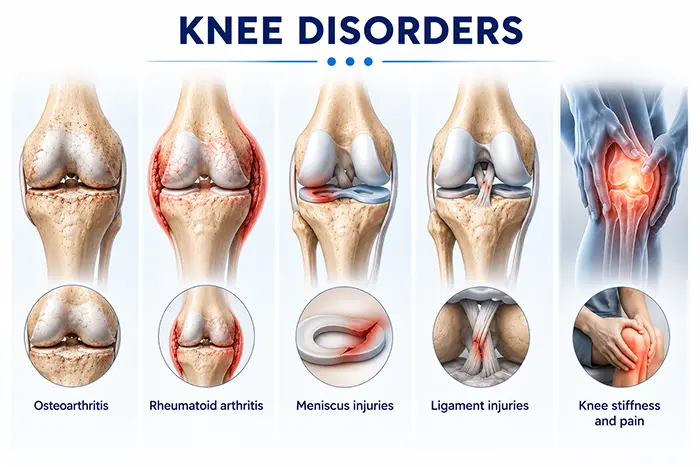
Osteoarthritis causes deterioration of joint cartilage, which can lead to pain, stiffness, swelling and reduced mobility.
Advanced arthritis that significantly limits daily activities despite appropriate treatment may require knee replacement.
Arthritis Affecting One Knee Compartment
When knee arthritis is confined to a single suitable compartment, robotic partial knee replacement may be considered instead of replacing more of the joint.
Knee Deformity Due to Arthritis
Long-standing joint degeneration can contribute to bow-legged or knock-kneed alignment.
A specialist evaluates joint damage, ligament function and alignment before planning the surgical approach.
Inflammatory Joint Conditions
Certain forms of inflammatory arthritis may cause progressive knee damage and persistent functional limitations.
When significant joint destruction occurs, knee replacement may be considered following appropriate medical assessment.
Post-Traumatic Knee Arthritis
Previous fractures or major injuries can sometimes result in cartilage damage and later development of arthritis.
Treatment depends on the condition of the joint, existing implants, ligament function and other clinical factors.
Recovery After Robotic Knee Replacement Surgery
Recovery depends on whether the patient undergoes total or partial knee replacement, their overall health, preoperative mobility and rehabilitation progress.
Immediately After Surgery
The medical team monitors pain, circulation, wound healing and general health.
Many patients begin standing and walking with assistance within the early postoperative period when medically appropriate.
First Few Weeks
Rehabilitation generally focuses on:
- Improving knee bending and straightening.
- Gradually increasing walking distance.
- Reducing swelling.
- Strengthening the muscles supporting the knee.
- Practising safe movements and everyday activities.
- Following wound care and medication instructions.
Returning to Daily Activities
Patients may gradually return to routine activities as pain, strength and mobility improve.
Some individuals undergoing partial knee replacement recover certain functions sooner than those undergoing total knee replacement, although results vary.
Long-Term Rehabilitation
Strength, endurance and knee movement can continue improving over several months.
Follow-up appointments help assess recovery, implant function and any concerns requiring medical attention.
The surgeon and physiotherapy team provide individual instructions for driving, climbing stairs, returning to work and resuming exercise.
Are There Risks Associated With Robotic Knee Replacement Surgery?
Like any major operation, robotic-assisted knee replacement carries risks even when advanced technology is used.
Potential complications include:
- Infection.
- Blood clots.
- Bleeding or wound healing problems.
- Persistent pain or stiffness.
- Nerve or blood vessel injury.
- Implant loosening or wear.
- Joint instability.
- Fracture around the implant.
- Anaesthesia-related complications.
- Need for revision surgery in the future.
Robotic systems may also introduce technique-specific considerations, depending on the equipment used.
A preoperative consultation helps identify individual risk factors and discuss appropriate preventive measures.

How to Prepare for Robotic Knee Replacement Surgery
Preparation begins with a detailed clinical assessment and discussion of the planned procedure.
Medical Evaluation
Patients may undergo blood tests, cardiac assessment or other investigations depending on age, medical history and anaesthesia requirements.
Review of Existing Medications
Inform the surgical team about all medications, supplements and medical conditions. Some medicines may need adjustment before surgery under medical supervision.
Preoperative Strengthening
Appropriate exercises may help maintain muscle strength and mobility before surgery when tolerated.
Home Preparation
Patients may need to organise assistance, prepare a suitable walking space and make arrangements for recovery after hospital discharge.
Understanding the Rehabilitation Plan
Discuss physiotherapy, walking aids, follow-up appointments and the expected return to daily activities with the treatment team.
Already Advised Knee Replacement? Get a Second Opinion
If you have already been advised to undergo knee replacement, you may want clarification about the procedure, implant options or whether robotic assistance is appropriate. Dr. Amyn Rajani provides orthopaedic second opinions for patients considering knee replacement surgery.
A second-opinion consultation can help you understand:
- Whether knee replacement is currently necessary.
- Whether non-surgical treatment remains appropriate.
- If partial knee replacement is a suitable option.
- Whether total knee replacement is more appropriate.
- The potential role of robotic-assisted surgery.
- Expected rehabilitation requirements.
- Risks, benefits and available treatment alternatives.
Consult a Robotic Knee Replacement Surgeon at OAKS Clinic, Mumbai
Patients experiencing advanced knee arthritis, persistent joint pain or reduced mobility can schedule an orthopaedic consultation with Dr. Amyn Rajani.
Consultations are available by appointment.
Bring existing X-rays, MRI reports, prescriptions and previous treatment records if available.
Clinic Address
OAKS Clinic
707, Panchsheel Plaza,
Next to Dharam Palace,
Hughes Road, Gamdevi,
Mumbai – 400007, Maharashtra, India.
Appointment: +91 88989 75355
Telephone: 022-23619137
Email: oaksclinic14@gmail.com
Frequently Asked Questions About Robotic Knee Replacement Surgery in Mumbai
Q1. What is robotic knee replacement surgery?
Robotic knee replacement surgery is a joint replacement procedure in which a surgeon uses computer-assisted robotic technology to support surgical planning, bone preparation and implant positioning. The surgeon controls the procedure, while the robotic system assists with selected technical steps.
Q2. Who is a suitable candidate for robotic knee replacement surgery in Mumbai?
Patients with advanced knee arthritis, substantial joint damage and persistent symptoms despite appropriate non-surgical treatment may be candidates. A specialist determines suitability through clinical assessment, imaging and a review of the patient's overall health.
Q3. Is robotic knee replacement better than conventional knee replacement?
Robotic assistance can improve precision in selected aspects of surgical planning and implant placement. However, it is not necessarily better for every patient, and long-term clinical benefits compared with conventional replacement are still being studied. Both approaches can provide good results when appropriately performed.
Q4. What is robotic total knee replacement surgery?
Robotic total knee replacement uses robotic-assisted technology to support replacement of damaged knee joint surfaces. It is generally considered for patients with advanced arthritis affecting multiple compartments of the knee.
Q5. What is robotic partial knee replacement surgery?
Robotic partial knee replacement replaces a selected damaged compartment while preserving more of the healthy joint structures. It may be suitable for patients with arthritis limited to one compartment and appropriate ligament function.
Q6. Does the robot perform knee replacement surgery independently?
No. The surgeon remains responsible for the operation. The robotic system helps guide certain steps according to the surgeon's plan and provides information to support precision.
Q7. How long does robotic knee replacement surgery take?
The operation can take approximately one to two hours in many cases, although the duration depends on whether total or partial replacement is performed, the patient's anatomy, surgical complexity and other factors. Preparation, anaesthesia and recovery-room time add to the total hospital procedure time.
Q8. How long is recovery after robotic knee replacement?
Many patients begin assisted walking soon after surgery, while everyday function may improve gradually over weeks. Strength and functional recovery can continue for several months. The timeline depends on the operation, the patient's health and rehabilitation progress.
Q9. Is robotic partial knee replacement less invasive than total knee replacement?
Partial knee replacement generally preserves more healthy bone and joint structures and may use a smaller surgical exposure. However, suitability depends on the location of arthritis and the condition of the remaining knee structures.
Q10. How long does a robotic knee replacement implant last?
Implant longevity varies according to patient age, activity level, body weight, implant design, surgical factors and other conditions. Robotic assistance does not guarantee that an implant will last longer than one placed using conventional techniques.
Q11. Can both knees be replaced using robotic technology?
Bilateral knee replacement may be considered for selected patients, either during one operation or in staged procedures. Suitability depends on overall health, severity of arthritis, operative risk and specialist assessment.
Q12. Is robotic knee replacement painful?
Pain and discomfort are expected after knee replacement surgery, but they are managed using appropriate anaesthesia and postoperative pain-control strategies. The intensity and duration vary between patients.
Q13. What is the cost of robotic knee replacement surgery in Mumbai?
The cost depends on the hospital, type of surgery, implant selection, robotic technology, whether one or both knees are treated, length of hospital stay and insurance coverage. An individual estimate should be obtained after consultation and hospital assessment.
Q14. Can robotic knee replacement correct bow-legged or knock-kneed alignment?
Knee replacement can address certain deformities caused by arthritis. Robotic technology may assist with planning and alignment assessment, but the achievable correction depends on bone structure, ligament balance and the severity of deformity.
Q15. Can I walk normally after robotic knee replacement surgery?
Many patients experience improved mobility after successful knee replacement and appropriate rehabilitation. However, the extent of improvement varies, and normal walking cannot be guaranteed for every patient.
Q16. Does Dr. Amyn Rajani perform robotic total and partial knee replacement in Mumbai?
Yes. Dr. Amyn Rajani's clinical practice includes robotic-assisted total and partial knee replacement. The appropriate procedure and availability of the required robotic system are discussed during treatment planning.
Q17. How do I choose a robotic knee replacement surgeon in Mumbai?
Consider the surgeon's orthopaedic qualifications, experience with robotic-assisted and conventional replacement, ability to evaluate total versus partial replacement, hospital facilities and approach to postoperative rehabilitation. A specialist consultation can help determine whether the proposed procedure is suitable for you.
Q18. How can I book a robotic knee replacement consultation with Dr. Amyn Rajani?
You can contact OAKS Clinic at +91 88989 75355 or use the contact page to request an appointment at Hughes Road, Gamdevi, Mumbai.
Take the Next Step Towards Better Knee Mobility
Living with advanced knee arthritis can make walking, climbing stairs and performing everyday activities difficult. Understanding your treatment options is an important step towards managing pain and improving function.
If you are considering robotic knee replacement surgery in Mumbai, Dr. Amyn Rajani provides specialist evaluation for both robotic total and partial knee replacement. Schedule a consultation to discuss your knee condition, surgical options and the treatment approach most appropriate for your needs.