Knock knees in adults is a condition more common than most people realise. Many adults live with this misalignment for years, often experiencing knee pain, hip discomfort, or difficulty walking, without knowing that effective options exist.
The short answer to whether knock knees can be corrected in adults is: yes, in most cases. The right approach depends on severity, underlying cause, and whether pain or function is being affected. Mild cases often respond well to targeted exercises and physiotherapy. More significant deformities may require surgical correction.
This article covers the main knock knees causes in adults, conservative treatment options including knock knees exercises for adults, and when knock knees treatment involving surgery becomes the appropriate step.
What Are Knock Knees?
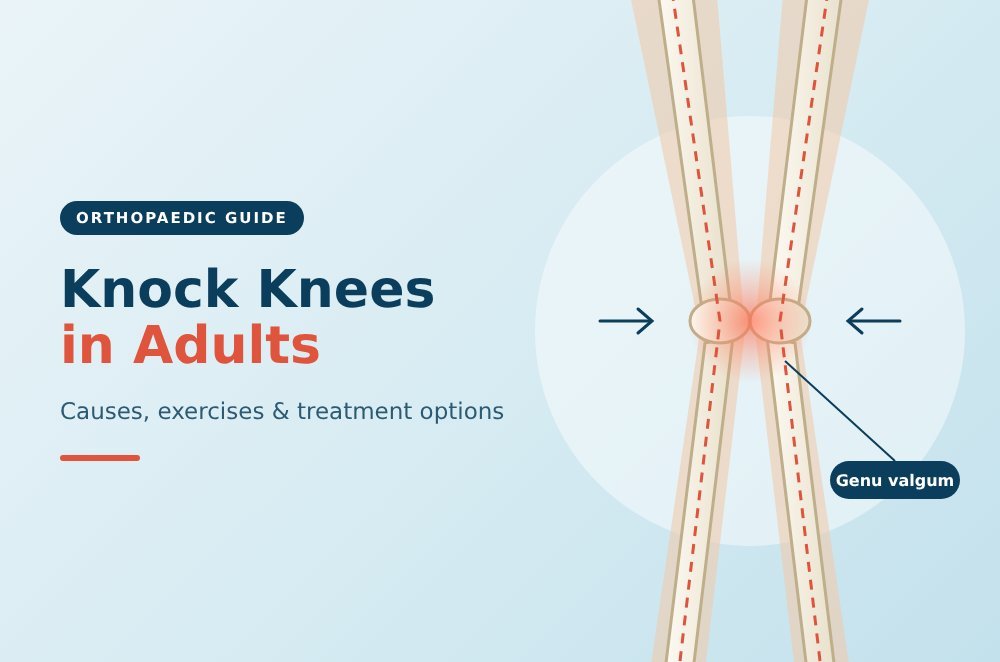
Knock knees, medically known as genu valgum, is a leg alignment condition where the knees angle inward and touch or nearly touch when a person stands with their feet together, while the ankles remain apart. The inward angling places uneven mechanical load across the knee, particularly on the outer (lateral) compartment of the joint.
In children, a mild degree of genu valgum is considered a normal phase of development, usually correcting itself by around age 7 to 8. In adults, knock knees that persist or develop later in life are a different matter. They are usually related to an underlying cause, and they will not resolve without deliberate intervention.
The condition can be mild, moderate, or severe. In mild cases, a person may notice that their ankles are slightly apart when their knees touch. In more significant cases, the intermalleolar distance (the gap between the ankles) may exceed 5 to 8 cm, and walking, running, or climbing stairs can become uncomfortable.
According to Pace Hospital, around 10% of overweight adults have some degree of genu valgum, though it can also occur in individuals of normal weight for other reasons.
Knock Knees Causes in Adults
Understanding the cause matters because it shapes treatment. Knock knees causes in adults are varied and sometimes involve more than one factor.
Excess Body Weight
Carrying excess weight is one of the most common contributors to adult genu valgum. The extra load across the knee shifts the mechanical axis, causing the joint to drift inward over time. Weight loss can partially reduce the stress, though it does not reverse established structural changes.
Flat Feet and Poor Foot Mechanics
The foot and ankle affect everything above them. Flat feet, or excessive pronation, allow the leg to rotate inward, which pulls the knee into a valgus position. This is one reason that orthotics and footwear modification feature in conservative management.
Osteoarthritis
Osteoarthritis of the lateral (outer) compartment of the knee causes cartilage loss in that area, which in turn allows the knee to drift into valgus. This is distinct from medial compartment arthritis, which tends to produce bow legs (genu varum).
Rickets and Vitamin D Deficiency
Vitamin D deficiency during bone development, particularly a condition called rickets, is a recognised cause of limb deformity including knock knees. In adults, ongoing nutritional deficiencies can affect bone quality, though they are less often a primary cause of new-onset genu valgum.
Injury and Post-Traumatic Deformity
A fracture near the knee, particularly involving the growth plate in childhood or the distal femur (lower thighbone) in adulthood, can heal with altered alignment. Post-traumatic genu valgum can develop gradually after an injury that was not corrected at the time.
Ligament Laxity
Some individuals have naturally loose ligaments, which allows the knee to adopt a valgus position under load. This is sometimes part of broader hypermobility syndromes.
Rheumatoid Arthritis
Inflammatory joint disease can cause progressive joint erosion and ligament laxity. Knock knees developing alongside swelling, morning stiffness, and multiple joint involvement may indicate an inflammatory arthritis and should be assessed accordingly.
When Do Knock Knees Need Medical Attention?
Not every adult with knock knees requires urgent intervention. But there are clear signs that warrant an orthopaedic assessment rather than a wait-and-see approach.
See a doctor if you notice:
- Knee pain that is persistent, worsening, or affecting sleep
- One knee appears noticeably more inward than the other
- A recent injury followed by a visible change in leg alignment
- Pain in the hip or lower back alongside the knee issue
- The knee feels unstable or gives way during walking
- You have been told you have arthritis and the knee alignment is worsening
- Significant difficulty with activities like stairs, running, or prolonged walking
A clinical examination, combined with a standing X-ray of the full lower limb, allows the treating surgeon to measure the precise degree of deformity and determine the mechanical axis deviation. This informs whether conservative management is sufficient or whether surgical correction is the better path.
Knock Knees Correction Without Surgery
For mild to moderate knock knees in adults, non-surgical options are the usual starting point. Knock knees correction without surgery is realistic in many adults, particularly when the deformity is functional rather than structural, and when the knee joint itself has not sustained significant cartilage damage.
Physiotherapy
A physiotherapist can assess the entire lower limb kinetic chain, from the foot up to the hip. Targeted exercises that strengthen the hip abductors, external rotators, and knee stabilisers can reduce the functional valgus position of the knee during movement. A 2024 systematic review published in the Journal of Gorgan University of Medical Sciences reviewed 22 studies on corrective exercises and supportive tools for genu valgum. The findings suggested that resistance exercises, particularly with Thera-band, alongside orthotics and kinesiotape, showed significant potential in reducing the degree of knee valgus.
Orthotics and Footwear Modification
Custom foot orthotics that correct excessive pronation can reduce the inward pull on the knee during standing and walking. Appropriate footwear with good arch support is often an inexpensive and practical first measure, especially for adults whose knock knees are related to flat feet.
Weight Management
For adults where excess body weight is contributing to the valgus alignment, even modest weight loss reduces the mechanical load across the lateral knee compartment. This alone may not straighten the knee, but it can meaningfully reduce pain and slow progression.
Bracing
Valgus off-loading braces can redistribute joint forces and reduce lateral compartment stress. They are most useful for adults with lateral compartment arthritis combined with mild genu valgum.
Knock Knees Exercises for Adults
Knock knees exercises for adults target the hip abductors, hip external rotators, and knee stabilising muscles. Strengthening these muscle groups reduces the inward collapse of the knee during standing and movement. The exercises below are commonly used in physiotherapy programmes for genu valgum. Always consult a physiotherapist or your treating doctor before starting any exercise programme, especially if you have knee pain.
Hip Abductor Strengthening (Side-Lying Leg Raise)
Lie on your side with your legs straight. Lift the top leg to about 30 to 45 degrees and hold for two seconds before lowering. Perform 3 sets of 12 to 15 repetitions on each side. The gluteus medius is the primary target and is one of the most important muscles for controlling knee alignment.
Clamshells
Lie on your side with hips at about 45 degrees and knees at 90 degrees, feet together. Keeping your feet touching, lift your top knee as far as comfortable and lower slowly. This targets the hip external rotators. A resistance band around the thighs increases the challenge.
Wall Squats with Ball
Stand with your back against a wall and a soft ball or pillow squeezed between your knees. Slowly lower into a shallow squat and return. Squeezing the ball activates the inner thigh and knee stabilisers, counteracting the outward knee collapse.
Single-Leg Balance
Stand on one leg for 20 to 30 seconds at a time. Focus on keeping the knee aligned directly over the second toe, not allowing it to drift inward. Progressing to standing on an unstable surface increases the neuromuscular challenge.
Resistance Band Walks (Lateral Band Walks)
Place a light resistance band just above the knees. Bend slightly at the hips and knees and step sideways, keeping the feet parallel and the knees pushed outward against the band’s resistance. Take 10 to 15 steps in each direction. This directly targets the hip abductors and external rotators.
Step-Ups with Alignment Focus
Step up onto a low platform one foot at a time, concentrating on keeping the knee tracking over the foot and not collapsing inward. This functional exercise builds strength in a movement pattern relevant to daily activity.
Consistency matters more than intensity with these exercises. A 2022 clinical study in the Journal of Gorgan University of Medical Sciences found that 8 weeks of Thera-band corrective exercises improved knee muscle co-contraction and stability in men with genu valgum during walking.
Knock Knees Treatment: Surgical Options
Surgery for knock knees in adults is reserved for cases where conservative management has not provided sufficient relief, where the deformity is significant, or where joint damage is progressing. There is no fixed age limit for corrective surgery, and adults can benefit from it at various stages of life.
Distal Femoral Osteotomy (DFO)
For most adults with genu valgum, the preferred surgical option is a distal femoral osteotomy. This procedure involves making a controlled cut in the lower part of the thighbone (femur) and repositioning it to correct the inward alignment. A plate and screws hold the bone in the corrected position while it heals.
According to Hospital for Special Surgery (HSS), the distal femur is the preferred site of osteotomy for surgical correction of genu valgum in adults. Distal femoral osteotomy avoids the joint line obliquity that can occur when correction is attempted at the tibia alone, and it is generally preferred when the valgus angle exceeds 12 degrees.
A study published in Springer’s Journal of Orthopaedics reported that distal femoral varus osteotomy successfully reduced the ankle gap in all treated patients, with most able to approximate their ankles and knees simultaneously after the procedure.
High Tibial Osteotomy (HTO)
In some cases, particularly when the valgus deformity originates partly from the tibia (shinbone), a high tibial osteotomy may be performed alone or in combination with a distal femoral osteotomy. HTO for knock knees treatment is used when the tibial component of the deformity is clinically significant.
Total Knee Replacement
In adults who already have advanced lateral compartment arthritis alongside knock knees, a total knee replacement may be the more practical option. A correctly aligned knee implant resolves both the arthritic pain and the valgus deformity at the same time.
Recovery After Surgery
Recovery from distal femoral osteotomy typically involves a period of protected weight-bearing for several weeks while the bone heals, followed by a structured knee rehabilitation programme. Full recovery and return to normal activity can take several months. Individual outcomes vary based on age, general health, degree of correction, and adherence to physiotherapy.
Research Insight: Dr Amyn Rajani on Knee Alignment and Osteotomy
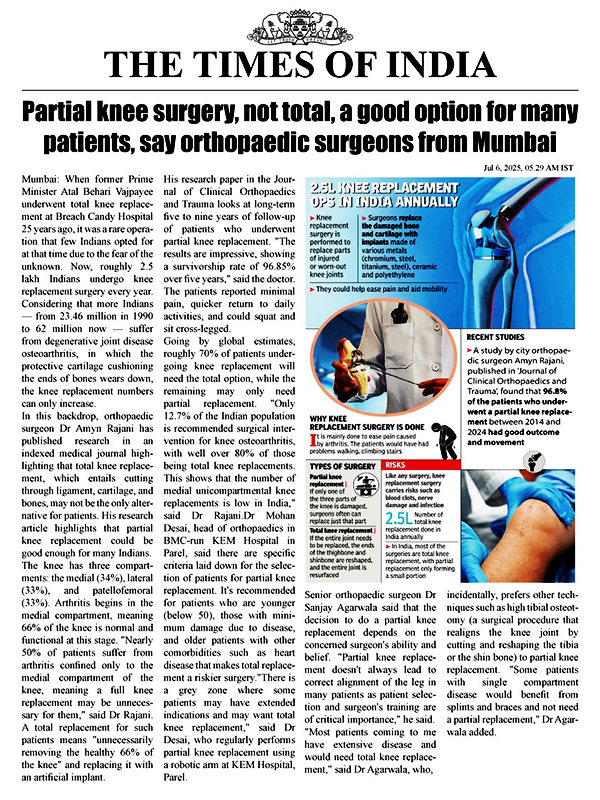
Dr Amyn Rajani is a Consultant Knee, Shoulder, and Hip Surgeon with over 25 years of experience. He is affiliated with Breach Candy Hospital, Saifee Hospital, and PD Hinduja Hospital in Mumbai, and is a reviewer for the Journal of Arthroplasty and the Indian Journal of Orthopaedics.
One of Dr Rajani’s published studies is directly relevant to the surgical management of knee alignment problems. In a paper titled “Postero-Central Slice Osteotomy of the Proximal Tibia: A Novel Technique for Correcting Resistant Tight Extension Gaps in Posterior-Stabilized Total Knee Arthroplasty for Varus Osteoarthritis”, published in The Journal of Arthroplasty (August 2024), Dr Rajani and his co-authors described a novel osteotomy technique applied at the proximal tibia to address a specific surgical challenge during knee replacement.
While this paper specifically addresses a technical challenge in knee replacement surgery rather than knock knees directly, it reflects Dr Rajani’s active engagement with osteotomy techniques to correct knee alignment. The principles of correcting the mechanical axis of the knee are the same whether the indication is knock knees treatment prior to joint replacement or managing alignment during joint replacement surgery itself.
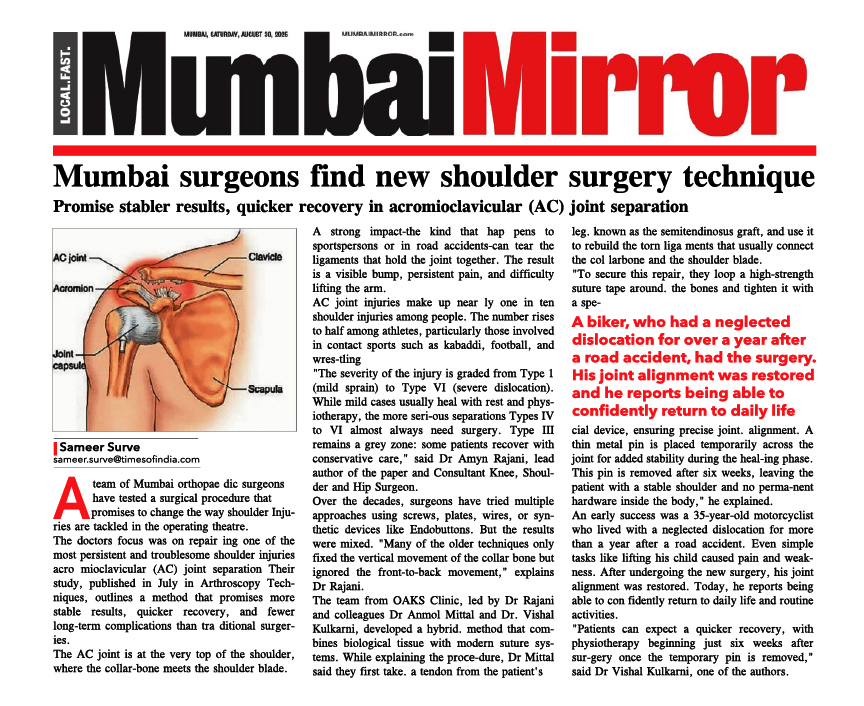
His earlier research also includes the role of high tibial osteotomy in managing knee deformity, and his scientific publications list spans alignment-related complications, arthroplasty techniques, and long-term outcome studies. For patients considering surgical correction of knock knees in adults, Dr Rajani’s experience with osteotomy and joint alignment is clinically relevant context.
FAQs about Knock Knees in Adults
Can knock knees be corrected in adults without surgery?
Yes, in mild to moderate cases. Physiotherapy, targeted knock knees exercises for adults, orthotics, and weight management can reduce the functional valgus position of the knee and relieve symptoms. Established structural deformity from cartilage loss or bone abnormality is unlikely to fully correct without surgery.
How to fix knock knees in adults?
The approach depends on severity. Mild cases are managed with physiotherapy and corrective exercises. Moderate to severe cases with pain, joint damage, or significant deformity may require a distal femoral osteotomy or, where advanced arthritis is present, a total knee replacement.
What causes knock knees in adults?
Common knock knees causes in adults include excess body weight, flat feet, lateral compartment osteoarthritis, past fractures that healed in poor alignment, and inflammatory arthritis. Vitamin D deficiency during bone development is also a recognised cause.
Are knock knees serious?
Mild knock knees in adults without pain or functional limitation do not require treatment beyond monitoring. Without correction, significant valgus deformity can accelerate lateral knee compartment wear over time and increase the risk of early arthritis.
What are the best knock knees exercises for adults?
Hip abductor strengthening (side-lying leg raises), clamshells, resistance band lateral walks, wall squats with a ball, and single-leg balance exercises are the most commonly used. A physiotherapist can tailor a specific programme to your degree of deformity and current fitness level.
Is there an age limit for knock knees surgery?
No fixed age limit applies. Adults of various ages can benefit from osteotomy surgery to correct knock knees. The suitability depends on bone quality, overall health, joint condition, and the degree of deformity.