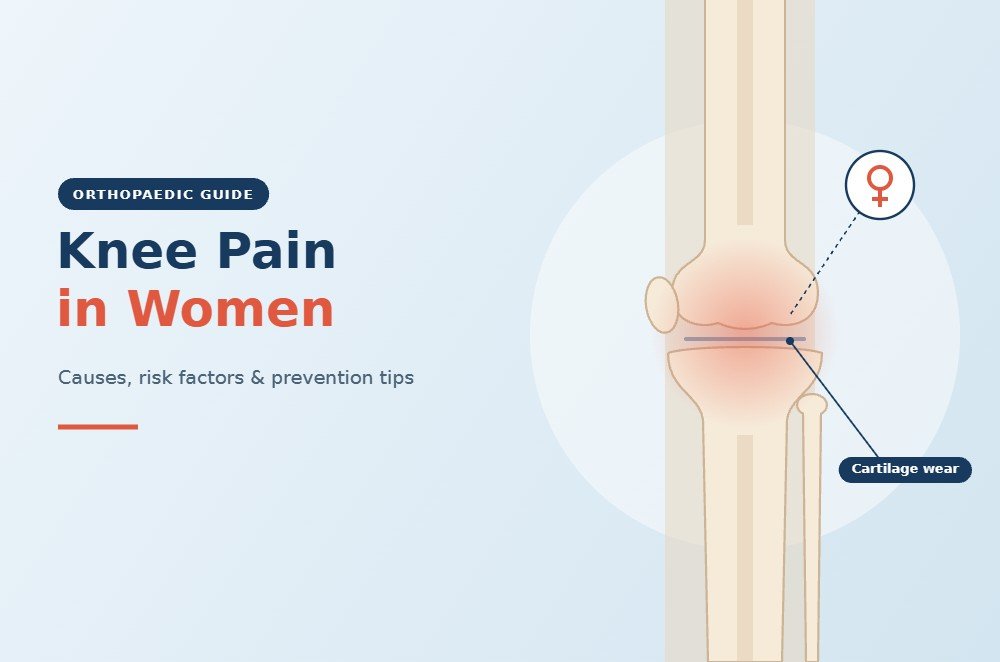
Knee pain in women can develop at different life stages. Some experience discomfort around the kneecap during exercise, while others notice stiffness and swelling as they approach menopause. For many, symptoms become more noticeable after the age of 40. Several factors contribute to these changes, including hormones, joint anatomy, previous injuries, muscle strength, and body weight.
The good news is that knee pain is not an inevitable part of ageing. Understanding its cause helps women choose suitable treatment and take steps to protect their joint health. This guide explains why women experience knee pain, the conditions commonly responsible, and how to manage and prevent it.
If you are experiencing discomfort but aren’t sure what’s causing it, start by understanding what different types of knee pain may indicate.
Why Do Women Experience More Knee Pain Than Men?
Research shows that women are more frequently affected by knee osteoarthritis than men, particularly in older age groups. Hospital for Special Surgery (HSS) reports that the difference becomes more noticeable with age. Its data indicate that knee osteoarthritis affects approximately 10% of women and 7% of men aged 40 to 49. Among those aged 60 to 69, the figures rise to around 35% and 19%, respectively.
The World Health Organization also reports that approximately 60% of people living with osteoarthritis worldwide are women. The knee is the most frequently affected joint, with an estimated 365 million people affected globally in 2019. These figures highlight the importance of understanding the factors that influence women’s joint health. Several factors may contribute to this difference.
1. Hormonal Changes Around Menopause
Oestrogen supports several processes that protect bone, muscle, and joint health. Hormonal changes during perimenopause and menopause may influence joint symptoms and the risk of developing osteoarthritis.
However, the relationship between oestrogen and cartilage health is complex. Hormonal changes are one contributing factor, rather than the only explanation for knee pain during menopause.
Dr. Amyn Rajani has also discussed the relationship between hormonal changes and arthritis among women in his feature on arthritis in women.
2. Differences in Knee Anatomy and Movement
Differences in hip and lower-limb alignment can influence how forces pass through the knee. Some women also experience patellar tracking problems, where the kneecap does not move smoothly within its groove.
A high-riding kneecap, known as patella alta, can affect kneecap movement and contribute to instability or discomfort. A low-riding kneecap, called patella baja, can also restrict movement and cause stiffness.
3. Higher Risk of Certain Sports Injuries
Women participating in sports involving sudden turns, jumps, and changes in direction may be at risk of anterior cruciate ligament (ACL) injuries. Differences in anatomy, movement patterns, muscle strength, and neuromuscular control may contribute to this risk.
An ACL injury can affect knee stability and increase the risk of future joint problems. Our guide to ACL tear and reconstruction explains the injury and available treatment options.
4. Cartilage and Meniscus Changes
Cartilage and meniscus injuries can affect knee movement and how loads are distributed. Previous injuries may also contribute to osteoarthritis later in life.
A meniscus tear can cause pain, swelling, and catching sensations, particularly during twisting movements.
5. Weight and Muscle Strength
Excess body weight increases the load placed on the knee during daily activities. Weak quadriceps, hamstrings, and hip muscles can also affect joint support and movement control.
Weight management and regular strengthening exercises can help reduce unnecessary stress on the knee.
Common Causes of Knee Pain in Women
Knee pain can originate from the joint, kneecap, surrounding tendons, or soft tissues. Some of the conditions commonly responsible include:
- Osteoarthritis: The gradual breakdown of joint cartilage can cause pain, stiffness, swelling, and difficulty walking. It becomes more common with age and is a major cause of knee pain in women over 50.
- Patellofemoral pain syndrome: This causes pain around or behind the kneecap. Symptoms often increase while climbing stairs, squatting, or sitting with bent knees for long periods. Kneecap alignment and muscle control may contribute.
- Ligament injuries: ACL and other ligament injuries can cause pain, swelling, and instability. Our guide to knee ligament injuries, including ACL, PCL, PLC and MPFL explains the different structures involved.
- Rheumatoid arthritis: This autoimmune condition can inflame the joint lining, causing pain, warmth, swelling, and stiffness. It may affect several joints.
- Bursitis: Inflammation of the small fluid-filled sacs around the knee can cause localised pain and swelling. Conditions such as prepatellar bursitis and pes anserine bursitis can affect different areas of the joint.
- Tendon problems: Repeated jumping, running, or overuse can irritate the tendons around the knee. Jumper’s knee is one example of an overuse-related condition.
These conditions can cause similar symptoms, so identifying the exact cause matters. A broader overview of common causes of knee pain in adults can help explain the other possibilities.
Knee Pain in Women Over 40
Many women notice changes in their knee health during their forties and fifties. This stage often overlaps with perimenopause and menopause, when hormonal levels change, and other age-related factors become more noticeable.
Common contributing factors include:
- Changes in oestrogen levels around menopause.
- Early cartilage changes associated with osteoarthritis.
- Weight gain or reduced physical activity.
- Reduced muscle strength and joint support.
- Previous sports injuries or ligament damage.
Knee pain at this age deserves attention, particularly when it affects walking, climbing stairs, or daily activities. Early assessment can help determine whether the symptoms relate to arthritis, a soft-tissue problem, or another joint condition.
For women with persistent stiffness and swelling, a clinical examination of the knee can help determine which structures need further investigation.
Knee Pain Treatment for Women
Treatment depends on the underlying condition, symptom severity, age, and activity requirements. Most women do not need surgery and can improve with appropriate non-surgical care.
| Treatment Approach | What It Involves |
|---|---|
| Physiotherapy and exercise | Strengthening the thigh, hip, and core muscles to support the knee. |
| Weight management | Reducing excess load on the joint. |
| Medication | Using prescribed pain relief or anti-inflammatory medicines when appropriate. |
| Injections | Considering corticosteroid or other joint injections for selected conditions. |
| Activity modification | Adjusting exercise routines and daily activities to reduce joint stress. |
| Surgery | Considering arthroscopy or joint replacement when clinically appropriate. |
Physiotherapy and Strengthening
Physiotherapy helps improve muscle strength, joint movement, balance, and stability. A structured physical therapy programme for the knee can be useful for women with several types of knee conditions.
For patients recovering from an injury or procedure, a planned knee rehabilitation programme helps gradually restore strength and function.
Medication and Injections
Medication may help manage pain and inflammation during flare-ups. In selected patients with osteoarthritis, injections such as corticosteroids or hyaluronic acid may be considered after assessing the joint.
Viscosupplementation for knee osteoarthritis is one option used in selected cases. Its suitability depends on the patient’s symptoms and clinical assessment.
When Is Surgery Considered?
Surgery may be discussed when pain and restricted movement continue despite appropriate non-surgical treatment.
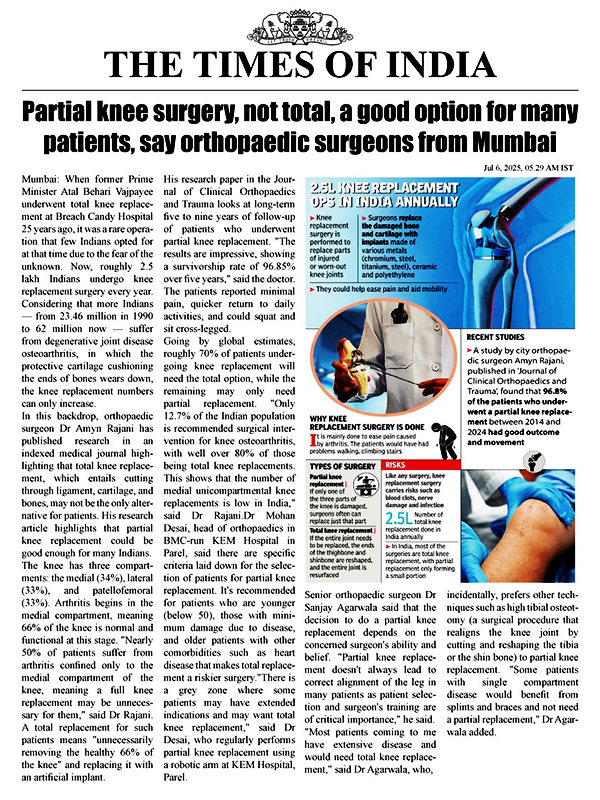
Depending on the diagnosis, options may include arthroscopic treatment for selected meniscus or cartilage problems, partial knee replacement when arthritis is limited to one compartment, or total knee replacement for advanced arthritis affecting multiple compartments.
You can read about knee arthroscopy, partial knee replacement, and total knee replacement to understand these procedures. Base the decision on symptoms, examination findings, imaging, and the extent of joint damage. These partial knee replacement FAQs also explain when a partial replacement may be suitable.
How to Prevent Knee Pain in Women
Preventive care focuses on maintaining muscle strength, managing joint load, and staying physically active. These steps are particularly useful during and after menopause.
1. Keep the Thigh Muscles Strong
The quadriceps and hamstrings support the knee and help control movement. Exercises such as straight leg raises, wall sits, and step-ups can improve muscle strength when performed correctly.
You can refer to these knee rehabilitation exercise demonstrations for examples of guided movements.
2. Maintain a Healthy Weight
Excess body weight increases the mechanical load on the knee. Maintaining a healthy weight can reduce joint stress and help manage osteoarthritis symptoms.
3. Stay Active With Joint-Friendly Exercise
Walking, swimming, and cycling are useful low-impact activities. Regular movement helps maintain muscle strength and joint mobility. Choose activities that suit your fitness level and do not increase knee pain.
4. Choose Supportive Footwear
Comfortable footwear with suitable cushioning and support can make walking easier. Regular use of very high heels may alter lower-limb mechanics and increase stress around the knee.
5. Protect Your Knees During Sports
Warm up before exercise and learn safe landing, turning, and movement techniques. Increase training intensity gradually instead of making sudden changes to your routine.
Women involved in sports can also benefit from understanding ligament injuries and appropriate prevention strategies. Patient examples and recovery footage are available in the knee surgery and rehabilitation videos.
6. Support Bone and Joint Health
A balanced diet, adequate calcium, and sufficient vitamin D support bone health. Vitamin D deficiency can contribute to bone pain and muscle weakness, although it does not cause every case of knee pain.
Dr. Amyn Rajani and his colleagues studied the role of correcting vitamin D3 deficiency before unicompartmental knee replacement. Published in the Malaysian Orthopaedic Journal in 2024, the study examined its relationship with post-operative bone pain after partial knee replacement. This research relates specifically to surgical outcomes and should not be interpreted as evidence that vitamin D deficiency causes knee pain in all women.
For a broader explanation of symptoms and testing, read about joint pain associated with vitamin D deficiency.
A Note on Women’s Knee Health
Several factors influence knee pain in women, including age, hormonal changes, joint alignment, muscle strength, body weight, and previous injuries. No single explanation or treatment applies to everyone.
I am Dr. Amyn Rajani, an orthopaedic and knee surgeon with more than 20 years of experience and an MS in Orthopaedics from the University of Mumbai, where I graduated as a gold medallist. My clinical work includes treating sports injuries, arthritis, and conditions affecting knee movement and stability.
My research includes work on knee replacement outcomes and the role of pre-operative vitamin D correction. You can read my scientific publications and Google Scholar research profile for further details.
If knee pain affects your daily activities, an assessment can help identify the cause and suitable treatment options. You can find more information about Dr. Rajani’s orthopaedic practice and his hospital affiliations.
Frequently Asked Questions
Why do women get more knee pain than men?
Women experience higher rates of knee osteoarthritis, particularly in older age groups. Hormonal changes, anatomical and movement differences, previous injuries, and weight-related factors may contribute to this difference.
Why does knee pain often start after age 40 in women?
Knee pain may become more noticeable after 40 because of hormonal changes around menopause, age-related cartilage changes, weight fluctuations, and previous injuries. However, the cause varies between individuals.
What is the best treatment for knee pain in women?
Treatment depends on the cause. Many women improve with physiotherapy, muscle strengthening, weight management, activity modification, and medication when needed. Injections or surgery may be considered in selected cases.
Can knee pain in women be prevented?
Many risk factors can be managed through regular exercise, maintaining a healthy weight, strengthening the muscles around the knee, wearing supportive footwear, and using appropriate techniques during sports.
Is knee pain normal during menopause?
Knee pain can become more common around menopause, but it should not automatically be considered a normal part of ageing. Assess persistent pain, swelling, or stiffness to identify the underlying cause.
References:
- World Health Organization. Osteoarthritis: Key Facts, Risk Factors and Management.
- Hospital for Special Surgery. Women and Arthritis.
- Rajani AM et al. Role of Pre-operative Correction of Vitamin D3 Deficiency in Controlling Post-operative Bone Pain after Unicompartmental Knee Arthroplasty. Malaysian Orthopaedic Journal, 2024.