Knee swelling is one of the most common reasons people visit an orthopaedic surgeon. It can appear suddenly after a fall or injury, or gradually over weeks with no clear trigger. In either case, swelling signals that the joint is under stress.
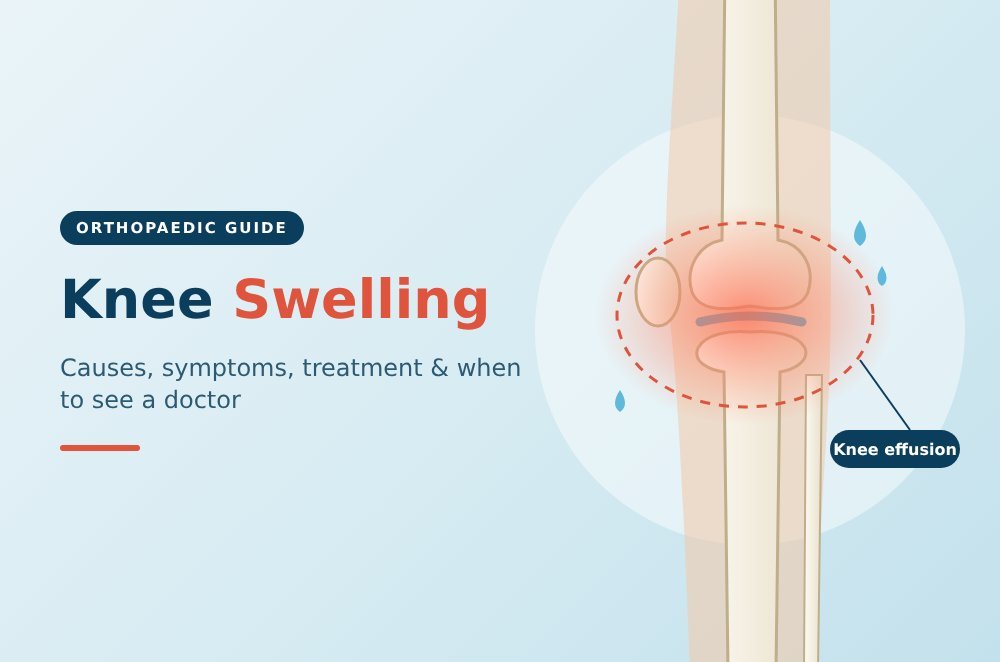
The swollen knee you notice is usually the result of excess fluid in the knee joint, a condition medically referred to as knee effusion. It can affect people of all ages. Younger patients often experience it after sports injuries, while older adults commonly develop it alongside knee osteoarthritis.
This article explains the main causes of knee swelling, what symptoms to expect, how to manage it at home, when medical treatment is necessary, and when to see a specialist.
What Is Knee Swelling (Knee Effusion)?
The knee joint normally holds a small amount of synovial fluid. This fluid lubricates the joint and allows smooth movement. When the joint is irritated, injured, or diseased, the synovial membrane produces more fluid than usual. This surplus fluid collects inside the joint capsule, causing the knee to look and feel swollen.
Knee effusion is the medical term for this build-up of excess fluid in the knee joint. According to a 2023 study in the Journal of Orthopaedic Surgery and Research, knee effusion is directly associated with increased knee pain, reduced range of motion, and altered walking patterns.
The normal knee holds less than approximately 1 ounce (around 25–30 ml) of synovial fluid. In cases of effusion, this volume can rise significantly, sometimes to 60–100 ml or more, depending on the underlying cause.
A swollen knee may feel warm, tight, or tender to touch. In some cases, the swelling is so significant that bending the knee fully becomes difficult.
Common Causes of Knee Swelling
There is rarely a single, universal cause. The causes of knee swelling vary widely across age groups and activity levels. Below are the most frequently seen reasons.
Osteoarthritis
Wear and tear of the joint cartilage is the most common reason adults develop a swollen knee. As cartilage breaks down, the joint becomes inflamed and produces more synovial fluid. Swelling in osteoarthritis often builds gradually and is worse after prolonged activity.
Ligament Injuries
Tears to the ACL (anterior cruciate ligament), MCL, PCL, or lateral ligaments commonly cause rapid, significant knee swelling. This type of swelling usually develops within a few hours of the injury, sometimes within minutes. The joint may feel unstable.
Meniscus Tears
The menisci are two cartilage discs sitting between the thighbone and shinbone. A tear, whether from a sudden twist or gradual degeneration, often causes persistent fluid in the knee joint. Meniscal swelling tends to appear more slowly than ligament-related swelling.
Rheumatoid Arthritis
An autoimmune condition that causes the synovial membrane to become inflamed. Knee effusion in rheumatoid arthritis can affect both knees. The swelling is often accompanied by stiffness, warmth, and systemic symptoms such as fatigue.
Gout and Pseudogout
Gout occurs when uric acid crystals deposit inside the joint. Pseudogout involves calcium pyrophosphate crystals instead. Both conditions trigger sudden, painful knee swelling that can closely resemble a joint infection. A fluid sample taken from the joint is needed to confirm crystal-related arthritis.
Bursitis
Bursae are small, fluid-filled sacs that cushion the joint. Prepatellar bursitis (sometimes called housemaid’s knee) causes swelling directly over the kneecap. Pes anserine bursitis causes swelling on the inner side of the knee, often in overweight adults or runners.
Fractures
Bones around the knee, including the patella, tibial plateau, and distal femur, can fracture following falls or high-impact injuries. A fracture typically causes immediate, severe swelling and significant pain. Weight-bearing is usually not possible.
Less Common But Serious Causes
Some conditions causing knee swelling are less frequent but require prompt attention.
Septic Arthritis
When bacteria enter the knee joint, usually through the bloodstream or after a penetrating injury, the result is a joint infection. Septic arthritis causes rapid, severe swelling of the knee, intense pain, fever, and warmth. It is a medical emergency. Without prompt treatment, it can permanently damage the joint cartilage within days.
Baker’s Cyst (Popliteal Cyst)
A Baker’s cyst is a fluid-filled swelling that forms at the back of the knee. It develops when excess joint fluid pushes into the popliteal bursa. The cyst itself may cause a visible bulge behind the knee and a feeling of tightness. If it ruptures, fluid leaks into the calf, causing sudden calf pain and swelling.
Haemarthrosis
This is bleeding into the joint space. It usually follows a significant injury, such as an ACL tear or a tibial plateau fracture. The knee swells rapidly, typically within one to two hours of injury. The joint may feel warm and appear bruised around it.
Pigmented Villonodular Synovitis (PVNS)
A rare condition in which the synovial tissue grows abnormally and bleeds into the joint repeatedly. It typically presents with recurrent swollen knee episodes in younger adults with no clear trauma history.
Synovial Lesions and Other Rare Causes
Conditions such as synovial chondromatosis, synovial lipomatosis, and other lesions of the synovial membrane can mimic common joint swelling. These are uncommon but are worth considering when swelling is persistent and unexplained.
Symptoms That Accompany a Swollen Knee
A swollen knee rarely appears in isolation. Other symptoms usually accompany it. Noting these carefully helps narrow down the possible cause.
- Pain: May be dull and constant or sharp with movement. Post-injury pain tends to be more acute.
- Stiffness: The joint may feel tight, particularly after sitting for a long time or first thing in the morning.
- Warmth: Heat over the joint usually indicates active inflammation or infection.
- Reduced range of motion: Fully straightening or bending the knee may become difficult. In severe knee effusion, the knee may be locked at a slight angle.
- Redness: Visible redness over the joint can suggest infection, gout, or active inflammatory arthritis.
- Clicking or locking: These mechanical symptoms, along with knee swelling, may point to a meniscus tear or loose body in the joint.
- Instability or giving way: Common with ligament injuries, particularly ACL tears.
- Fever: A temperature alongside a hot, swollen joint requires urgent assessment to rule out septic arthritis.
The timing of swelling also matters. Swelling that appears within minutes to two hours of an injury usually suggests ligament damage or haemarthrosis. Swelling that develops gradually over 24 to 48 hours is more common with meniscal injuries or inflammatory conditions.
How to Reduce Knee Swelling
For mild to moderate knee swelling without signs of infection or serious injury, the following measures can help during the first 48 to 72 hours.
The RICE Method
The RICE approach remains the standard starting point for early management.
- Rest: Reduce activity and avoid putting full weight on the knee, especially if movement causes pain.
- Ice: Apply an ice pack wrapped in a cloth for 15 to 20 minutes every 2 to 3 hours. Ice can help slow inflammation and reduce discomfort. Avoid applying ice directly onto skin.
- Compression: An elastic bandage or compression sleeve around the knee can help limit further fluid in the knee joint. It should be firm but not so tight that it cuts off circulation.
- Elevation: Keep the leg raised above hip level when resting to allow fluid to drain away from the joint.
Over-the-Counter Anti-Inflammatory Medication
Nonsteroidal anti-inflammatory drugs (NSAIDs) such as ibuprofen may help reduce pain and inflammation. The appropriate dose and whether these are suitable for you depends on your general health and any other medications you are taking. Always check with a pharmacist or doctor before using them regularly.
Avoid Heat in the Early Stages
Heat applied to a freshly swollen knee can increase inflammation and worsen swelling. Heat may be used later, once the acute phase has settled, to ease stiffness.
Gentle Movement
Complete immobility is usually not helpful. Light, pain-free movement can encourage fluid drainage and prevent the joint from stiffening further. A physiotherapist can advise on appropriate exercises.
If knee swelling does not improve within 3 to 5 days with home care, or if it worsens, professional assessment is necessary.
Swollen Knee Treatment
Swollen knee treatment depends entirely on the underlying cause. A doctor will usually begin with a physical examination and may request X-rays, an MRI, or blood tests. In some cases, a sample of the joint fluid is drawn out with a needle for laboratory analysis. This procedure is called arthrocentesis or aspiration.
Aspiration (Arthrocentesis)
When the fluid in the knee joint is causing significant pressure or pain, or when the cause is unclear, the doctor may drain it. Removing the fluid provides immediate relief and allows the fluid to be tested for crystals, bacteria, or blood. This helps confirm whether the swelling is due to infection, gout, or injury.
Corticosteroid Injections
In cases of persistent knee effusion related to inflammatory arthritis or osteoarthritis, a corticosteroid injection into the joint can reduce inflammation. According to research published by Monash University, patients who received both aspiration and corticosteroid injection reported improvement in pain compared to those who had no intervention. Relief typically begins within a few days to a week.
Repeated corticosteroid injections should be used carefully. They are generally not recommended more than three to four times per year in the same joint, as frequent injections may affect the cartilage over time.
Physiotherapy and Knee Rehabilitation
Once the acute swelling is managed, a structured knee rehabilitation programme helps restore strength, flexibility, and joint stability. Strengthening the muscles around the knee, particularly the quadriceps, reduces the mechanical load on the joint and can help prevent recurrence.
Surgical Treatment
When swelling is caused by a structural problem, such as a torn meniscus, ligament tear, or joint infection, surgery may be required. Knee arthroscopy is a minimally invasive procedure used to clean out loose tissue, repair a meniscus, or wash out an infected joint.
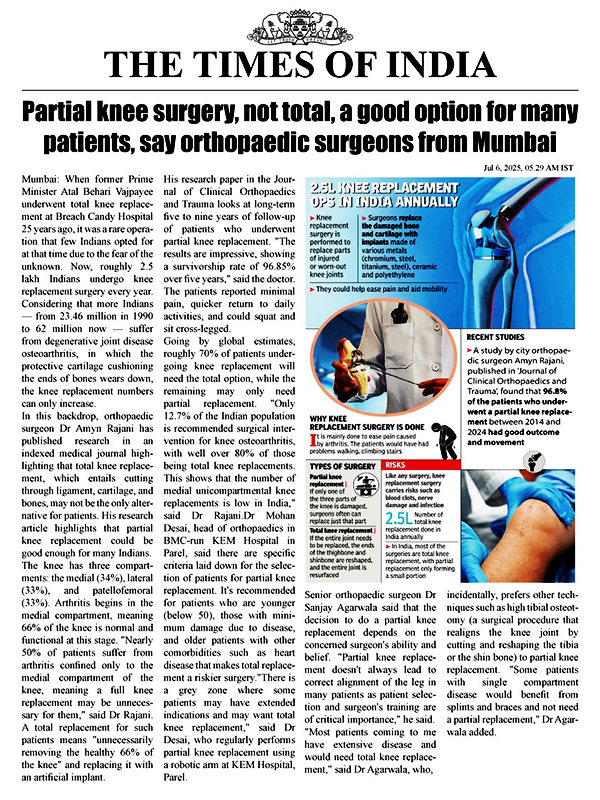
For severe osteoarthritis where conservative treatment is no longer sufficient, partial knee replacement or total knee replacement may be discussed.
Treating the Underlying Cause
It is worth noting that draining the fluid or reducing inflammation is only one part of treatment. If the underlying cause is not addressed, knee swelling tends to return. A long-term plan that includes managing the root condition, whether arthritis, ligament instability, or inflammatory disease, is essential.
Research Insight: Dr Amyn Rajani on Synovial Lesions and Knee Swelling
Dr Amyn Rajani is a Consultant Knee, Shoulder, and Hip Surgeon with over 25 years of experience. He is affiliated with Breach Candy Hospital, Saifee Hospital, and PD Hinduja Hospital in Mumbai.
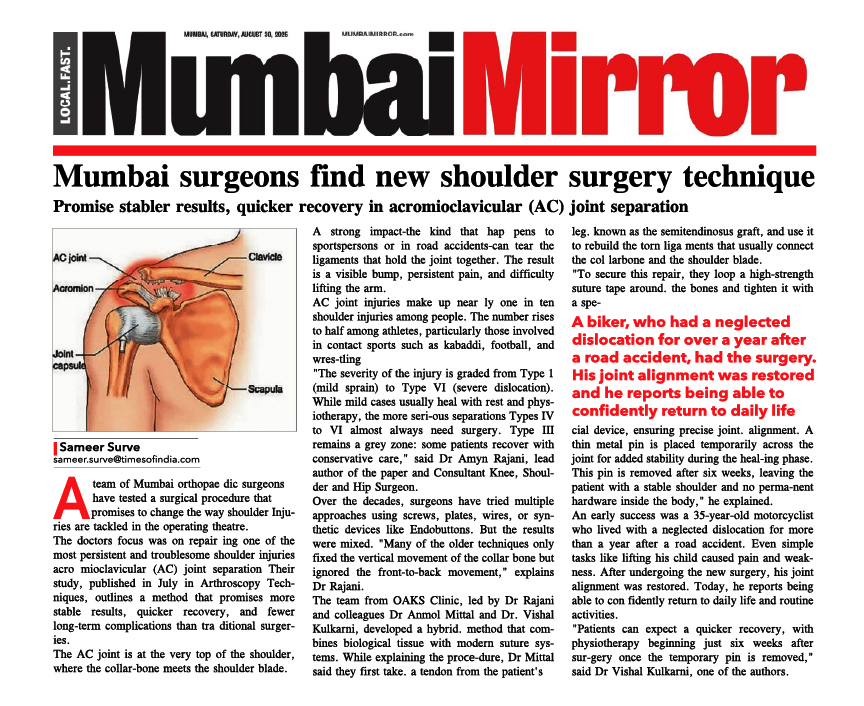
One of Dr Rajani’s contributions directly relevant to knee swelling is his published work titled “It’s not what it looks like: challenges in diagnosis of synovial lesions of the knee joint”, published in the Journal of Experimental Orthopaedics in 2016.
In this paper, Dr Rajani and his co-authors investigated how synovial lesions inside the knee can be easily misdiagnosed. The study highlighted that persistent knee swelling without a clear history of injury or obvious arthritis may sometimes stem from unusual synovial pathology. These cases require careful assessment and should not be dismissed as routine joint inflammation.
What this means practically is that not every swollen knee has an obvious explanation. When fluid in the knee joint keeps returning despite standard treatment, or when imaging does not fully explain the swelling, a more thorough investigation into the synovial tissue may be warranted.
Dr Rajani’s broader research portfolio also includes work on post-operative pain management after knee replacement surgery, long-term functional outcomes following total knee replacement, and techniques in unicompartmental arthroplasty. His scientific publications are available on the clinic website.
When to See a Doctor
Not all knee swelling needs same-day medical attention. However, certain signs should not be ignored.
Seek Urgent Medical Attention If:
- The knee is severely swollen, hot, and painful, with or without a fever. This could indicate septic arthritis, which is a joint infection that requires immediate treatment.
- Swelling appeared rapidly after an injury and the knee feels unstable or cannot bear weight.
- You heard or felt a pop inside the knee at the time of injury.
- There is visible deformity of the knee after trauma.
- Calf swelling or breathlessness develops alongside a swollen knee. These can be signs of a deep vein thrombosis (DVT) or pulmonary embolism and need urgent assessment.
- There is redness spreading outward from the joint.
See a Doctor Soon If:
- Knee swelling has not improved after 3 to 5 days of home management.
- The swelling keeps coming back without a clear cause.
- Pain is limiting your daily activities, sleep, or ability to walk.
- The knee feels locked or cannot be fully straightened.
- You have a history of rheumatoid arthritis, gout, or previous joint infections.
A doctor will carry out a physical examination and may arrange an X-ray, MRI scan, or blood tests. If the swollen knee treatment requires aspiration or injections, this can typically be done in the clinic.
If you are experiencing persistent or recurring knee effusion, consulting a specialist such as Dr Amyn Rajani can help identify the cause accurately and guide the most appropriate treatment for your specific situation.
FAQs about Knee Swelling
What is the most common cause of knee swelling?
Osteoarthritis is the most frequently seen cause in adults over 50. In younger and more active individuals, ligament injuries and meniscal tears are more common triggers of knee swelling.
Can knee swelling go away on its own?
Mild knee effusion caused by a minor strain or overuse may settle within a few days with rest, ice, compression, and elevation. Swelling linked to an underlying condition such as arthritis, gout, or ligament damage is unlikely to fully resolve without treating the root cause.
How to reduce knee swelling at home?
The RICE method, which stands for Rest, Ice, Compression, and Elevation, is the standard first step. Reducing activity, applying ice wrapped in cloth for 15 to 20 minutes every few hours, and elevating the leg can help reduce knee swelling in the early stage.
How long does a swollen knee take to go down?
A minor swollen knee from a soft tissue injury may improve within one to two weeks. Swelling related to arthritis or a torn ligament typically takes longer and requires medical management.
What happens if fluid in the knee is not treated?
Untreated fluid in the knee joint can cause ongoing discomfort, reduced mobility, and accelerate joint damage over time. In cases of infection, leaving the joint untreated can result in permanent joint destruction and serious systemic illness.
Is knee swelling always serious?
Not always. Some minor injuries cause temporary knee swelling that settles with basic home care. However, swelling that is severe, warm, accompanied by fever, or keeps recurring always warrants a professional evaluation to rule out serious causes.
When should I be worried about a swollen knee?
Seek medical attention if the swollen knee is accompanied by fever, was caused by a significant injury, feels very unstable, or has not improved after 5 to 7 days of home treatment.