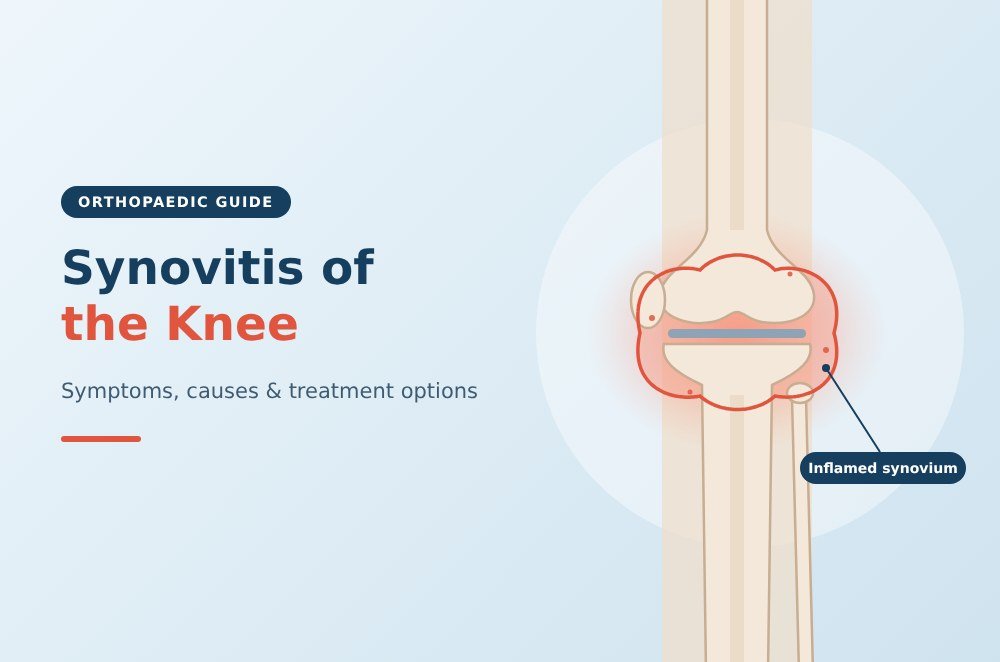
When a patient reports knee swelling, warmth, and stiffness, one condition I consider is knee synovitis. It is a common problem, but many people are unfamiliar with the term. Synovitis refers to inflammation of the synovium, the thin lining inside the knee joint. When this lining becomes inflamed, it thickens and produces excess fluid, making the knee swollen, painful, and difficult to move.
Knee synovitis is treatable, especially when you identify the underlying cause early. In this guide, I will explain its causes, symptoms, diagnosis, and treatment options, including exercises that can support recovery. If you are unsure why you have knee discomfort, our guide to what your knee pain indicates can help you understand the possible causes.
What Is Synovitis of the Knee?
A capsule surrounds the knee joint. Its inner layer is called the synovium or synovial membrane. In a healthy knee, this lining produces a small amount of fluid that lubricates the joint and nourishes the cartilage. Under normal conditions, it is only a few cells thick.
In knee synovitis, the lining becomes inflamed and thickened. It begins producing excess fluid, which leads to swelling. The inflamed tissue causes pain, while the additional fluid stretches the joint capsule and increases discomfort. This condition is a common cause of knee pain in adults.
Causes of Knee Synovitis
The synovium can become inflamed for several reasons. Some of the common causes include:
- Osteoarthritis: As the cartilage wears down, small fragments and joint debris can irritate the synovium and trigger inflammation. This is a common cause, particularly among older patients.
- Rheumatoid arthritis and other inflammatory arthritis: In these conditions, the immune system attacks the synovium, causing persistent inflammation.
- Gout and crystal arthritis: Crystals, such as uric acid crystals in gout, can collect inside the joint and trigger an intense inflammatory reaction.
- Meniscus and cartilage problems: A torn meniscus or loose cartilage fragment may repeatedly irritate the joint lining and keep it inflamed.
- Injury and overuse: A direct blow, sudden twist, or repeated stress from activities such as running can irritate the synovium. Sports injuries involving the ligaments or meniscus may also cause inflammation, including injuries that require ACL tear and reconstruction.
- Infection: An infection inside the joint, known as septic arthritis, can cause rapid and severe inflammation. It requires urgent medical treatment.
Knee Synovitis Symptoms
Knee synovitis symptoms may develop gradually or appear quickly after an injury or infection. Common symptoms include:
- Swelling: The knee may feel puffy or spongy, with swelling around the joint.
- Warmth: Increased blood flow to the inflamed lining can make the knee feel warm to the touch.
- Pain: Patients often feel a dull ache that worsens with movement or physical activity.
- Stiffness: The knee may feel tight and difficult to move, particularly in the morning or after sitting for a long time.
- Reduced range of motion: Swelling and discomfort can make it difficult to bend or fully straighten the knee.
If your knee is warm and swollen along with a fever, or you have sudden, severe pain, seek medical attention urgently. These symptoms may indicate an infection. Persistent swelling also needs assessment by a knee specialist in Mumbai to identify its cause.
How Knee Synovitis Is Diagnosed
Diagnosing knee synovitis involves confirming the inflammation and identifying its underlying cause. This requires a clinical examination and, when needed, imaging or laboratory tests.
| Method | What It Shows |
|---|---|
| Clinical examination | Checks swelling, warmth, tenderness, and knee movement. |
| Ultrasound | Shows synovium thickening and fluid inside the joint. |
| MRI scan | Provides detailed images of the synovium, cartilage, meniscus, and ligaments. |
| X-ray | Helps identify arthritis and bone changes, although it does not show the synovium directly. |
| Joint aspiration | Removes joint fluid for testing to check for infection, inflammation, or gout crystals. |
Joint aspiration is particularly useful when infection, gout, or inflammatory arthritis is suspected. Testing the collected fluid helps identify the cause and guide treatment. An X-ray can also help assess underlying arthritis and other bone changes. A knee and orthopaedic specialist in Mumbai can recommend the appropriate investigations based on your symptoms.
Knee Synovitis Treatment
Treatment focuses on two main goals: reducing inflammation to relieve symptoms and addressing the underlying cause to prevent recurrence. Most patients improve with non-surgical treatment.
Non-Surgical Treatment
- Rest, ice, compression, and elevation: These measures can help reduce swelling and discomfort during the early stages of inflammation.
- Anti-inflammatory medication: Non-steroidal anti-inflammatory drugs may help manage pain and reduce inflammation when medically appropriate.
- Joint aspiration and corticosteroid injection: Removing excess fluid can reduce pressure inside the joint. A corticosteroid injection may also help control inflammation in selected cases.
- Treating the underlying cause: Inflammatory arthritis may require medicines that control the immune response. Gout treatment focuses on managing uric acid levels. Addressing the underlying condition helps reduce the risk of recurring synovitis.
Physiotherapy and Rehabilitation
Once the acute inflammation settles, physiotherapy helps restore knee movement and strengthen the surrounding muscles. A structured physical therapy programme for the knee can support recovery and improve joint function.
Patients who need a longer and supervised recovery plan can also benefit from a structured knee rehabilitation programme.
Surgical Treatment
Surgery is considered when synovitis is severe or does not respond to non-surgical treatment. The main procedure is called synovectomy, which involves removing the inflamed synovial lining, usually through keyhole surgery.
Synovectomy may be recommended in selected patients with persistent inflammation, particularly in cases of resistant inflammatory arthritis. The decision should be made after a detailed assessment by an experienced knee specialist in Mumbai.
Knee Synovitis Exercises
Gentle exercises can help restore knee movement and strength after the acute and painful phase of inflammation has settled. However, the exercises should suit your condition. Consult your doctor or physiotherapist before starting, particularly if the cause of swelling has not yet been identified.
1. Quadriceps Sets (Static Quadriceps)
Sit with your leg straight and gently tighten the muscle at the front of your thigh. Press the back of your knee towards the floor, hold for five seconds, and then relax. Repeat 10 times, 2 or 3 times a day.
2. Straight Leg Raises
Lie on your back with one knee bent and the other leg straight. Tighten the thigh muscle of the straight leg and lift it a few inches. Hold briefly and lower it slowly. This exercise strengthens the quadriceps without moving the knee. A physiotherapist can guide you on the correct technique and progression.
3. Heel Slides
Lie on your back and slowly slide your heel towards your buttocks to bend the knee as far as comfortable. Then slide it back to the starting position. This exercise helps improve knee flexibility and range of motion.
4. Stationary Cycling
Once your knee feels comfortable, light cycling on a stationary bike with low resistance can help maintain movement, improve circulation, and strengthen the surrounding muscles without high impact.
Avoid running, jumping, deep squats, and other activities that cause sharp pain while the knee is inflamed. Focus on gentle, controlled movements that do not increase discomfort.
Conclusion
Knee synovitis can develop due to different conditions, so identifying the underlying cause is important for choosing the right treatment. With timely diagnosis, appropriate medication, and guided rehabilitation, most patients can manage the condition effectively.
I am Dr. Amyn Rajani, an orthopaedic and knee surgeon with over 20 years of experience and an MS in Orthopaedics from the University of Mumbai, where I graduated as a gold medallist. My clinical experience in knee and orthopaedic care includes assessing and treating different causes of knee pain and swelling.
If you are experiencing persistent knee swelling, warmth, or stiffness, you can book a consultation to understand the cause and discuss suitable treatment options.
Frequently Asked Questions
What is the main cause of knee synovitis?
Common causes include osteoarthritis, rheumatoid arthritis, gout, injuries, and overuse. Infection can also cause synovitis and requires urgent treatment. Identifying the underlying cause is important because treatment varies from patient to patient.
How long does knee synovitis take to heal?
Mild synovitis caused by an injury or overuse may settle within a few weeks with appropriate care. However, synovitis related to inflammatory arthritis or gout may take longer and requires treatment of the underlying condition.
Is walking good for knee synovitis?
Gentle walking may help once severe pain and swelling have settled. It keeps the joint moving and supports circulation. During an acute flare, however, rest and controlled exercises may be more suitable. Follow your doctor’s or physiotherapist’s advice.
Can knee synovitis go away on its own?
Mild synovitis caused by a minor injury may settle with rest and appropriate care. However, persistent or recurring swelling should be assessed to identify the underlying cause and prevent further joint problems.